

Aberlour 12 Year: A Complete Bottle Guide
We may receive a commission on purchases made from links.
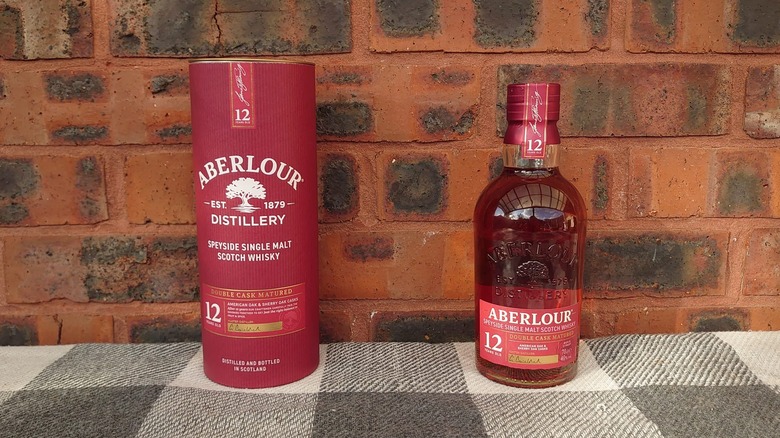
With so many good distilleries in Scotland, they can't all be hugely popular. However, some deserve more international recognition, and I think Aberlour is one of them. It may be surrounded by famous distilleries that produce far higher quantities, but Aberlour can stand its ground when it comes to quality. Its flagship and most easily accessible bottle is its 12 Year Old Double Cask Matured single malt. This tells you a lot about Aberlour's standard, as it seems to have no desire to offer a budget whisky.
I've been enjoying Scotch whisky for nearly two decades now, and in that time, Aberlour 12 crossed my path on more than one occasion. However, for this detailed guide, it was only right that I acquired another bottle to see if it was still up to the standards I expected. As a whisky expert with a rich depth of knowledge and experience, I'm also in a great place to see how it stacks up against other single malts. The result will be an ultimate bottle guide that will show you if buying a bottle of Aberlour 12 would be money well spent.
History of Aberlour 12
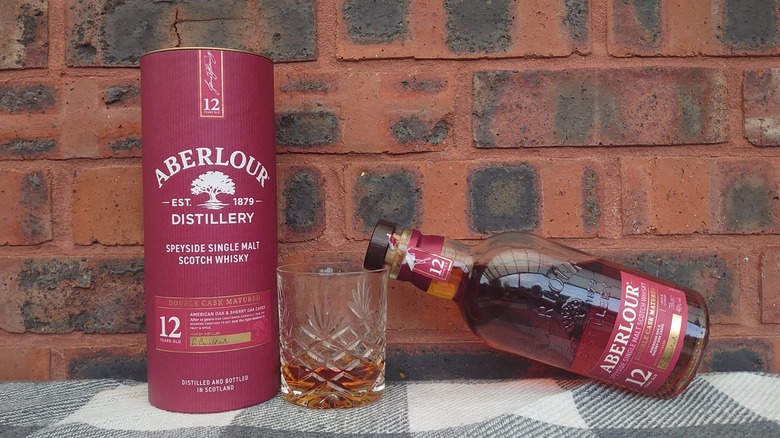
There was a distillery in the town of Aberlour all the way back in 1826, but tragically, it ended being mostly destroyed by fire. In 1879, a new distillery was built under the Aberlour name further down the river. The man responsible for this rebuild was a local benefactor by the name of James Fleming. As we'll see later, this was far from his only contribution to the town. He may have been a pillar of the community, but Fleming didn't hold on to the distillery for too long. In 1892, it was sold to Robert Thorne & Sons, but six years later, Aberlour would be set back by a familiar foe.
It suffered another serious fire, but this time, the distillery was rebuilt on its existing site. Before its current ownership, the delivery changed hands a few times. WH Holt & Sons acquired Aberlour in 1921 and sold it again to Campbell Distillers in 1945. Despite the distillery being 95 years old at this point, it hadn't been in anyone's hands for longer than three decades. That would change with the sale to Pernod Ricard in 1974, but much more on that later. The number of stills increased from two to four in 1973, but aside from that brief expansion, the distillery remains quite small. For comparison, the Glenfiddich distillery has 32 stills. Today, Aberlour remains a relatively small yet highly respected distillery.
What does Aberlour 12 taste like?
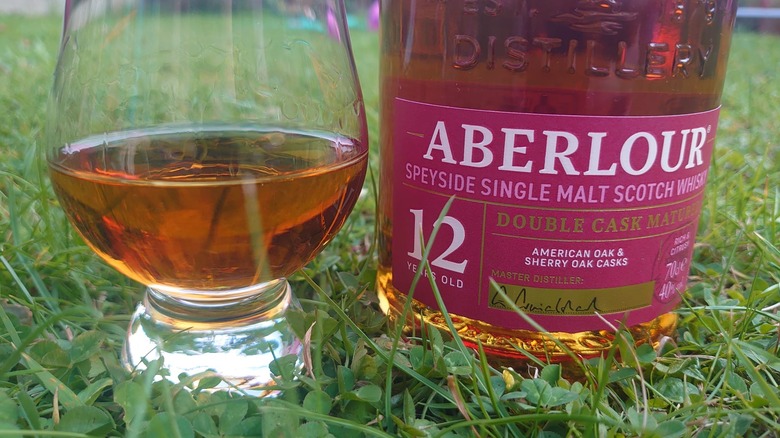
Now we get on to the all-important question of what Aberlour 12 tastes like. On the nose, it has an elegantly rich aroma that is common among all well-matured scotches. The nuance comes from a mix of sweet and fruity notes. On the sweet side, you get a touch of vanilla but mostly deep honey notes. As for fruit, it is mostly presented as ripe green apples. Along with subtle notes of oak and spice, it adds to a pleasant aroma. When tasting, your first impression is how the whisky finds that impressive balance of being both smooth yet full-bodied in flavor. A touch of that honey from the nose comes through, but the most prominent sweet taste is that of caramel, and you get a little toffee, too. This could be the influence from the American cask, while the sherry cask imparts a raisin-like quality of rich dried fruits.
It's not overly spicy, but you get a lovely lingering cinnamon warmth on the finish. The result is a whisky that has an impressive amount of depth for its price tag. It's approachable enough that whisky newcomers won't be overpowered, while being complex enough to be highly enjoyable for experienced whisky lovers. When it comes to mid-range scotches, Aberlour 12 remains one of my go-to favorites.
How is Aberlour 12 made?
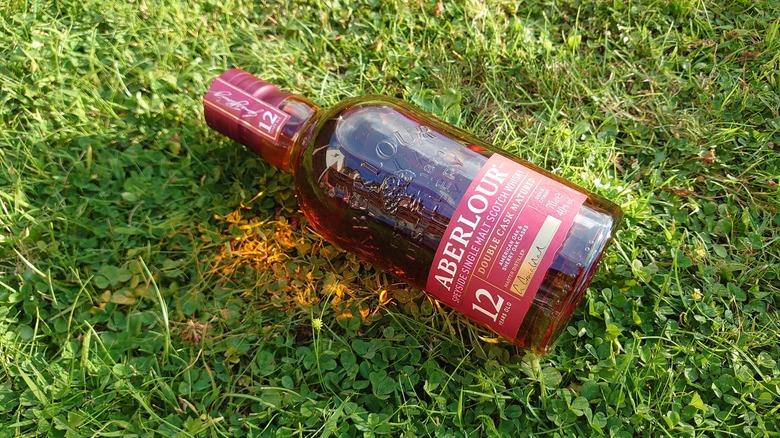
There are some basic steps that all whiskies will follow. The barley is malted, mashed, and fermented before eventually being distilled and matured. However, exactly how a distillery follows these steps will always have variances. For Aberlour, the process begins with locally sourced barley and water. Even though it's situated by the infamous River Spey, Aberlour's water comes from the nearby Birkenbush Springs. As with water from the river, it's soft and pure, perfect for distillation. The spirit is distilled twice through Aberlour's copper pot stills. These stills are common in Scotch but not often used for bourbon.
This distillate will then be checked to meet quality standards before being matured. For this Aberlour expression, that means spending 12 years in both sherry and American oak casks. To prevent the wood from having too much influence, Scotch is matured in used barrels, with Aberlour using two different types. This comes with the aim of getting some of the fruity notes of sherry, along with the mellow vanilla flavors commonly found in bourbon. The 12-year mark on the bottle is the minimum time that the whisky has been aged for. If it doesn't meet the quality expectations, it may be left to mature for longer. After all that time, it's placed in the elegant wide bottle before hopefully finding its way onto our taste buds.
How to drink Aberlour 12
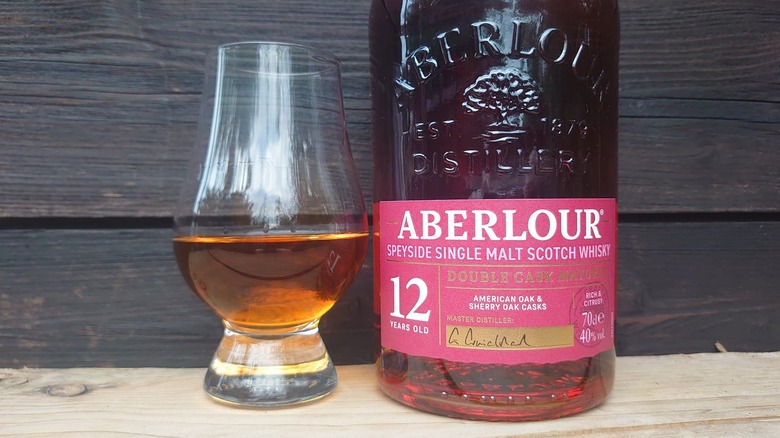
How to enjoy your bottle of Aberlour 12 comes down to a personal preference. I'm not a fan of whisky snobbery, including the myth that all whisky needs to be drunk neat. Personally, however, there comes a point when whisky is that good, I'll only ever enjoy it on its own. I may put a little in a cocktail or with a mixer out of curiosity, but that's about it. Aberlour 12 has a rich depth of flavor that suits being drunk neat. It takes you through the journey of its tasting notes without any unpleasant aftertaste. The taste can be a little strong at first, especially considering its low proof, so you should never be scared to add a little ice or water. This can help open the flavors, especially for those who don't have a whole lot of tasting experience.
For mixers and cocktails, there isn't a huge amount of cut through with the flavors, as it's not a powerful whisky. Even if I wanted to use a single malt for mixing, there are better options out there for this. It's also good to consider which glass you should use. While I like to drink most of my whisky out of a crystal tumbler, I always put any new whisky inside one of my tasting glasses. There are a few great options out there for drinking any type of whiskey, but the Glencairn glass is the classic choice. This allows you to fully take in the aroma and closely control your sips. If you haven't got a tasting glass already, it's a small but worthwhile investment.
Is Aberlour 12 expensive?
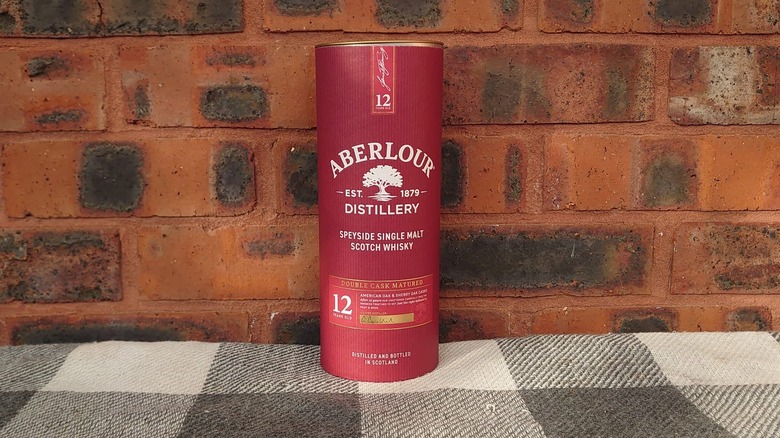
There are two ways to approach the question of whether a particular label is expensive compared to other whiskies, and whether it is good value for money. On both accounts, Aberlour 12 competes well. In terms of single malt Scotch, it sits in the mid-level price bracket with an average price of around $65. That's around $20-30 more expensive than some of the most common single malts you can buy, such as Glenfiddich and The Glenlivet. What are you getting for that extra money? Plenty more depth and character.
Though I enjoy those single malts, they are more everyday spirits and the type of Scotch you'd give a guest that doesn't have much of an appreciation for it. Aberlour 12 may be a level above in terms of price, but it's also a step up in quality. In terms of value, I think Aberlour 12 is exceptional. It doesn't have the premium quality that comes with the most expensive bottles, but I feel it competes well with single malts that are close to the $100 mark. If you're just getting into whisky, it makes sense to check out the cheaper bottles to develop your tasting experience. However, if you already appreciate a good Scotch, this is a great bottle for those looking for a higher level of quality.
Aberlour 12 vs Aberlour 16
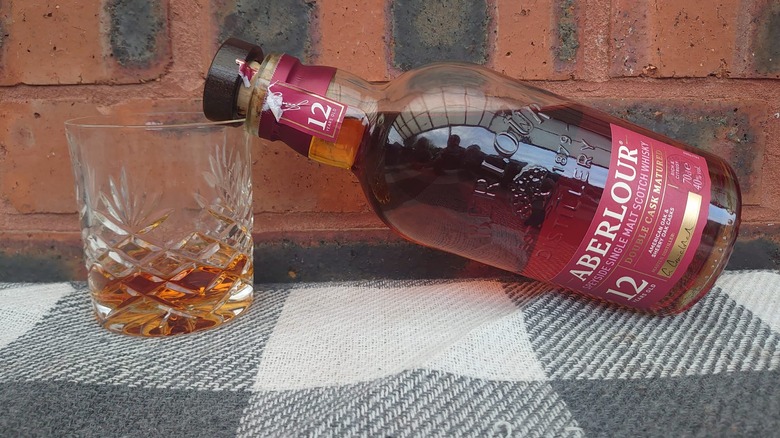
The fascinating aspect of whiskey maturation is that the same spirit matured for longer won't necessarily share the same characteristics as the younger sibling. However, that's not the case here. It's always hard to express what it means to say that whisky has a deep flavor, but it's almost like having a cheap piece of chocolate vs an expensive one. The flavors are usually more rounded, refined, and last for longer on your tongue. While Aberlour 12 isn't a cheap whisky, this analogy explains how the 16-year-old sibling simply takes things to an extra level. The caramel on the palate is even more delectable and aromas are more pronounced.
There are a few extra tasting notes you can find in Aberlour 16, mainly in the form of more nuttiness and dark chocolate. The finish is also a little longer, which you always expect with extra maturation. However, another thing you expect with greater maturity is a more pronounced oak flavor, but you don't get that here. Both whiskies seem to be more influenced by the spirits that were previously matured in the barrel rather than the barrel itself. Aberlour 16 is undoubtedly better, but it's also around twice as expensive. Due to this, it's great to start with the 12-year, and if you love it, treat yourself to the 16-year.
Aberlour 12 vs The Macallan 12
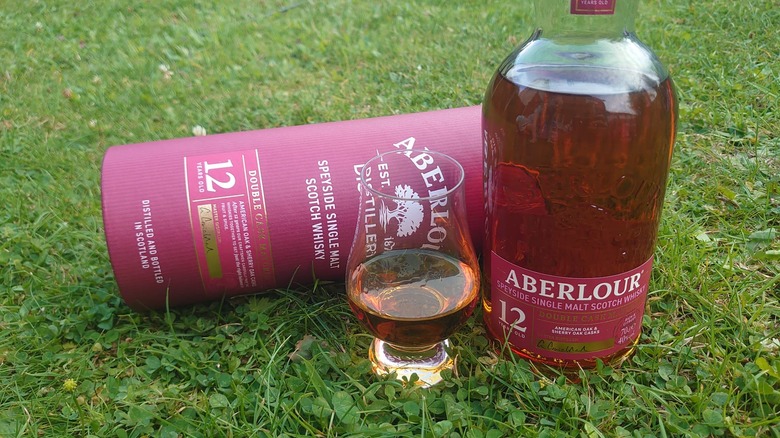
I was fascinated to read my colleague's opinion on The Macallan 12 Years Old as it echos my own sentiments. It's a perfectly fine Scotch that is beautifully elegant when sipped neat. However, you're left hoping for a little more character. Whisky shouldn't just be clean and pure; it should have depth and complexity. This may be a controversial opinion, but I often see casual drinkers thinking The Macallan is perfect whisky. If you're a true lover of this hallowed spirit, you should expect more, and Aberlour 12 gives you more. Whereas vodka should be clean and neutral, great whisky should tell a story.
The Macallan 12 shares many characteristics with Aberlour 12-year-old label. There is a sweet essence along with similar fruity notes. The Macallan 12 Years Old probably has a smoother and longer finish and is a decent value for its price point. However, Aberlour undoubtedly has more character. Personally, I feel brand recognition plays a part here. If Aberlour were as famous as The Macallan, then it could easily charge $30 or more for this whisky, and no one would complain. It's important to say here that all these opinions are relative to the price and competition. The Macallan 12 is an excellent whisky, but as I think Aberlour is cheaper and better, it easily wins this competition.
James Fleming had a huge influence on both the town and distillery
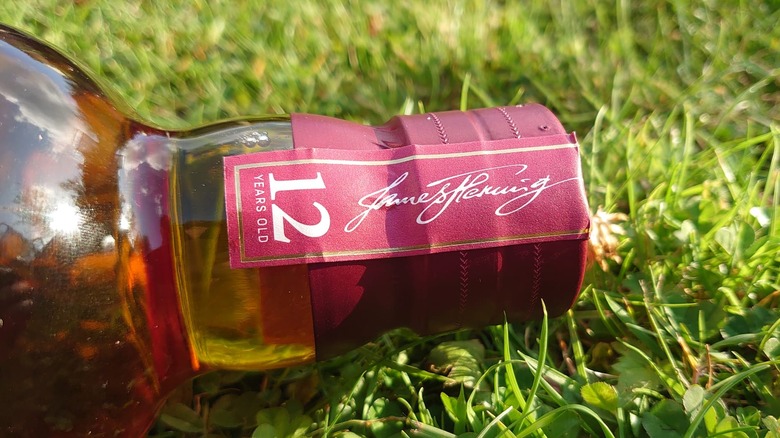
Aberlour wasn't James Fleming's first foray into the whisky industry, as he had previously owned the nearby Dailuaine Distillery for 10 years before moving to the town of Aberlour. The banker soon made an impression on the town, opening up a new banking branch before gaining prominent positions in the parish church, school board, and council. In 1879, he started building the new Aberlour distillery, but his influence on the town's history didn't stop there. He went on to build Aberlour's first town hall in 1889 and continued to make significant contributions.
He sadly passed away in 1895, but not before other acts of philanthropy. In his will, he left £500 towards building a footbridge over the River Spey. After some legal wrangling, this was eventually built in 1902. Along with this, he financed the Fleming Cottage Hospital, which opened five years after his death. The hospital still bears his name and continues to operate today under the National Health Service. Though James Fleming owned Aberlour Distillery for only 13 years, it's intriguing that it's his name that is adorned on the neck of the bottle. This is no doubt due to him being the founder of the distillery, but also a man pivotal in the success of Aberlour town.
The distillery is a leader in sustainability
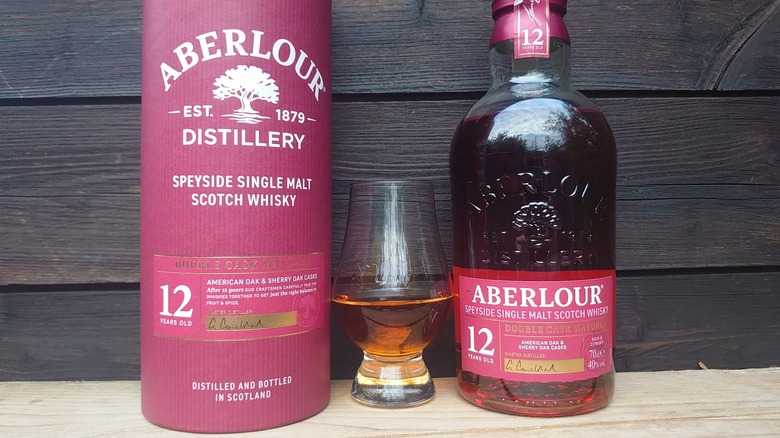
For a distillery in Speyside, getting local ingredients isn't difficult. You have a ready source of clean water available and plenty of barley farms around. So, while it's nice that Aberlour uses locally sourced ingredients, it's not unique in that respect. What is impressive is that Aberlour goes well beyond this. A part of that comes from the distillery operating on energy that is 100% renewable, either from wind farms or hydroelectricity. Added to this, its stills uses TVR heat recovery to maximize heat efficiency. There are other nice touches, such as repurposing used casks for planters and used malt (called draff) for animal feed.
The company is also a part of Pernod Ricard's Responsib'All Day, which aims for each employee to be an ambassador for social responsibility. What I find impressive about Aberlour is that these initiatives aren't aggressively marketed or easily found on its website. For some brands, the eco-initiatives can come across as performative as they tend to be concerned with looking like they care for the environment rather than actually caring for it. Aberlour seems to be happy to quietly go about its business as an elite distiller while caring for the environment.
It's now owned by the French giant, Pernod Ricard
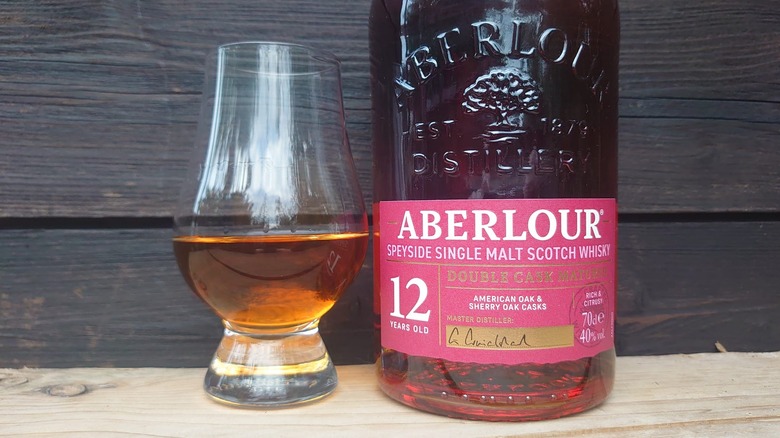
As alluded, Aberlour is now owned by French giant, Pernod Ricard. The company owns a huge number of liquor brands, with the most notable in the whisky industry being Queen Victoria's favorite, Chivas Regal, as well as The Glenlivet and Ballantine's. Though the running of Aberlour was taken over by Chivas Brothers Holdings in 2001, Pernod Ricard is still the parent company. This is not uncommon in the drinks industry. Sometimes a parent company will meddle with a distiller's operations; other times it lets it be autonomous. It seems from the outside looking in that it has been allowed to keep its independence.
Perhaps the biggest results of this has been Aberlour's soaring popularity in France where it's one of the country's top whiskies. This is far from a new partnership, as the French giant has been in charge of Aberlour since 1974. Pernod Ricard appears to be content to let Aberlour do its thing. With a company like The Glenlivet on its roster, it makes sense to have another whisky brand that is happy to stay at the size it is and keep its reputation for quality. Often, when distilleries or breweries get taken over, I get concerned that a drop in quality will soon follow. Pernod Ricard has long shown willingness to preserve the integrity of its brands.
It has some famous neighbors
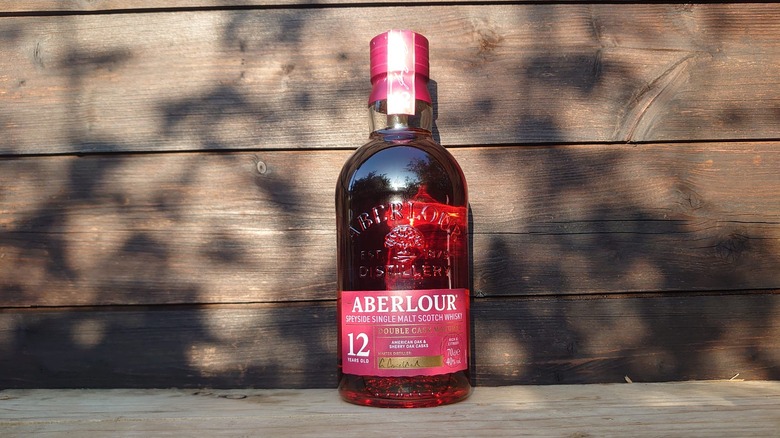
There are five main whiskey regions in Scotland, with around 150 distilleries across the country. Of those regions, Speyside is dwarfed in size by the Highlands and Lowlands. However, there are around 50 distilleries in this small patch of Scotland. There are a few reasons for that, mainly the beautifully clear waters of the River Spey, as well as the ideal climate for barley cultivation. All of this means that Aberlour has some very famous neighbors on its doorstep. In fact, if you take the A95 road starting at the Tormore distillery in the west, you would have passed by ten other distilleries before you ended your 10-mile journey to Aberlour. Unsurprisingly, that road roughly follows the river.
For whisky-lovers, the incredible collection of distilleries doesn't end there. Close by are also The Glenlivet, The Macallan, The Balvenie, and Glenfiddich. For those of us who love visiting distilleries, it's a feast of elite whisky production. Not all of these distilleries necessarily take water from the River Spey but use the springs and tributaries that feed into it. As with the limestone-filtered water that makes Kentucky the home of bourbon, this naturally filtered and soft water is ideal for making spirits. While there are always exceptions to the rule, this generally gives Speyside whisky more clarity and smoothness.