

6 Best Elderflower Liqueurs
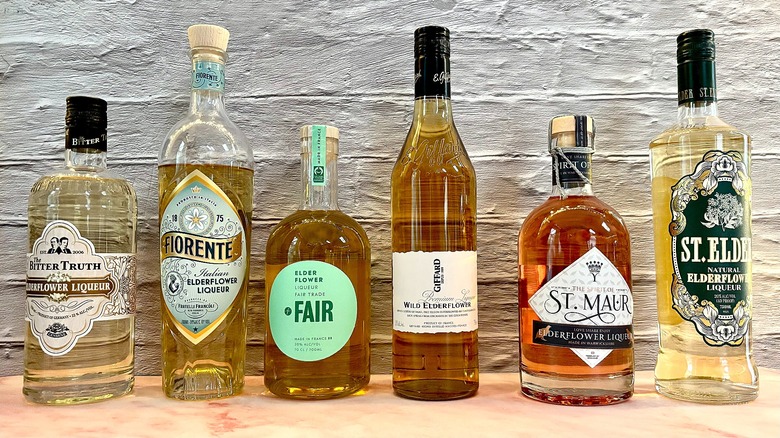
Elderflower seems to be a love-it-or-hate-it flavor. It's bright, floral, and somewhat fruity, so it has a distinct profile when compared to other aromatic ingredients. If you're unfamiliar with the flavor, my advice would be to grab a drink featuring elderflower and see if you like it before diving headfirst into the ingredient. If you do like the particularities of elderflower (and you happen to enjoy imbibing on occasion), you're in the right place — we are one and the same, and it would be beneficial to us to pay elderflower liqueurs some more attention.
I've been a fan of the flavor for quite a while, and my introduction to its use in the spirit world came from what's still one of the best bottled drinks I've ever had: On The Rocks' Lemon Drop Martini. It helped that I love lemon drops in general, but this elevated version (enhanced with elderflower liqueur and basil) presented everything I didn't know I needed in the cocktail. Since then, if a drink lists elderflower liqueur as an ingredient, you can bet I'm going to buy it.
When I found myself fiending for the flavor at home, I couldn't resist finding the best elderflower liqueurs I could get my hands on. I tried six bottles, each of which was stunningly different from the last, and each of which will appeal to a different type of consumer. Had I tried any and found them lacking, they wouldn't have made this list; as it stands, this roundup features a suitable selection for anyone to choose from.
Some recommendations are based on firsthand impressions of promotional materials and products provided by the manufacturer.
St. Maur
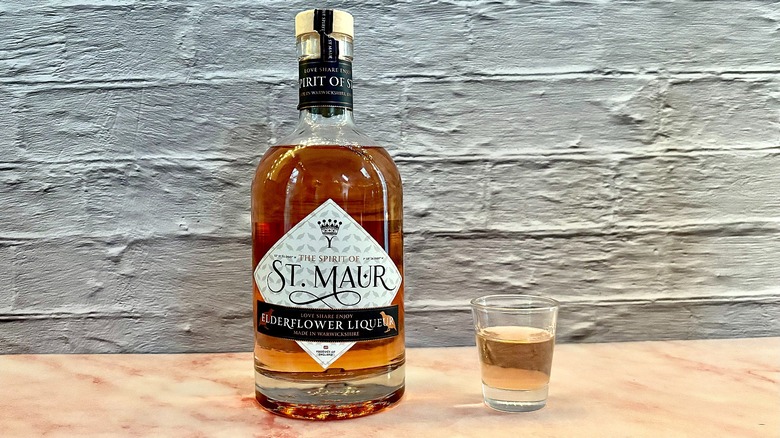
St. Maur hails from England, and you'll only find one spirit in the company's repertoire: elderflower liqueur. Since it's the brand's sole focus, it comes as no surprise that this is an offering to be reckoned with. It's won many awards, and I'd have to agree with the judging panel at the World Liqueur Awards, which described St. Maur as "an outstanding drink that is versatile and close to perfection." Were I giving the bottle a superlative, it probably would have been named "Sweetest" (though it's not overwhelmingly so) or "Most Elegant."
Because I have a particular fondness for everything pink, St. Maur's selection was immediately appealing. The liquid in the bottle has a lovely rosy hue, which pales a bit when pouring it into a shot glass; regardless, it's simply gorgeous to look at. On the nose, the drink is very floral with definite alcohol notes — it's reminiscent of a nostalgic candy, but for the life of me, I can't put my finger on exactly which one.
Upon sipping, it's very bright, obviously floral, and sweet enough that you may want to adjust the amount of simple syrup you're adding to your concoction (or just eschew simple syrup entirely in favor of this syrupy elderflower liqueur in your drink). The fragrance sits on my soft palate in a delightful way, and though it skews on the gentler end in terms of burn, the elderflower is unmistakable. It feels (and looks) sophisticated and could clearly elevate any drink effortlessly, like a boozy elderflower peach punch.
Fiorente
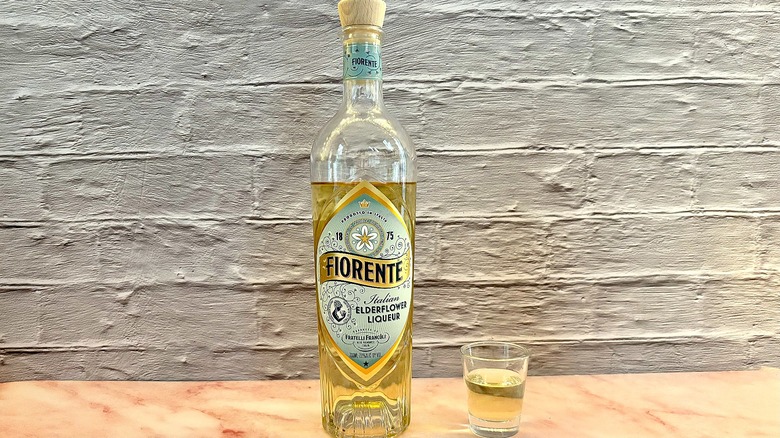
Similarly, Fiorente has honed all of its skills into perfecting the elderflower liqueur. Its bottle, which is lower in sugar content than many comparable offerings, is made in Italy utilizing wild elderflowers. The company rounds out the profile with the inclusion of mint, lemon, and lime, all of which make for a truly stunning entry in the genre. Moreover, the distillery gets bragging rights as far as its location — nestled near the Alps and close to lakes Maggiore and Orta, it benefits from the practically unbeatable local air and water quality.
It's worth noting that I tried all these liqueurs in the order in which I'm talking about them. I only mention this because Fiorente was starkly different from the last — enough so that I knew it wouldn't be fair to compare the two. Where the nose of St. Maur's was sweet and flowery, Fiorente presents as far more herbal on the nose (which makes sense now that I know about the mint, lime, and lemon infusions). I love this bottle. It tastes sweeter than it smells, and the infusions come through primarily aromatically rather than imparting any strong tasting notes to the liqueur. I could easily drink this straight (and, to be honest, I probably will). It's a well-rounded offering that would taste exceptionally good in a jazzed-up mojito, Moscow mule, or a simple spritzer — or, you can go the extra mile and use it in an adult-ified strawberry elderflower fruit fool.
St. Elder
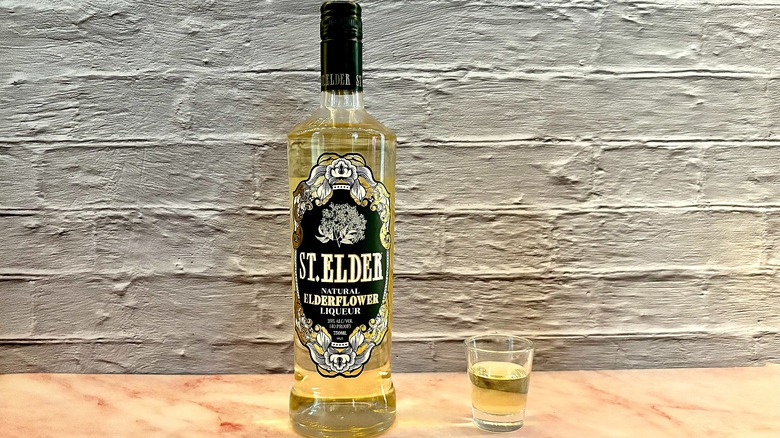
Up next is St. Elder's Elderflower Liqueur. This bottle is perhaps the company's most well-known offering, but it's not the only one in its oeuvre; also included are an espresso liqueur, a tantalizing grapefruit liqueur, a blood orange liqueur, and a hazelnut one. All are tempting, but only the elderflower is of consequence today. The small-batch liqueur is made from elderflower blossom extract, and the company claims notes of floral honey and sweet citrus in the bottle.
If you prefer your liqueurs on the stronger side, this is the bottle I would recommend. The nose presented with heavy alcohol notes at the front, while floral notes floated in more subtly. I thought this might burn quite a bit from how it smelled; fortunately, I was wrong. It went down much smoother than anticipated, but still had heavy alcohol notes toward the front of the sip. Once that washed away, though, I was left with a beautiful floral flavor coating my entire mouth. It kept me salivating (and yes, I took more than one sip). A little bit goes a long way with this bottle, and it doesn't hesitate to make itself known. I probably wouldn't use this in a simple spritzer, but it will be an easy choice when I need elderflower to hold its own in weightier cocktails or something that's supposed to be stronger by nature, like an elderflower pear martini.
Fair
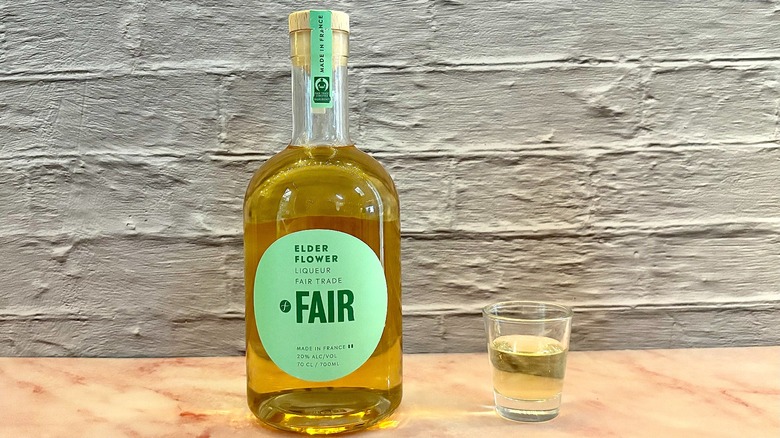
Fair's aesthetically pleasing lineup is by no means exclusive to elderflower, but rather includes a range of uncommon liqueurs that will bring out the mixologist in any consumer. I mean, come on — have you ever tasted a bottle of passion fruit, chipotle, kumquat, or açaí berry liqueur? Aside from being seen as pioneers of a new genre, the company can also boast being Fair Trade Certified. If you want to make sure that drinking good also means doing well, this is a brand you should get to know.
Want to make an elderflower margarita? Reach for Fair's Elderflower Liqueur and you won't be disappointed. On the nose, this smelled bright and like a light, crisp white wine. As a wine lover, I found this particularly endearing. Taking a sip of the liqueur didn't disappoint. It was a very strong liqueur and tasted winey as well, and was probably the driest elderflower liqueur on this list. If you want to add elderflower essence to an already sweet drink or you just don't love your cocktails sweet in general, this is the pick for you. It's ideal for drink purists who want to incorporate elderflower without messing with the proportions of an already-perfected recipe; plus, as with the previous bottle, a little bit will go a long way here.
Giffard
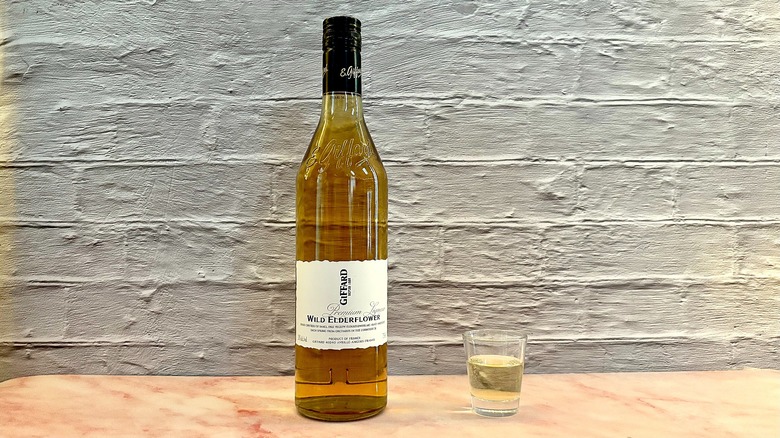
You may very well have seen the Giffard brand on shelves at your local liquor store; it seems to have a fairly wide reach, and its range of spirits encompasses everything from triple sec to creme de cassis and even banana liqueur. Then, obviously, we have the company's elderflower offering. The deep golden-hued spirit claims notes of saffron, licorice, and lychee, with a deep bouquet of a multitude of fresh flowers. I can confirm that this spirit goes beyond your standard elderflower offering; as such, I think it carves its own niche here.
This bottle, again, was very winey on the nose — but where the last was light and crisp, this was deep, fruity, and almost buttery. A small tasting revealed it to be the most potent liqueur I'd had so far, and it did indeed taste like a rich, thick floral wine. It was slightly drier and less syrupy than some of the other entries on this list, and though it had a relatively thin mouthfeel, it coated the entirety of my mouth with a deep, aromatic blossom flavor. Sipping this is an experience in itself, though I can see it being divisive — elderflower loyalists may think this veers too sharply from tradition. If you want a bottle that goes out of its way to enhance the typical elderflower profile, this is an easy pick.
The Bitter Truth
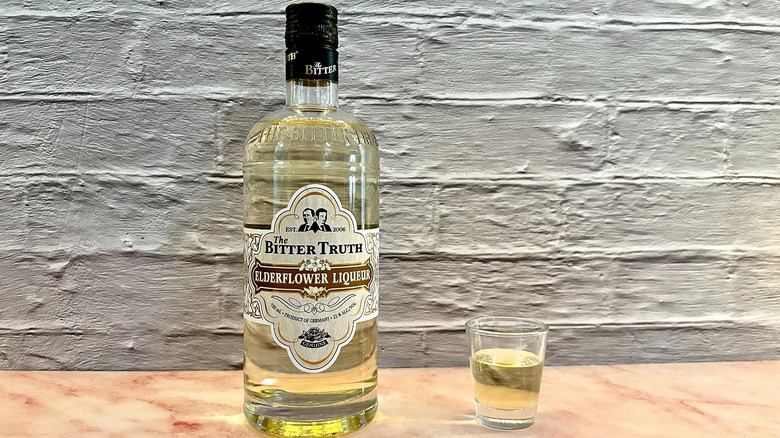
Last but certainly not least, The Bitter Truth swoops in to present what might be the strongest, purest elderflower liqueur in this lineup. As its brand name would suggest (and yes, the company also specializes in bitters), this aperitif-style summer liqueur holds nothing back in its flavor profile; while elderflower is the dominant note, it's supported and lifted by complementary hints of light herbs and fresh grapes. It's worth noting that I fully intend to also get my hands on a bottle of the Violet Liqueur — I suspect using the two in tandem would render me speechless.
The nose of this bottle is subtle and floral, without any of the herbaceous, sweet, or winey notes that set some of the others apart; as such, it seemed to smell the most purely of elderflower. I was surprised when sipping it revealed that it was far stronger than some others present here. It tasted like the company somehow found a more potent elderflower, in that it just presented much more of the floral note. That said, it sat in the back of my throat with a slight bitterness, but I won't count this against it. If I wanted to make an uncomplicated drink that wasn't sweet but still boasted a mighty elderflower flavor, this would be the bottle I'd reach for, and I think those looking for an unadulterated elderflower taste would appreciate it equally.
Methodology
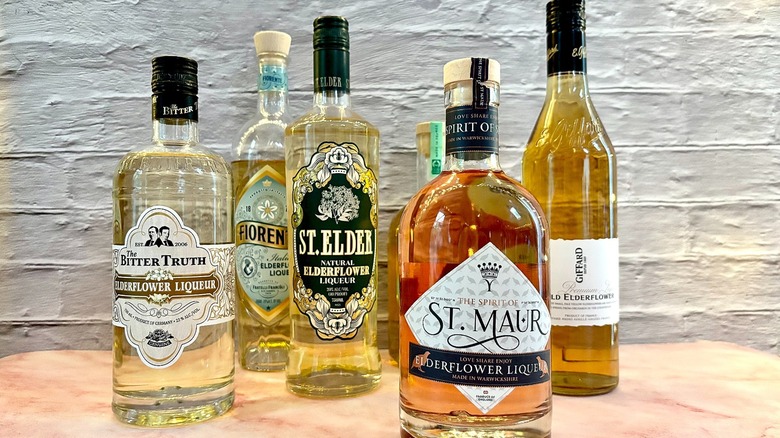
To compile a list of the "best" elderflower liqueurs, I got my hands on several popular brands that are well-regarded in the space and sampled each straight. In order to qualify, each had to have a pleasant (if not overtly floral) nose, with clear elderflower notes and not too much of an alcohol burn. It was somewhat surprising to find such a variety of flavors among the bottles — having had them, if given one blind, I feel fairly confident I could identify which brand it was. That's part of why we chose not to rank these liqueurs. I think each will be suitable for a different consumer, so calling one "better" or "worse" than the next would be a disservice to its singular characteristics.