

How To Store Olive Oil Cake For Maximum Freshness
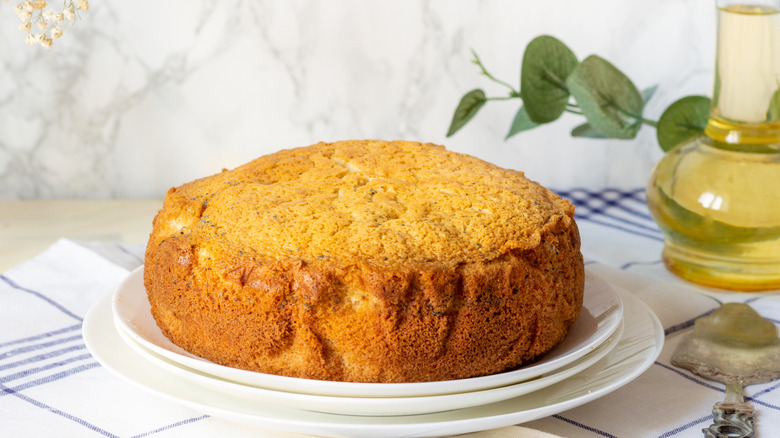
Full of complex, grassy, fruity notes, olive oil cakes are a must-try for lovers of sophisticated desserts. Still, uncertainty about storage and prep could make a home baker apprehensive about tackling this type of dessert. Never fear — not only are most olive oil cakes uncomplicated to make, but they can be stored much like cakes made with butter or vegetable oils.
Whether you're baking a dark chocolate olive oil cake or an olive oil polenta cake, these sweets usually use a simple batter. The oil does most of the work in terms of flavor and moisture. At room temperature, oil-based cakes also stay soft and fresh longer than butter-based ones. Store a plain olive oil cake in an airtight container or wrapped tightly in plastic, and it will retain peak quality for about four days. Past this point, the crumb will start to dry out, though it will likely be safe to eat until it begins to smell strange or grow mold.
Want your cake to last longer? Refrigeration can be tempting and will keep the dessert safe to eat for five to seven days. However, the fridge's dry environment can suck the moisture out of cakes and make them taste stale, and other foods stored inside might transfer their odors to the delicate crumb. If you really want to refrigerate it, wrap the cake in multiple layers of cling wrap in addition to storing it in a container. In most cases, a better option is to freeze it.
More storage tips for olive oil cake
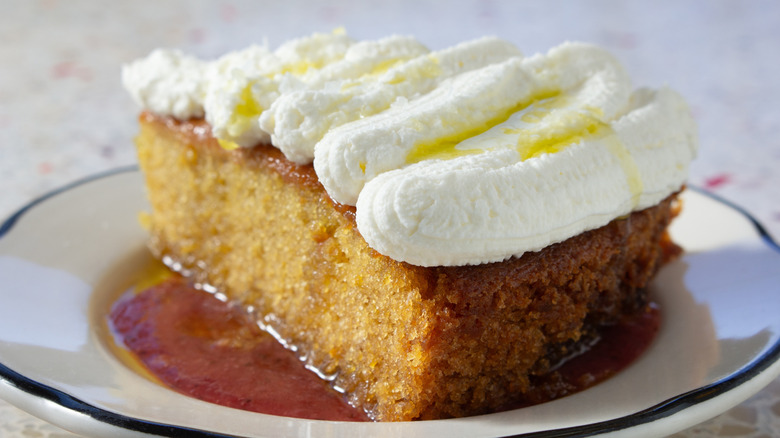
Whether it's freshly-baked or left over, freezing a cake is the absolute best way to preserve its taste and texture. Before you prep your olive oil cake for cold storage, make sure it's fully cooled. You can slice it up if you want to conveniently defrost single servings, or leave it whole to decorate and serve down the line. Cover the cake in at least two layers of plastic wrap followed by a layer of aluminum foil. If you can spare some extra freezer space, lock it in an airtight container as well.
Olive oil cake can remain at its best for up to three months in the freezer. To defrost it, you can leave it in the fridge for a few hours or let it sit out on the counter to speed things up. As long as you eat the cake soon after its stint in the fridge, it shouldn't suffer any staling.
These storage rules might change a bit for a filled or frosted cake. If it contains dairy-based ingredients like custards, curds, buttercream, or cream cheese frosting, leftovers should be refrigerated at all times. At room temperature, the dairy will start to melt and eventually spoil. Cakes with fruity fillings or toppings should also go straight into the fridge. With storage down pat, all you have to worry about now is grabbing the best type of olive oil to use for cake.