

Cast-In-Place Vs. Precast Concrete Countertop: Which Is Better For Your Kitchen?
We may receive a commission on purchases made from links.
There's that common phrase, "there are no wrong answers," but, ironically, that's rarely true. It is possible to make your life harder — hence the hot debate between cast-in-place and precast concrete countertops. Kitchen renovations are costly already; nobody wants disappointing results and expensive fixes.
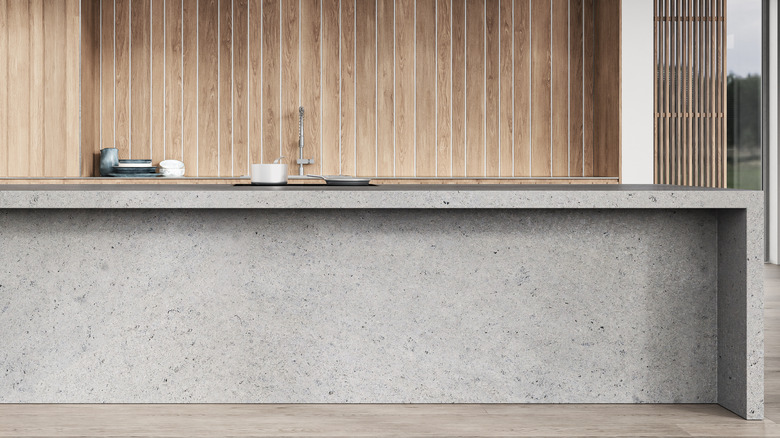
So, which is better for your kitchen? First, understand the primary difference: concrete is poured on site for cast-in-place, while precast is poured off site. Learning how to pick the perfect countertop material for your kitchen is never easy. However, in this scenario, there's an obvious choice right off the bat: precast is neater. Cast-in-place is typically used in "sloppier" jobs, like basement walls and foundations, where there's an emphasis on avoiding transporting large components. If visual appeal matters? Most customers should stick to precast for better quality assurance.
Customizability is the main benefit that sways homeowners towards cast-in-place instead. Despite the mess that pouring on site incurs, its adapt-as-you-go approach makes it easier to select that all-important finish. Are you envisioning troweled or polished countertops? And how complex is that design plan? If you're feeling brave, cast-in-place is sometimes worth the risk.
What to expect post-installation?
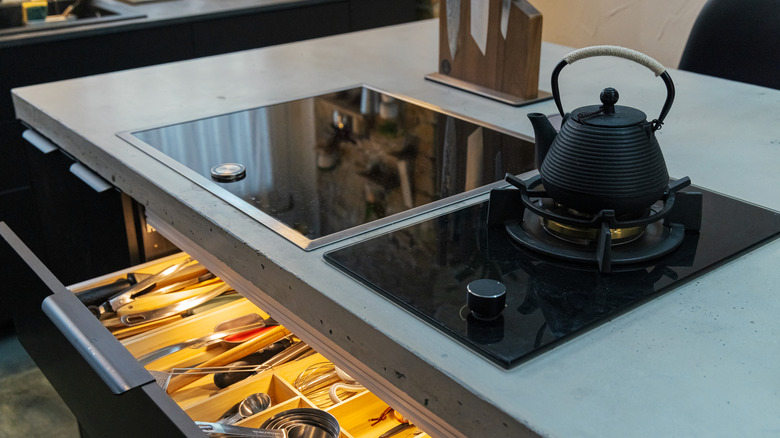
As every seasoned homeowner knows, installation is only the beginning — all kitchen countertop materials demand maintenance. Yet, in this scenario, once either type of concrete is installed, the actual upkeep is similar. The only difference is that precast is stronger; cast-in-place might need extra TLC.
Small sensitivities aside, let's look at general requirements. The biggest consideration is annual sealing; don't install a concrete kitchen countertop before considering this maintenance cost. Fortunately, there are moderately-priced options available online, including Rain Guard Water Sealers and CLARK'S Stone and Concrete Wax (scented with orange and lemon extract). It's possible to seal concrete countertops for under $40 per year. In terms of everyday cleaning, keep a packet of pH-neutral wipes handy. Prevention is always better than emergency scrubbing or scratch repair, so invest in chopping boards you'll actually use. It's wise to be prepared, though; a material-specific stain remover or filler, like Red Devil Concrete Repair Patch, saves scrambling for products in a pinch.