

15 Meals You Probably Ate If You Were Middle Class In The '90s
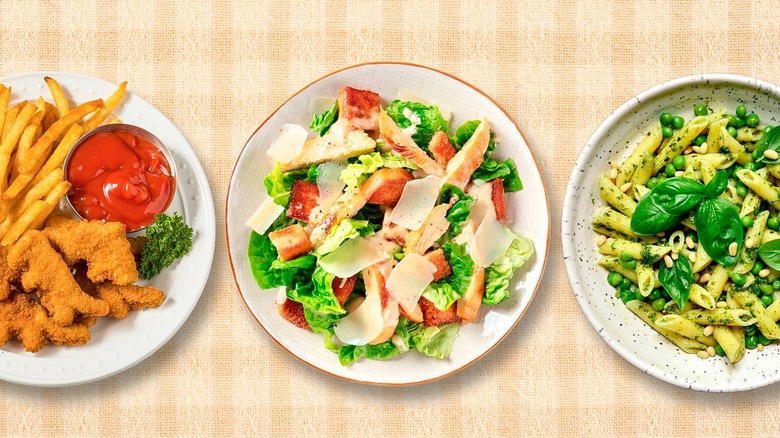
Global cuisine, Italian flavors, and the Atkins Diet: welcome to the '90s, when both frozen foods and fresh ingredients experienced a surge in culinary popularity. It was also a prosperous time for the middle class — a somewhat dubious category these days. There was a strong demographic of working families who were looking to save time and money, but would go for an occasional night out to dinner that, as a kid, felt like the most exciting meal of all time. Middle-class families would spring for convenient and kid-friendly frozen foods and other prepared meals, but the '90s kids of the household would still likely have to sit down for a chilled soup or Mediterranean-inspired salad.
Whether you grew up dreading or begging for these meals, they were everywhere: on cooking shows and restaurant menus, in the frozen food aisle, and in your home kitchen. These are dishes that bring back days of rollerblading, Full House, U2, and yeah, probably way too many pizza rolls.
Stuffed crust pizza
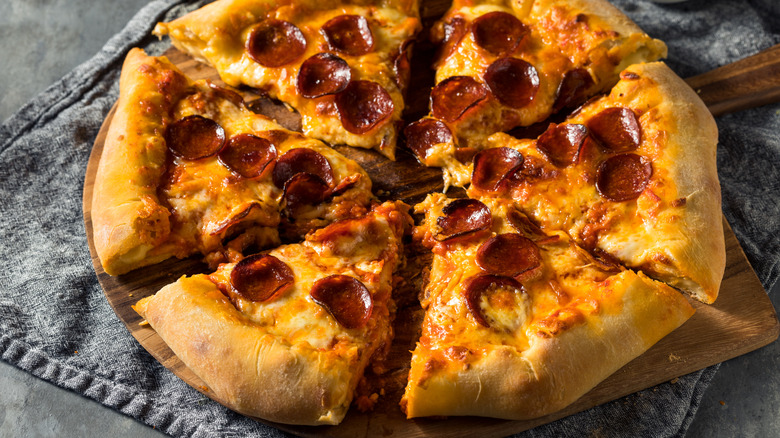
The actual inventor of stuffed-crust pizza is up for debate, as one Brooklyn man first made and patented the concept in 1987. He claims that Pizza Hut stole his idea and even sued them, though the lawsuit was unsuccessful. No matter who came up with it, Pizza Hut's rollout of stuffed crust pizza in 1995 (with a commercial featuring Donald Trump) started a cheesy phenomenon.
Not only was the product's promotion campaign a success, but it also became one of Pizza Hut's most well-known offerings. Stuffed crust pizza became a must-have menu option at pizzerias everywhere. Not long after, the novel invention was adapted into frozen grocery store versions. More than just a food, it is a cultural phenomenon that feels like an authentic relic of the times. Many a '90s parent, after a long day of work, would relent to the kids' pleading and spring for delivery — it's a carb-loaded slice of nostalgia.
Lunchables
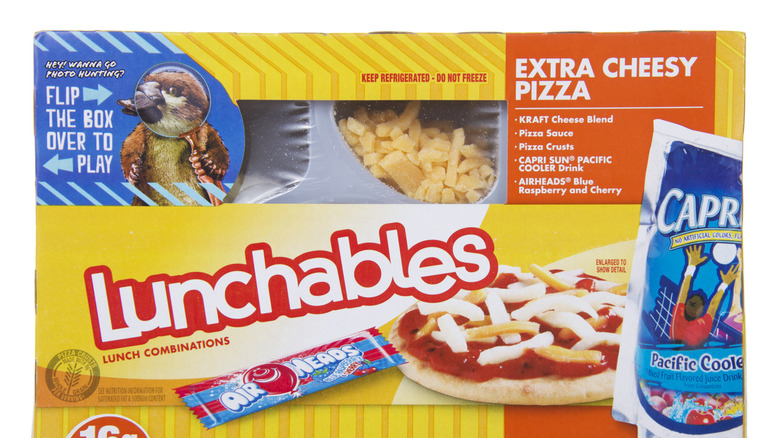
Looking at Lunchables today, with its somewhat slimy bologna and sad little pizza crusts, it is hard to picture the kind of "cool factor" that Lunchables had. But its cachet in the cafeteria in the '90s was almost like a fashion accessory. The yellow box, often adorned with characters from the latest popular TV show or movie, was seemingly everywhere.
Though the food itself — sodium-packed lunch meat — was nothing to write home about, its packaging and marketing made it highly desirable for kids. Lunchables also came with a juice pouch and a piece of candy, which could feel like an absolute feast for elementary schoolers.
It was not just marketed to kids, either. It was pitched as an easy solution for working parents who did not have the time to pack a school lunch. They were relatively expensive, however, making them more of a middle-class-and-up lunch or occasional treat.
Caesar salad
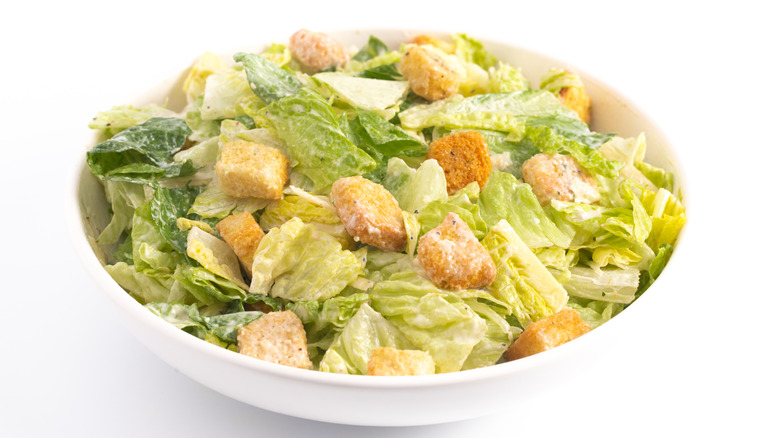
The '90s were a time with some very opposing food trends. While the sodium bomb that is Lunchables and the over-the-top, decadent stuffed-crust pizza were flourishing, it was also a time when "fresh" and "low-fat" cuisine were on the rise. Caesar salad, in some ways, is a perfect example of the two colliding. The salad was first invented in the 1920s in Tijuana, Mexico, and gained popularity as a restaurant order in the 1950s. However, in the late 1980s, the salad experienced a huge comeback.
Caesar salads, made with lettuce, cheese, croutons, and a rich dressing, are definitely not a healthy choice — a meal-sized chicken Caesar salad has more calories than a Big Mac. But it was ticking all the trendy boxes in the '90s. It was a side that seemed to be on every plate, and easily turned into a meal with the addition of chicken or other proteins. Caesar salads were inescapable at big family dinners or a night out.
Dino nuggets
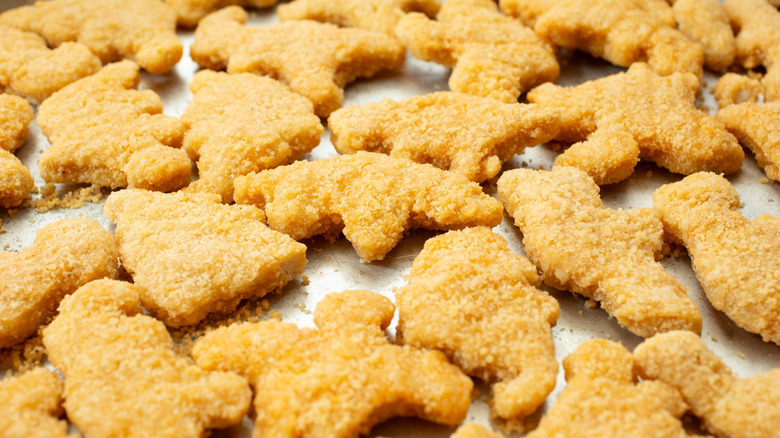
Dinosaur-shaped nuggets have a somewhat confusing origin story. Perdue Farms Incorporated held the original patent for the dinosaur shape, but they were also making many different novelty nugget shapes at the time. There's no definitive explanation for what made the dino nugget specifically blow up in the '90s, but it certainly may have something to do with the release of the Jurassic Park movie in 1993. In fact, dinosaurs were kind of everywhere for '90s kids. The Land Before Time was another dinosaur franchise that was having its heyday.
Whatever the reason for the skyrocketing popularity of dinosaur-shaped chicken nuggets, it seemed like endless brands were selling their own frozen variety. The novelty of their shape enticed even the pickiest eaters, and they were a ubiquitous Saturday lunch or after-school snack. You can still find yourself some dino nuggets in most grocery store frozen aisles, but they just don't taste the same when you aren't eating them in front of a rabbit ear television.
Asian chicken salad
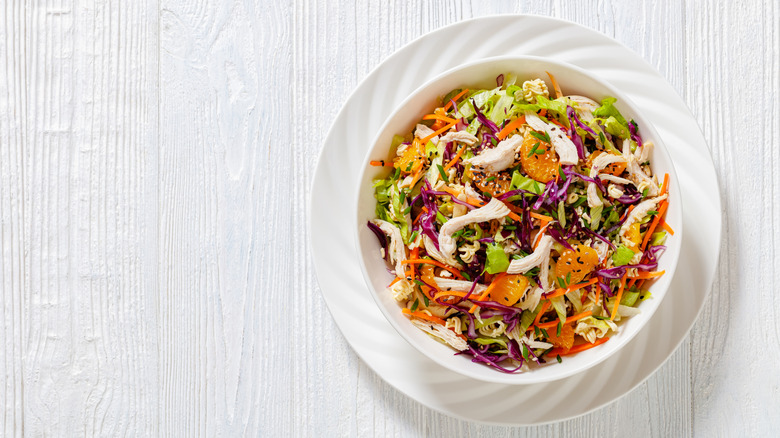
LA restaurant dish turned nationwide sensation, the vaguely named "Asian chicken salad" was ubiquitous in the '90s. Likely first served up by Sylvia Cheng Wu (aka Madame Wu), a cook for Hollywood stars, it gained popularity after various celebrity chefs, including Wolfgang Puck, put out their own versions. It is typically a combination of shredded chicken, cabbage, fried wonton strips, and mandarin oranges, topped with a sesame vinaigrette. There are plenty of variations, though, because its namesake does not really mean anything in particular, or call upon a specific country's cuisine.
Nevertheless, it was a big hit in the fusion-food-loving '90s, and since it was chicken and technically a salad, it was seen as a fresh and healthy option. It ended up on the massive menu of the Cheesecake Factory and other popular restaurant chains, feeding families everywhere. To this day, you can still purchase an Asian salad kit in the vegetable aisle of the grocery store.
Fajitas
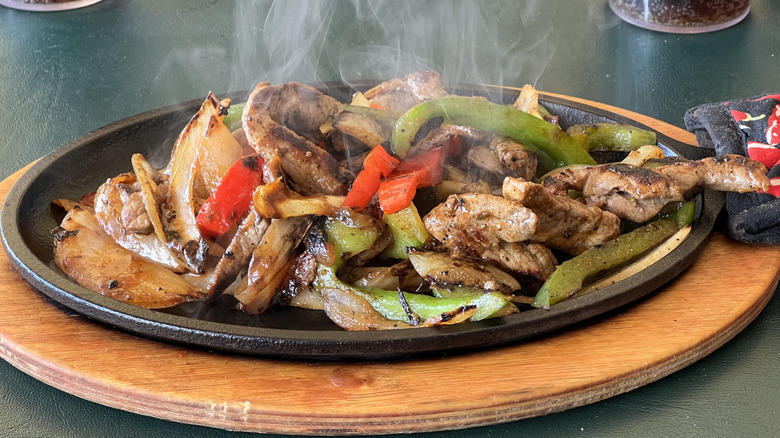
The origin story of fajitas begins in the early twentieth century in the Rio Grande Valley, where it originally referred to a cut of meat, not a dish. Fajita, meaning "little belt," was the term for skirt steak. Skirt steak was grilled, wrapped in a tortilla, and served with salt. By the 1990s, these humble origins were completely out the window.
Sizzling platters of various steak cuts, accompanied by vegetables, were massive hits in family restaurants and hotels. Taco Bell and McDonald's began selling fajita wraps, which became mainstays for the chains (neither currently offers them). These wraps were not made with skirt steak, and many weren't made with steak at all; a fajita was now made with chicken, shrimp, vegetables, or really anything. They were a crowd-pleasing meal, and grocery store "fajita kits" made them an easy family dinner option, too. You can still easily find yourself a fajita platter, but its '90s heyday has long since passed.
Chocolate lava cake
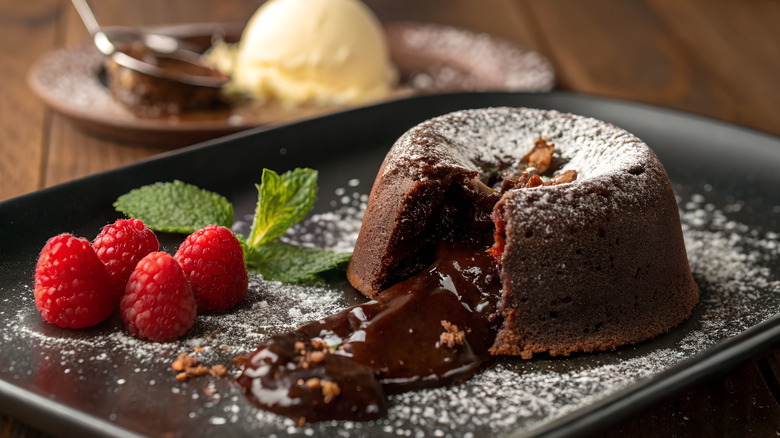
Like many '90s food fads, chocolate lava cake first got attention as a dessert in upscale city restaurants. It is easy to see its appeal: cutting into a decadent chocolate cake and discovering a rich, gooey center feels like gastronomic magic. Tableside showstopping meals at exclusive restaurants were very popular in the '90s. It also had a romantic quality, making it a classic '90s dessert for Valentine's Day or anniversary dinners.
From its beginnings in fine dining, chocolate lava cake trickled down from there. It became a staple at family-friendly restaurants like Chili's, the kind of place where a middle-class family could occasionally go out for a treat. By the early 2000s, its ubiquity meant that it had lost its shiny, exclusive air that had made it so popular in the first place. However, it remains a dessert that most kids would be happy to see on any menu.
Anything with sundried tomatoes
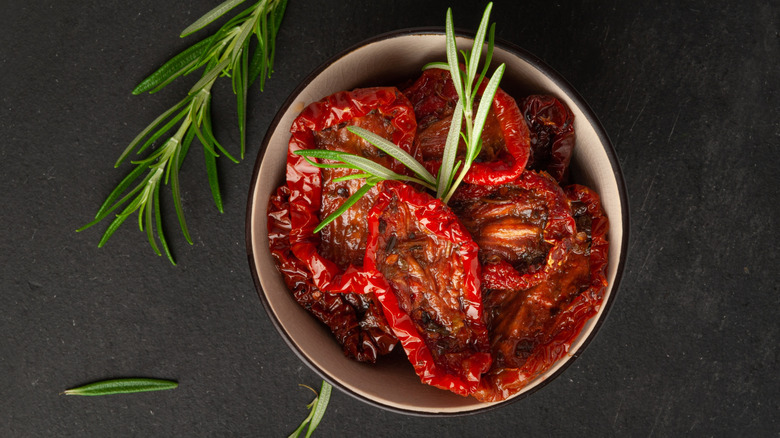
Italian food has been popular in America since Italians began immigrating in the 19th century, but the 1990s ushered in a surge of Italian products that found their way onto nearly every menu. The rise of Olive Garden at the time was no fluke. Italian cooking — at least, a particular interpretation of it — was a massive food trend. Several extremely popular cookbooks on Italian cooking were published early in the decade, and many a '90s home kitchen had at least one of them on the shelf. One of the most iconic ingredients that became ubiquitous at the time was sundried tomatoes, like, in everything.
Sundried tomatoes in pasta, on toast, in a sandwich, on a pizza, swirled in a dip — it was seemingly added to almost anything. It makes sense that people were so taken with it; after all, sundried tomatoes are deliciously sweet and savory. A jammy sundried tomato adds a flavorful punch with minimal effort. Plus, it was just so European. Which, of course, means it's classy.
Gazpacho
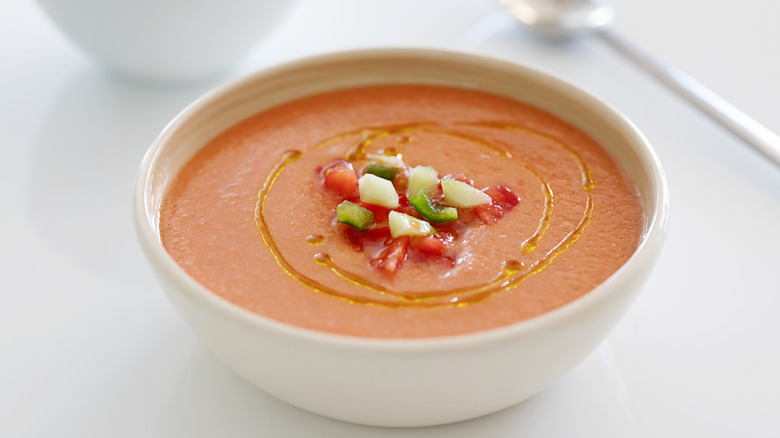
Another European export, this cold, tomato-based soup was ubiquitous in the 1990s. It fit squarely with many '90s food trends; it was fresh, nutritious, Mediterranean, and relatively simple. In this golden age of food television, enviable hostesses and home chefs were showing off beautiful table settings and delicate dishware filled with chilled soups, such as gazpacho. It had something of an upscale air about it, which can't be said about most soups.
Ironically, the simplicity of the soup contributed to its popularity, and this popularity led to seemingly endless variations and additions to the gazpacho. In the '90s, you'd order gazpacho and could be handed something smooth or chunky, featuring peppers, watermelon, or cucumber. It might have included pureed bread. Maybe it would be topped with mint or basil. It was a chilled soup free-for-all. Parents everywhere were ladling out mugfuls of gazpacho on hot summer nights, so it's a fond memory for lots of kids of the '90s.
Pesto
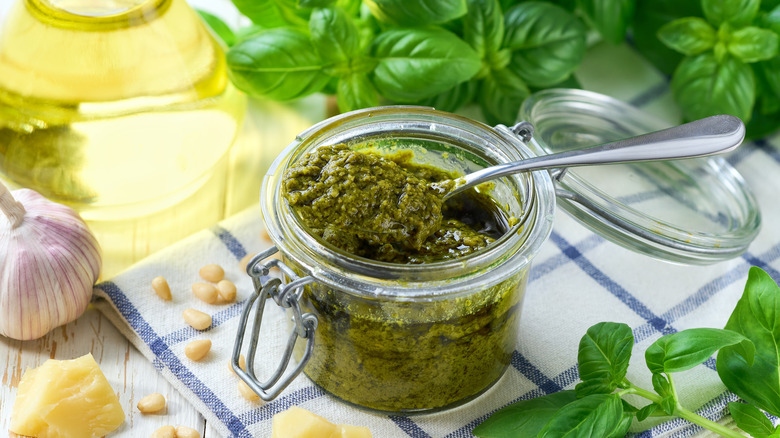
Like the sundried tomato, pesto Genovese shot to the forefront of American home cooking in the 1980s and 1990s as Italian cuisine became all the rage. In fact, they were quite often paired together in pasta dishes and sandwiches. Today, pesto is a run-of-the-mill staple that can be purchased jarred or refrigerated almost anywhere. In the '90s, pesto was a specialty food, considered an import from the old country.
The vibrant green sauce is a relatively simple combination of Parmesan cheese, basil, pine nuts, garlic, and olive oil. Still, its simplicity was what gave it mass appeal and seemingly endless uses. First popping up in specialty markets, it was a spoonful of authenticity. Soon, it was everywhere: paninis, pastas, chicken dishes, dressings. Pesto was a common ingredient, appearing on restaurant menus and at potluck tables, where it was often featured as a dip or sauce for various party dishes.
Sushi
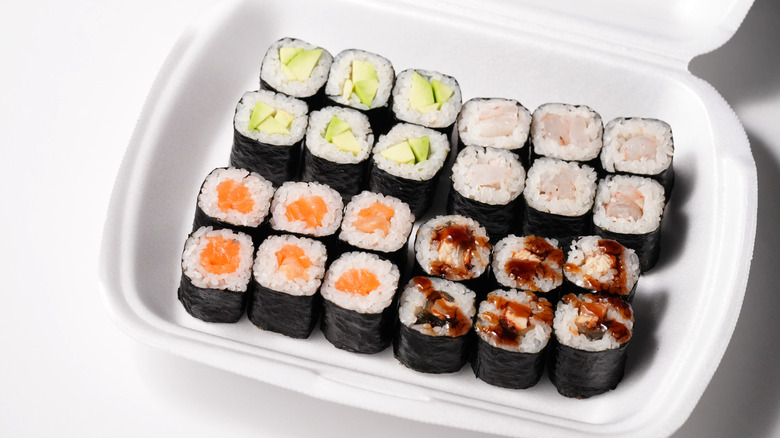
Sushi emerged on the Western scene as a dish for the cultured and wealthy in the 1970s, but it gained widespread popularity as a household name in the 1990s. International cuisine became mainstream trendy, and sushi was perceived as both healthy and classy. It appeared in shows like Sex and the City, where the glamorous characters could be seen eating sushi rolls while dashing around Manhattan.
Though it had certainly become trendy, it was still a food that was relatively expensive and unfamiliar to most Americans. It would have been a treat to get sushi, certainly a departure from the usual Pizza Hut order. But eventually, sushi rolls became available in grocery stores. This made it something that your parents could pick up as easily as boxed macaroni and cheese. Sushi lost its exclusivity, but it became something a family could eat together at home. The California roll, being free of raw fish and therefore more palatable to Western tastes, was especially popular.
Pizza rolls
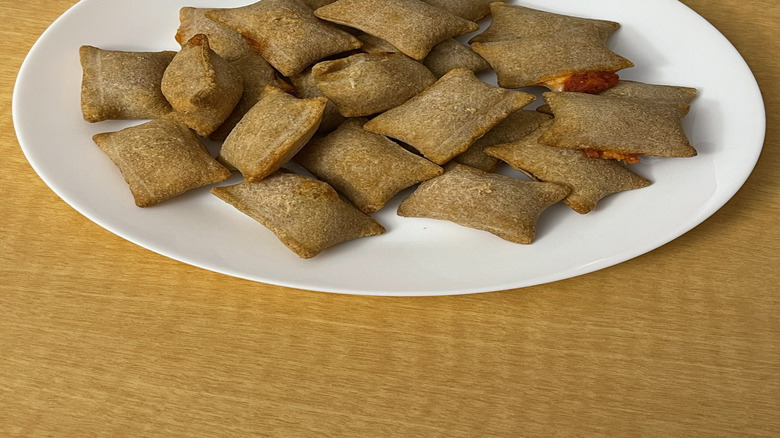
Pizza rolls were a stroke of genius of the microwave age. They were created in the 1960s when the owner of a frozen Chinese food company put pizza toppings inside an egg roll wrap. The kind-of-fusion product was popular upon its release, but when it was sold to Pillsbury in 1985 and then rebranded as Totino's Pizza Rolls, that popularity reached a whole new level. Kids and parents alike were bombarded with endless commercials for the bite-sized snacks, which fit perfectly into the pizza-obsessed, novelty-driven frozen food world of the '90s. It was another food that successfully targeted busy working families by appealing to parents' needs and kids' palates.
Commercials for the product depicted a pretty realistic scene: kids coming home from school, heating up an impossibly large bowl of the stuff, and sitting in front of the TV. No sleepover in the '90s was complete without pizza rolls and a movie. You can still throw some Totino's pizza rolls in the microwave nowadays, but don't be surprised if they don't taste as good as you remember.
Pork chops
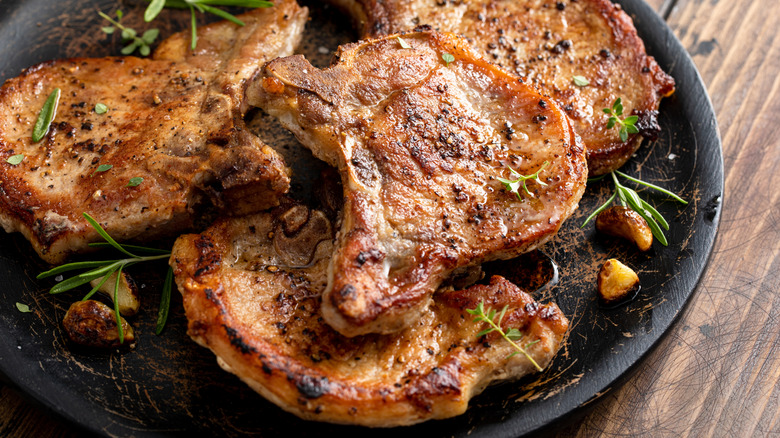
Okay, pork chops weren't invented in the 1990s. But the dish had a bit of a moment during that time. The pork industry made a big marketing push in the '90s. It was given the famous tagline of "the other white meat," suggesting that it was a meat that was as lean and healthful as chicken. Already an inexpensive and relatively straightforward cut of protein, the idea that pork chops were also a light and nutritious option made them a staple in home cooking for families. In keeping with other trends of the decade, cooking shows and books started churning out international and fusion dishes featuring the meat.
But there's something less glamorous that defined those '90s pork chops for a lot of kids: it was dry. Trichinosis outbreaks early in the decade had families cooking pork for as long as possible, making for some very tough, chewy, flavorless memories for '90s kids.
Teriyaki everything
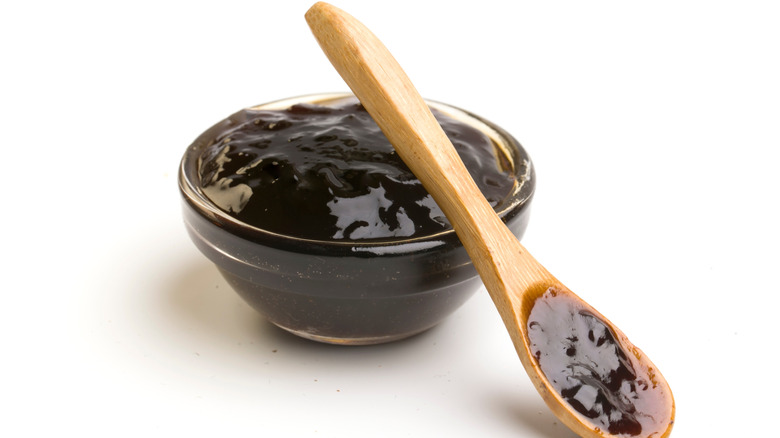
Teriyaki is a Japanese dish that involves grilling meat that has been marinated or glazed with a sweet and savory sauce of the same name. Japanese immigrants introduced teriyaki to the U.S. in the early twentieth century, where it gained particular popularity in Hawaii. But in the '90s, teriyaki became a bona fide food trend. Seattle became a hub for teriyaki dishes, and the regional fad spread like wildfire. It was perfect timing for teriyaki, as its international origins and deep-frying-free preparation meant it was perceived as light and modern. It's sweet, salty, and sticky, and its flavor profile was the right combination of novel and familiar for Westerners at the time.
Teriyaki flavors then infiltrated the fast-food world in the form of dipping sauces, salad dressings, and wraps. Teriyaki sauces, condiments, and marinades became ubiquitous at the grocery store, so a bottle of teriyaki something-or-other was in practically every middle-class family's fridge.
Edamame
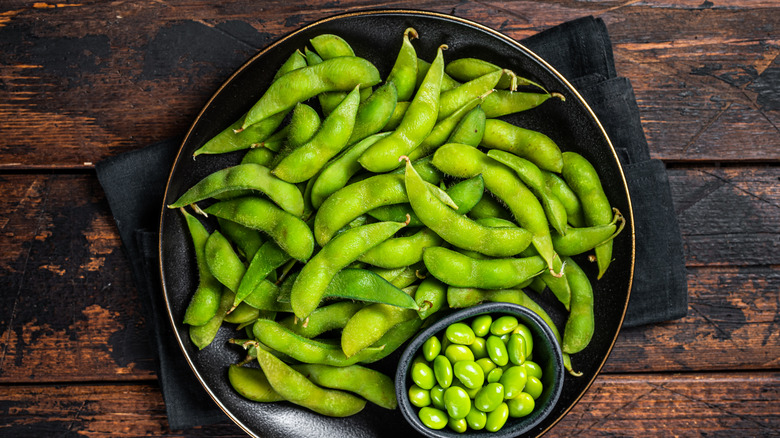
Edamame gained popularity in the 1990s due to its position at the intersection of two significant food trends: low-carb diets and Japanese cuisine. Edamame, also known as fresh soybeans, are often served as an appetizer at sushi restaurants. When the popularity of sushi skyrocketed, Western audiences began flooding sushi spots. They took a liking to the simple steamed appetizer, and it was quickly popularized.
Edamame is typically served steamed with minimal seasoning and additional preparation, which lends it a healthy, modern, and light image. Like other soy products at the time, edamame became a popular protein source for vegetarian and vegan diets. The ingredient was increasingly featured in food media and cookbook recipes. Soon enough, edamame became widely available in grocery store freezer sections. Since it was advertised as a great alternative to sodium-heavy foods like nuts or popcorn, many a '90s kid was offered steamed soybeans as a snack by health-conscious parents.