

Yes, You Can Drink Too Much Kombucha. Here's What Might Happen If You Do
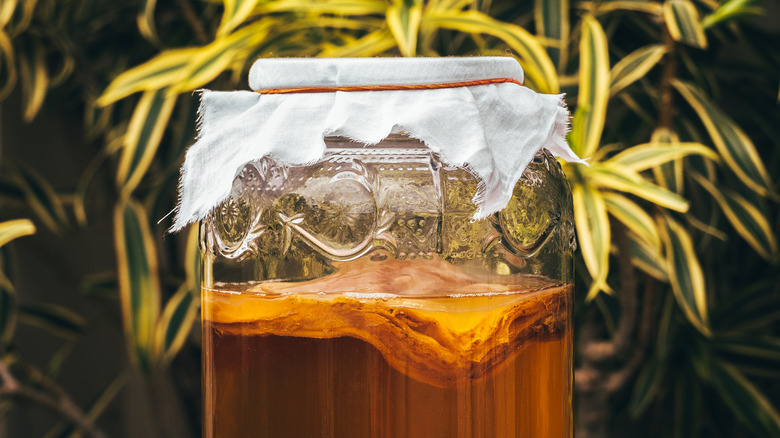
A few years ago, Kombucha was niche. It was a drink loved by hippies and health nuts, but not many people were regular kombucha drinkers. And no one was thinking about whether it was possible to drink too much of it, either. Flash forward to today, and kombucha is being touted as a superfood, with a long list of potential health benefits that range from better digestion to boosted immunity. The fermented beverage is available in practically every grocery store, an ingredient in innovative cocktails, and we all know at least one friend who's such a fan they make kombucha at home. But does this beverage have a dark side? It turns out it is actually possible to drink too much of it.
While kombucha's healthy properties are very real, recommendations for kombucha intake vary from the Cleveland Clinic's guideline of 4 ounces per day to Healthline's guideline of 8 ounces. Unless you've been told to avoid unpasteurized food, overconsumption of kombucha in a single day probably won't cause big problems – and this is true for most people. Bloating and digestive discomfort is possible, as are all the usual side effects of too much caffeine, like anxiety, sweating, and poor sleep.
If you're slamming multiple glasses of kombucha regularly, though, you might find you're drinking more calories than you thought, or consuming too much sugar. These are problems many of us are used to with sodas and juices, but they can come as a surprise when you're sipping on an ancient superfood.
Two reasons too much kombucha could leave you bloated (and why one of them is kind of a good thing)
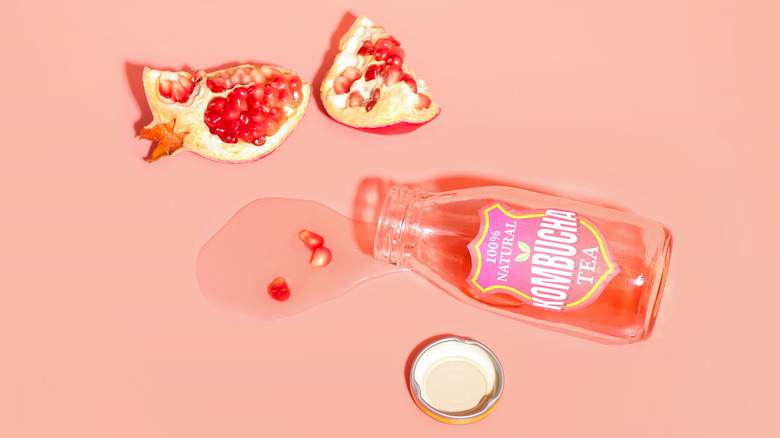
There are two reasons you might feel gassy after kombucha. The first is excess sugar, caffeine, and carbonation — that one's pretty simple. Although it's pretty healthy overall, kombucha does contain sugar and caffeine, and it's also naturally fizzy. Commercial kombucha needs to be uniform in flavor and fizz, so it often contains added sugar and may be force carbonated. Most commercial kombuchas contain 2 to 8 grams of sugar per 8 ounce serving, which is nothing compared to the 26 grams packed into the same amount of Coca-Cola, but it could be enough to give you a bit of a tummy ache. Likewise, the caffeine content in kombucha is usually pretty low at 1 to 2 milligrams per ounce. But if you've already had your morning coffee and you forgot kombucha is tea-based? Well, you might be surprised by bubble guts or jitteriness.
The second reason you might be bloated after kombucha is a little more unusual. As kombucha is fermented tea, it's a probiotic. In other words, it's full of good bacteria. These bacteria secrete antimicrobial peptides which get rid of harmful bacteria, a process that creates gas and can cause bloating. If this is the reason you're bloated after kombucha, it should improve with regular consumption of kombucha or other fermented drinks. Fermentation newbies should introduce things like kombucha, kimchi, and kefir slowly, allowing time for their gut biome to adjust. It'll be worth it in the long run, and not just for the health benefits. Fermented foods are delicious, varied, and in many cases, they're easy to make and store at home.
Occasionally, kombucha might actually make you sick

Finally, there's a non-zero chance of actually getting sick from kombucha. This is more likely to be due to bad luck or preexisting conditions than drinking too much of your favorite brand, but unpasteurized kombucha can occasionally cause food poisoning. Despite this small risk, for most of us, kombucha's health benefits outweigh the risks of drinking a bit too much of the stuff. As long as you consume kombucha with caution if it's new to you and remain aware of calories and sugar intake, you can enjoy it daily.
There are some groups of people, however, who should steer clear of the drink entirely. This includes people with compromised immune systems, such as those undergoing cancer treatment, people with kidney disease, and people with HIV. Kombucha that hasn't been pasteurized should also be avoided during pregnancy, but some pregnant people choose to eschew pasteurized brands as well, since they contain small amounts of alcohol and caffeine. As with all health concerns around food and drink, you should talk to your doctor if you're worried kombucha might be risky for you.