

Why Watermelon Stains Your Clothes, According To Science
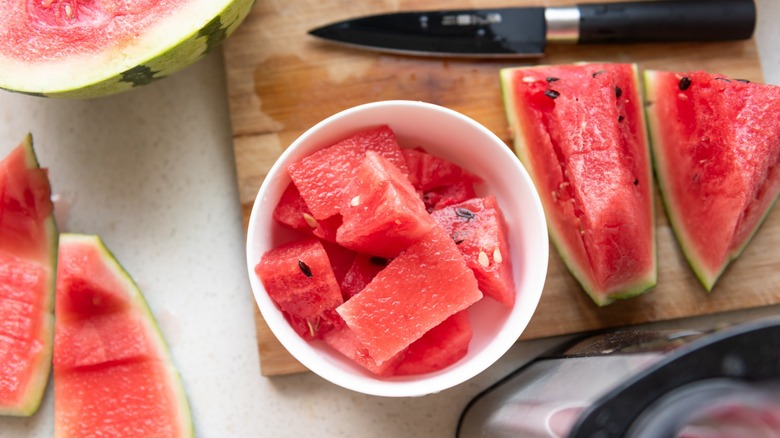
One of the great joys of summer is biting into a fresh, juicy watermelon and getting that burst of flavor. Unfortunately, it's not always easy to keep the mess contained. As succulent as watermelon is, you'll often find it dripping down your chin and getting on your clothes. Even though it seems like it should rinse right out, the juice can still leave a stubborn stain. For that, you can thank the lycopene in watermelon.
Lycopene is a natural pigment. You can find it, or similar compounds like beta-carotene, in all kinds of fruits and vegetables. Tomatoes are red thanks to lycopene, and that deep, pink shade in watermelon is also caused by the same pigment. Humans don't need lycopene to survive, but it still offers health benefits because it's an antioxidant. All carotenoids are powerful natural dyes. Astaxanthin, a pigment that's made from lycopene in nature, is responsible for the pink color in both flamingos and salmon. They get this solely from the food they eat. The lycopene in tomatoes can even stain plastic. That powerful pigmentation is part of the reason it will leave those stubborn stains on your clothes.
The big problem with lycopene is that it's a fat-soluble pigment. That means it doesn't easily come out in water. The molecules embed themselves in fabric and stick together, resisting soap and water. If you wash a lycopene-stained garment, whether from watermelon or tomato sauce, that stain will probably still be there afterward. And you can keep cleaning it, but the stain simply won't go anywhere. If you use hotter water, the stain may actually embed even deeper.
How to tackle watermelon stains
All hope is not lost if watermelon juice has stained your clothes. The key is to treat it more like a grease stain than a juice stain. Most importantly, you will have greater success if you catch it when it's new. Rinse the stained area with cold water to remove any excess watermelon juice, and then blot it with a cloth or paper towel to absorb as much liquid as possible. If you have dish soap designed to cut grease, apply it to the stain, but don't scrub it in; simply dab.
If you're dealing with an older stain that has already dried, you may need to work a bit harder to remove it. Like any fat-soluble stain, this can get embedded in the fabric. Washing and drying it at high heat may set the stain and make it seem like it's impossible to remove.
The experts at The Garden Professors recommend treating a lycopene-based stain with an oil first. It sounds counterintuitive to stain a stain, but applying some cooking oil to the stain can help loosen the embedded lycopene. Then try a solvent cleaner. Something like Spot Shot could work, as long as you've tested it to ensure it's safe on your fabric. Be sure to follow your garment's care instructions first and foremost. Persistence may be key here, but it's a small price to pay to enjoy the perfect watermelon.