

The Most Important Chopstick Etiquette Rules To Follow When Eating At A Japanese Restaurant

Today, more than a fifth of the planet's population uses chopsticks as their primary dining utensils. Originating in ancient China around 5000 years ago, chopsticks didn't become customary in Japan until around the 6th century, presumably influenced by visiting Koreans. Japan has a long-held reputation for maintaining strict traditions, and chopsticks certainly aren't excluded from the nation's extreme adherence to cultural customs.
I've spent over a decade working in the international hospitality industry, and more than half of that time in East Asia. Every country has its own chopstick norms, but Japanese diners take things far more seriously. While living near the Japanese embassy in Hanoi, Vietnam, I spent many evenings checking out the local eateries with my Japanese housemate. While they taught me about the many pitfalls to avoid when dining at Japanese restaurants, I was surprised by how much importance is placed on proper chopstick etiquette.
Called "hashi" in Japanese, chopsticks are more than simple eating utensils — how you use them strongly reflects your respect for social etiquette. There are many different types of Japanese restaurants, and while some may be considered more formal than others, chopstick etiquette is equally crucial wherever you dine. There's even a special term for breaking this etiquette — "kiraibashi" — which roughly translates to "chopstick taboos," and specific faux pas even have their own titles. Today, I'm going to share with you the most important chopstick rules that everyone should follow when dining at a Japanese restaurant.
It's impolite to rub wooden chopsticks together before you use them
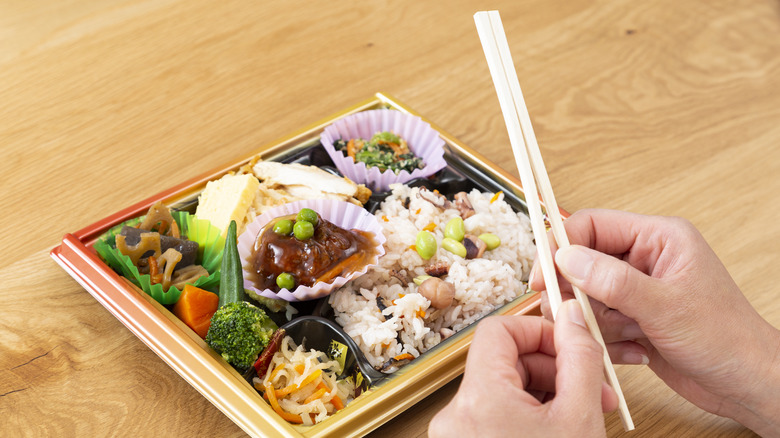
This first chopstick faux pas is one I'm sure many people are guilty of, myself included. It's a pretty common habit to take a pair of disposable wooden chopsticks and rub them together in your hands to remove any splinters that you don't want to end up in your mouth. In most other chopstick-utilizing cuisines, this is completely fine, but rubbing chopsticks in Japan is considered rude behavior.
The problem is that rubbing chopsticks together — a taboo known as "kosuribashi" — implies that they're poorly made from cheap wood. Japanese restaurants take a lot of pride in presentation, and that applies to utensils and table settings as well as the food itself. By suggesting the chopsticks are low quality, you're also insinuating the restaurant has subpar standards, which is an insult to the chef or owner.
Truthfully, I find that it's pretty rare to encounter chopsticks with splinters, even at fast food joints or with takeout food. Most of the time, rubbing chopsticks seems to be ritualistic more than anything. Just gently separate the two sticks and visually inspect them for any splinters. If you do find any, simply remove them carefully by hand and put them to one side without making a fuss.
Don't hover your chopsticks over shared dishes for too long
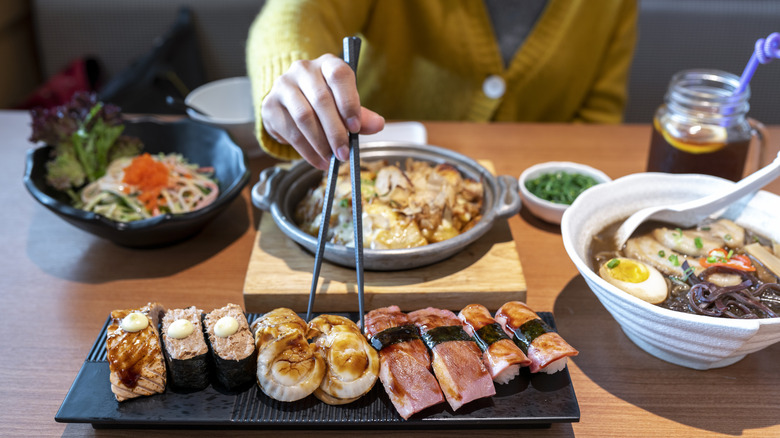
Many Japanese restaurants, such as "izakaya" pubs, hotpot spots, and barbeque joints, offer communal dining experiences. Given the diversity of the nation's cuisine, ordering sharing plates is the perfect way to sample even more of the tastiest Japanese dishes during one meal. However, it's probably no surprise that Japanese-style shared dining comes with its own set of convoluted social expectations.
The first thing to remember when using chopsticks to select food from a sharing plate is that efficiency is key. If you hover your chopsticks over the dish for too long — a taboo known as "mayoibashi" — it gives the impression that you're taking time to pick out the best bits of food for yourself. In Japan, this is considered selfish, especially as you're slowing down the meal and making others wait to be served.
In a similar vein, never use your chopsticks to stir or dig through the food on a sharing dish. This particular offense, called "saguribashi," is also distasteful for similar reasons and is seen as greedy, childlike behavior. The polite approach is to simply take the top piece of food, or at least identify the piece you want before you dive in with your chopsticks. There's nothing wrong with assessing the dish first, especially because it's also considered improper to commit "sorabashi," which is when you touch the food with your chopsticks before deciding you don't want it and leave it on the plate.
Use a separate set of chopsticks for sharing plates
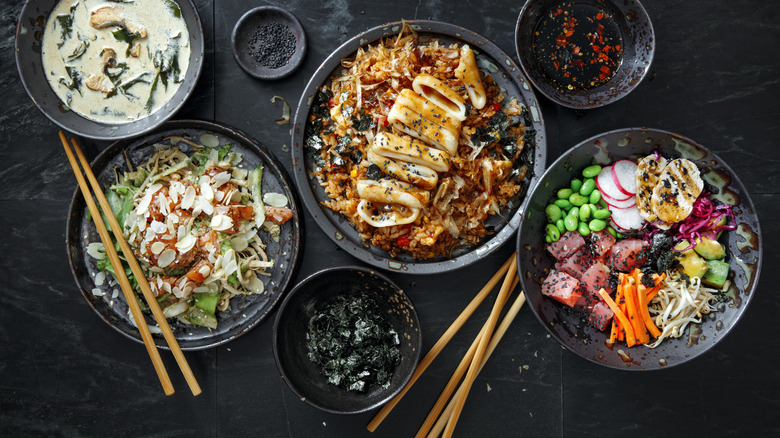
Even if you're following all the chopstick rules when taking food off a shared plate, they mean nothing if you're not using the correct chopsticks in the first place. When serving shared dishes, Japanese restaurants will usually provide separate utensils for transferring food from the communal plate to your own. Japanese etiquette dictates that you should always use these for serving, rather than your personal chopsticks.
Using your own chopsticks, the ends of which have been in your mouth, to serve food is considered unhygienic and bad manners. The same rule applies to hotpots and Japanese barbeque-style dining, which involves transferring uncooked food to a hotplate or bowl. Known as "jikabashi," this taboo is akin to double-dipping in other cuisines. On the rare occasion that you haven't been given any serving utensils, the most polite practice is to reverse your chopsticks and serve with the ends you haven't eaten from. One could argue that picking up food with the ends that have touched your hands isn't a great deal more sanitary, but that doesn't seem to matter in this case. If you're not keen on handling the business ends of your chopsticks, it's probably better to just ask for extra utensils first.
Don't use your chopsticks to stab at food
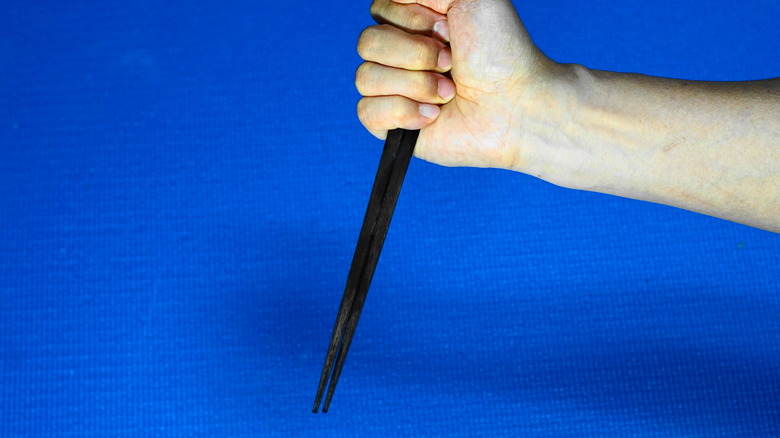
If you're struggling to get a good grip on a piece of food with your chopsticks, it can be tempting to spear it instead. In Japanese dining culture, however, this is seen as the sort of thing a child might do. Chopsticks should always be used like a set of tongs, and stabbing at food with them — a behavior known as "tsukibashi" or "sashibashi" — is a big no-no.
Understandably, not everybody is going to be a chopstick pro, but it's better to take your time and use them correctly than to attempt to find shortcuts. It's one thing to lack the skill to use chopsticks with practiced finesse, and you'll be forgiven for being a little inelegant if you're trying your best, but using them incorrectly is seen as disrespectful of Japanese culture.
Another faux pas that's common with less experienced chopstick users is "kakibashi," which involves bringing your bowl or plate up to your mouth and using your chopsticks to shovel the food into your mouth. If you're in the comfort of your own home, then you can use chopsticks however you like, but you shouldn't break the etiquette when you're in Japanese company.
You shouldn't move plates or bowls with chopsticks
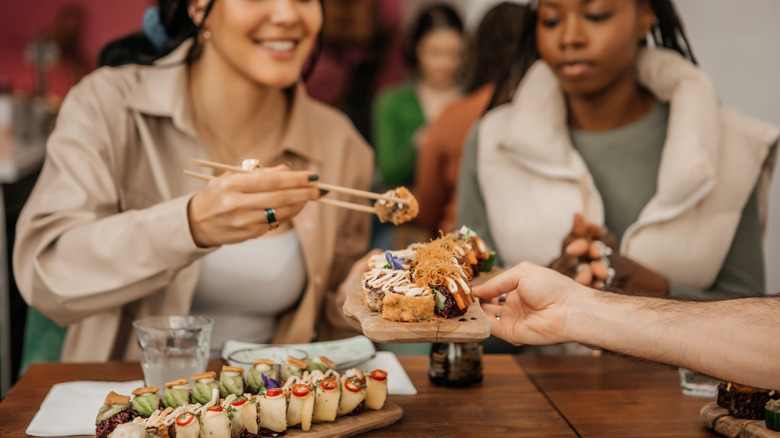
If someone asks you to pass them a dish, or you're after some food that's a little out of reach, you should never move things with your chopsticks. Even if you're dining alone at a casual eatery, you don't want to be seen using chopsticks to drag your condiments closer. Using chopsticks to pull something towards you is called "yosebashi," and it's a taboo that suggests you're too lazy or impatient to use your hands.
You'll likely notice a pattern among many of these etiquette rules. Essentially, chopsticks should be used with the correct technique and only to transfer food. Of course, it's still possible to make a mistake while moving food, but remembering this as a general concept is a solid baseline to avoid potential embarrassment. If you're tempted to use your chopsticks for any other purpose, there's a good chance it's something you're not supposed to do. If you always bear this in mind, you'll find it much easier to start learning the more nuanced aspects of Japanese chopstick etiquette.
Passing food directly between chopsticks is extremely disrespectful
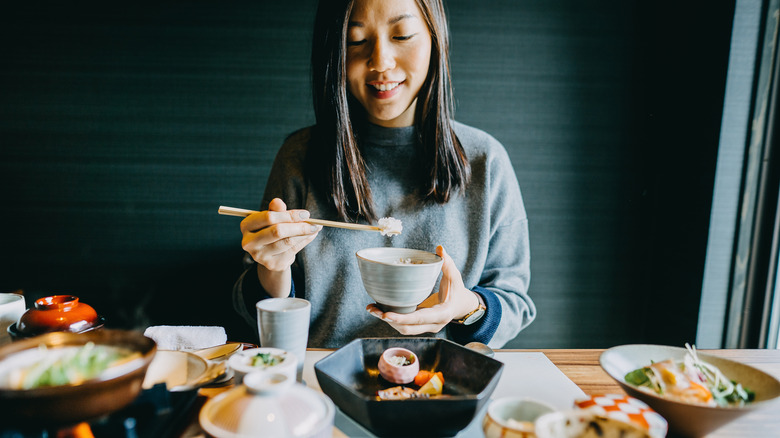
While the list of Japanese chopstick rules is pretty lengthy, they're not all considered taboo for the same reasons. Some are seen as disrespectful to the use of the chopsticks themselves, and we've seen that others can be viewed as childish, selfish, or even lazy. However, there are also chopstick faux pas that have deeper cultural connotations, including some that are linked to the concept of death.
One such breach of etiquette is passing or receiving food directly from one set of chopsticks to another, referred to as "hiroibashi," "utsushibashi," or "hashiwatashi." In fact, it's arguably one of the more serious taboos, and it's even avoided in highly informal settings. Almost every Japanese funeral involves cremation. One part of the ritual, called "kotsuage," involves close family members using special chopsticks to pick out bone fragments from the deceased's ashes and carefully placing them in a burial urn. Passing food chopstick-to-chopstick is disrespectful and even unlucky because it's seen as mirroring the funeral rite. If you do need to pass food to someone, you should put it directly onto their plate, pass them the dish, or hold the dish up so they can take the food off it themselves.
Never lick your chopsticks clean
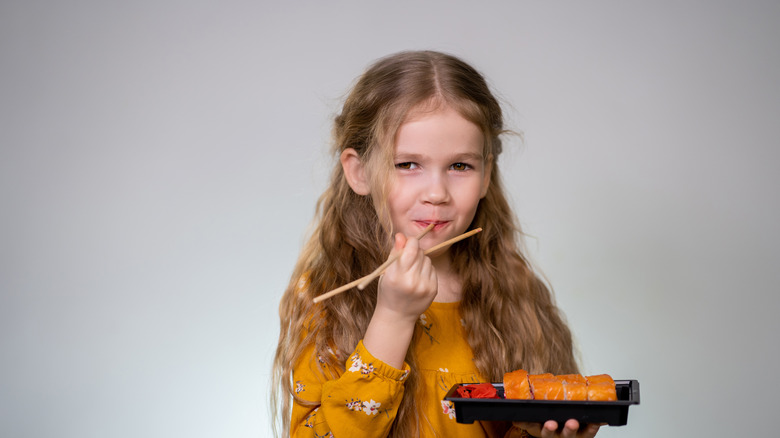
No matter how tasty your Japanese meal might be, you should avoid trying to suck every last morsel off your chopsticks. In Japanese dining culture, licking or sucking chopsticks clean is called "neburibashi," and it's on par with licking your plate clean in a Western restaurant. That is to say, it's considered pretty bad manners. Ironically, loudly slurping Japanese noodles is seen as complimentary to the chef, yet it's something we might see as impolite.
Similarly to cleaning the chopsticks with your mouth, you shouldn't use them to pick food out of your teeth either. Known as "yojibashi," this is also seen as an improper, disrespectful use of the revered dining tools. Another faux pas is holding the chopsticks with your mouth or between your teeth. It doesn't matter how many laughs your walrus impression gets around the dinner table at home; you'll be met with a much less enthusiastic response if you try pulling off the gag in a Japanese restaurant. You've probably noticed that, once again, these taboos all fall under the category of "not using chopsticks for their intended task."
Don't use chopsticks to make your point
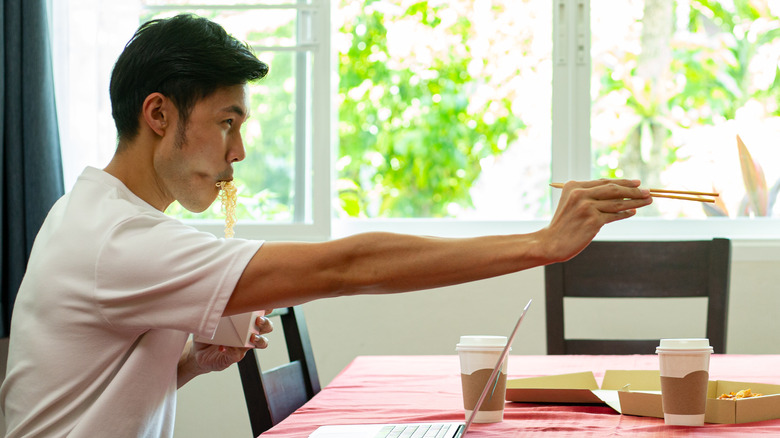
While the Japanese term "sashibashi" can refer to stabbing at your food with chopsticks, it can also be used to refer to another taboo — using chopsticks for pointing at someone or something. Pointing at another person with chopsticks can be seen as rude or even slightly aggressive, something that doesn't differ much across cultures. Most of us would consider pointing a fork or spoon in a Western restaurant to be bad mannered and confrontational.
Meanwhile, using chopsticks to gesture at food or any other object once again shows a lack of respect toward your dining utensils. If you do need to point at anything, it's better to put your chopsticks down to use your hands, or hold them parallel in one hand to free up the other. Similarly, try not to wave your chopsticks around while dining, as you'll risk shaking bits of food onto the table, which is considered "furibashi".
Besides breaking general chopstick etiquette and making a mess, it also goes against the more reserved nature of Japanese dining. That's not to say that Japanese meals among close friends can't become a little more high-energy, but in public spaces, there's an emphasis on not disturbing those around you.
Remember that chopsticks aren't toys
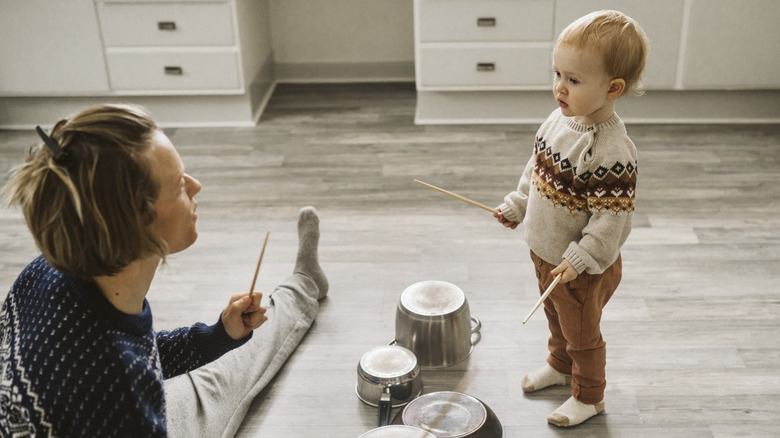
If you're not someone who grew up using chopsticks regularly, it's easy to get lost in their novelty. To a kid, a pair of chopsticks might be tempting to use like a set of drumsticks, while a single stick is the perfect magic wand. If I'm honest, I know my fair share of adults who would view them similarly. However, if you're dining in a Japanese restaurant, tapping your chopsticks — a taboo called "tatakibashi" — is seen as extremely childish behavior.
Don't tap your chopsticks on the table or the rim of your bowl, or spin them between your fingers. If you're a bit of a fidgeter — something I'm guilty of myself — then try to keep your hands folded in your lap when you get the urge to fiddle with your chopsticks. Playing with your food or dining utensils in a public setting is generally frowned upon outside of Japan, so it's no surprise that it's considered rude by a nation known for its focus on proper etiquette.
Never stick chopsticks upright in your rice bowl
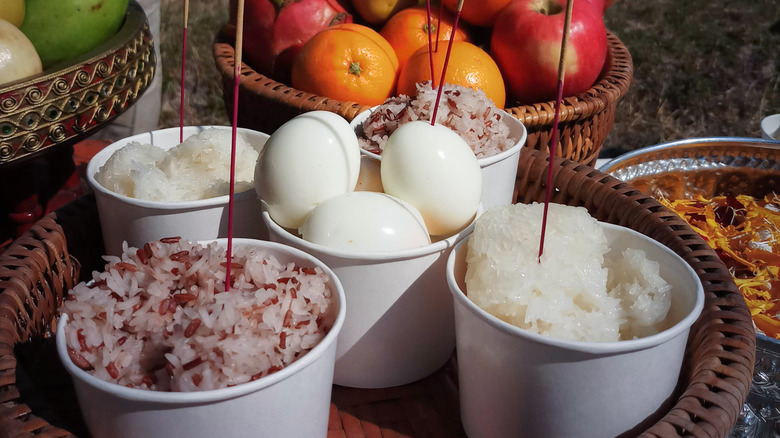
One of the more commonly known chopstick rules is that you should never stick them upright in a bowl of rice. This is another taboo — referred to as either "tatebashi," "tsukitatebashi," or "hotokebashi" — that's taken extremely seriously due to its association with death, specifically funerals. This rule is one that doesn't just apply to Japanese restaurants either.
At Buddhist funerals, bowls of rice with sticks of incense in them are given as offerings to the deceased. A pair of chopsticks stuck into a bowl looks nearly identical to these offerings, so tatebashi is considered unlucky and disrespectful. Most cultures that have a significant Buddhist following avoid the practice, so it's best to assume that it's a faux pas at any Asian food restaurant. In China, crossing your chopsticks on top of your bowl is also associated with death, and while it doesn't have the same connotation in Japan, it's still frowned upon to rest your chopsticks across the bowl instead of putting them down.
Put your chopsticks on a chopstick rest when you're not using them
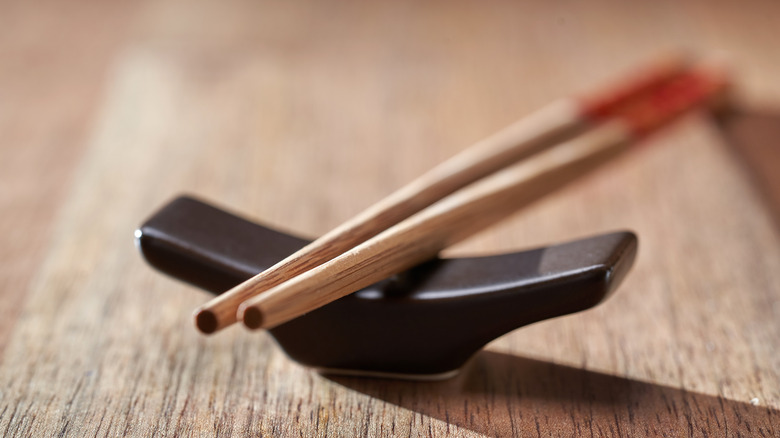
While there are plenty of incorrect ways to set down your chopsticks in a Japanese restaurant, it would be a little ridiculous to assume you have to hold them perfectly throughout your entire meal. It's not completely unacceptable to rest chopsticks in parallel on top of your bowl, but this is usually taken as a sign that you're finished eating and not the politest method.
The best approach is to use a "hashioki," or chopstick rest. Most restaurants will provide a chopstick rest, which lets you place them down while keeping the ends that have been in your mouth raised off the table. If you haven't been given a rest, you can always improvise by folding the paper sleeve your chopsticks came in into a small stand. Place the chopsticks parallel to each other, neatly in front of you. It may seem like an insignificant detail, but treating the chopsticks with respect when you're not using them will go a long way to demonstrating that you're familiar with Japanese dining culture.
If you're not confident in your chopstick skills, ask for a fork
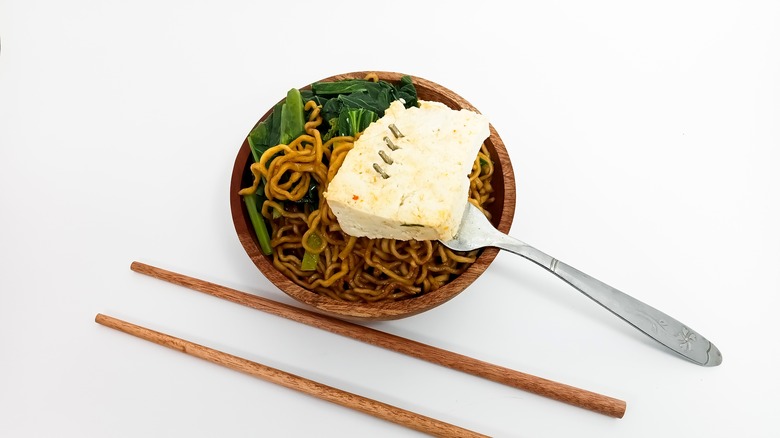
Following Japanese chopstick etiquette rules may be the least of your worries if you don't yet have a handle on how to use them properly. Many people feel pressure to dine with chopsticks when they're eating at a Japanese restaurant for the first time; however, it's better to go without if you're lacking the skill or confidence to operate them correctly.
Most restaurants, especially those that are used to hosting foreign diners, will have no problem giving you a fork if you ask for one. In fact, it's more polite to accept your limitations than to muddle through, breach chopstick etiquette, and make a mess. If you find yourself trying to use both hands to work the chopsticks, or you're struggling to hold on to a piece of food, it's a sign that you might need to give up on this occasion.
There are some clever chopstick hacks that can make things easier, but they may not go down too well in a restaurant. I suggest practicing at home to hone your chopstick skills, focusing on keeping the lower stick steady and manipulating the upper stick to pinch food. Start by practicing on sushi roll-sized items, then progress to smaller items to increase your precision. While it may seem tricky to begin with, I guarantee that you'll improve with time and experience. Then, you'll be truly ready to navigate the many intricacies of Japanese chopstick etiquette.