

Why You May Want To Think Twice Before Adding Stainless Steel To Your Kitchen

We may receive a commission on purchases made from links.
While lathering wooden countertops in protective oil for what seems like the umpteenth time this year, it's understandable to feel swayed towards durable stainless steel. Sometimes, though, the grass isn't greener. If scratches, dents, and water spots sound nightmarish, think twice before adding stainless steel to your kitchen.
Stainless steel is a popular material for sinks, countertops, cabinetry, and appliances, yet despite its affordable all-rounder reputation, it may not be the fix-all solution you had in mind. The glossy surface is heat and moisture-resistant, but a magnet for obvious scratches and impact-caused damage. In the kitchen, accidents are an unfortunate reality; whether it's slipped knives on countertops, dented sinks from dropped pans, or chair-scraped cabinets. Since stainless steel has a characteristic shine, the aftermath of these incidents can be visually loud. Don't be under the illusion that the material is totally low-maintenance, either; that metallic glisten is a sucker for showing fingerprints and spots from splashed water.
It's not a blanket ban and stainless steel isn't one of the outdated kitchen design trends you should avoid completely. In fact, it's a trusted material for appliances and in commercial settings, especially for those craving functionality and a preference for "little and often" cleaning schedules. Just understand its scratchable tendencies beforehand.
Is it possible to protect stainless steel features?
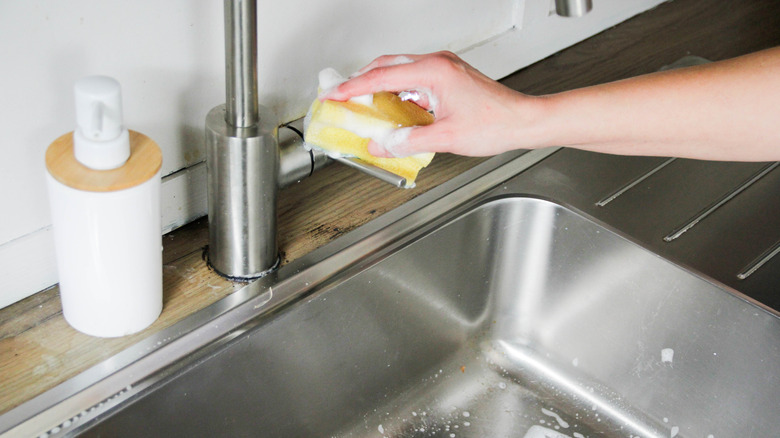
Stainless steel might not be perfect, but then what is? Part of "thinking twice" is evaluating whether taking the plunge is worthwhile despite the trade-offs. For homeowners with their hearts set on shiny kitchen features and an industrial aesthetic, there are methods of mitigating that risk.
Firstly, consider existing and potential protective measures. Investing in non-slip coverage, like this Kitchen Sink Protector Mat, protects surfaces like sink bottoms, and similarly, always using chopping boards avoids countertop damage. During the design stage, prioritize establishing adequate space for appliances and utensils to "live" (insufficient storage is one of the most common kitchen mistakes, and knocking over stray items exacerbates the risk of damage). Where possible, those with stainless steel sinks should consider purchasing a dishwasher to avoid heavy-duty usage completely.
Secondly, it's essential to learn how to clean stainless steel — because, yes, it's different from maintaining porcelain and wooden features. As a non-porous surface, there's less demand for ultra-strength bacteria busters (hooray for non-aggressive detergents). Instead, scratch-free cleaning products become your best friends; think soapy water and gentle sponges.Maintenance doesn't need to cost the world. In fact, it's also possible to use cheap baking soda or make stainless steel appliances sparkle with an olive oil and vinegar cleaning hack. And if you're still concerned about scratches? Choose a matte finish, while keeping a Multi-Purpose Metal Polish Paste handy for emergencies.