

Is There A Big Difference Between Cumin And Caraway?

What's the difference between vodka and water? What's the difference between ice cream and sour cream? These are similar lines of questioning to the one at hand regarding cumin versus caraway. Anyone who has encountered either knows they couldn't be more different. For the uninitiated, cumin and caraway are both small brown seeds, and might be stored near one another (separated by cardamom) in a well-alphabetized spice rack, but their culinary histories and uses diverge drastically.
Besides sharing a first letter, both belong to the kingdom Plantae, and that's where common ground ends. Confusing these two in the kitchen can lead to serious flavor disasters. Imagine caraway's strongly licorice-y, slightly sweet, and medicinal profile showing up unexpectedly where cumin should have been holding down the earth tones, like in a comforting Indian lamb saag or a Cuban picadillo. Or the grounded, warm smokiness of cumin slipping into rye bread, where caraway's distinct herbaceousness should sing.
For cooks curious to learn the ropes or experiment, understanding the differences is essential. Cumin commands the stage in Latin American, Middle Eastern, and Indian kitchens, while caraway is at home in Eastern and Central European fare. These seeds aren't interchangeable, and knowing when and how to use each is key to your food tasting good, or really not good. They might be look-similars, but they are not look-alikes, and once you become more familiar with them, you'll never mistake one for the other.
It's all cumin together
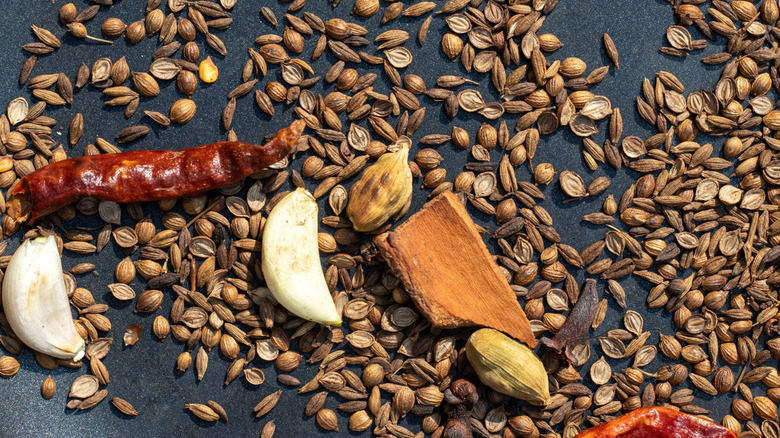
Cuminum cyminum is a small flowering plant native to the eastern Mediterranean and South Asia, belonging to the Apiaceae family, which also includes parsley, carrot, and dill. Archaeological evidence shows cumin has been used for over 4,000 years, with seeds found in ancient Mesopotamian sites and mentions in Greek and Roman texts. The plant produces delicate, white or pinkish flowers arranged in umbrella-like clusters, which give way to oblong, ridged seeds.
Historically, cumin was neither rare nor precious — although it was used as currency to pay rent in Medieval Europe — growing easily in gardens alongside other herbs, making it accessible across many cultures and culinary traditions. Its widespread cultivation speaks to cumin's versatility and enduring appeal, from ancient Egyptian bread recipes to the complex spice blends of India, the Levant, and North Africa. It's even been used in perfumery and to flavor liqueur. This humble seed has traveled with humanity across centuries and continents, evolving from a simple garden herb to a cornerstone of global flavor profiles.
Cumin pairs synergistically with garlic, chili, coriander, and many others (cumin and chocolate is an unexpected flavor combo). To unlock cumin's full potential, toasting the seeds in a dry pan is key. Grinding toasted seeds further releases their oils, intensifying the aroma and flavor. Some people describe cumin's aroma as musky or even reminiscent of sweat, a perception rooted in chemistry. The characteristic scent of cumin originates from volatile compounds such as cuminaldehyde and other aldehydes, which are chemically similar to molecules produced by skin bacteria responsible for body odor. Microbial action on sweat generates sulfur-containing compounds and short-chain fatty acids, giving rise to the familiar "sweaty" smell.
Caraway: a licorice-y loner
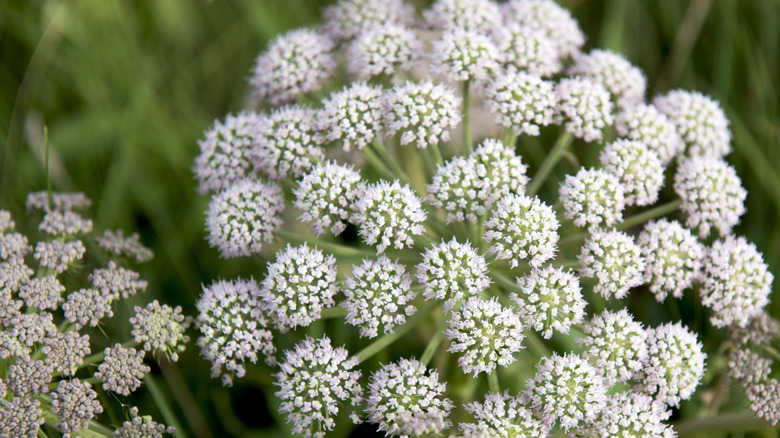
Unlike cumin, caraway does not play well with others. Rather than mellowing harmoniously into spice blends, caraway (Carum carvi, also in the family Apiaceae, interestingly, and with similar umbel flower formation) always stands out as sharp, bright, and licorice-y (although cooler and less sweet than something like star anise or fennel). It's this distinct personality that's kept it from joining the spice melange traditions of Mexico or the Middle East, where cumin thrives. Instead, caraway stakes its claim mostly in Europe and Western Asia, native to those regions and central to their culinary identities. While it's strongly associated with Central and Eastern European dishes (think rye bread, sauerkraut, and certain cheeses), caraway's culinary reach extends somewhat beyond these borders.
In Germany and Scandinavia, caraway flavors breads, stews, and sausages. In the Netherlands, it seasons boerenkool stamppot, a traditional kale and potato dish. Even in parts of the Middle East and North Africa, caraway seeds appear in some recipes, including pastries and other sweets. It's also the defining flavor note in the singular Scandinavian liqueur, Aquavit. In one unusual (and still available) 16th-century Dutch liqueur, Kummel, caraway's bright licorice notes mingle together with cumin's earthy undertones and the odd, powdery-floral fragrance of orris root, a secret ingredient in some Ras al Hanout spice blends, and the botanical source of that unique lipstick and old-purse scent prized in luxury perfumes.
You'll find caraway used whole or ground, in baked goods, roasted vegetables, and savory roasts. It's the perfect complement for braised cabbage, potatoes, and root vegetables, where its herbal sweetness balances earthiness with a subtle medicinal note. Caraway isn't shy; its singular voice commands attention, making it a niche but indispensable spice for cooks who appreciate a spice with character.