

8 'Small' Food Brands That Are Actually Owned By Big Corporations

We all know that there are a handful of mega-corporations out there that produce the vast majority of the products we consume on a daily basis. Food corporations specifically have been called out for their ambivalence regarding the quality and healthiness of the food they produce, often prioritizing profits over producing food that promotes the health and vitality of their customers. Perhaps this is why so many of us are attracted to supposedly smaller brands; we hope that because these companies are smaller, they have our interests at heart more than the aforementioned mega-corporations do.
But a lot of the time, that's just marketing. In reality, there are a ton of "small" food brands that are actually owned by huge corporations. Because you think you're getting an artisanal, small-batch product, you may be willing to pay more for these brands, even if they don't differ too drastically from the bigger, more mainstream food labels for which these companies are known. Keep reading to find out which of your favorite "small" food brands are actually owned by large corporations ... and maybe plan on shopping at your local farmer's market for truly small batch products.
Larabar
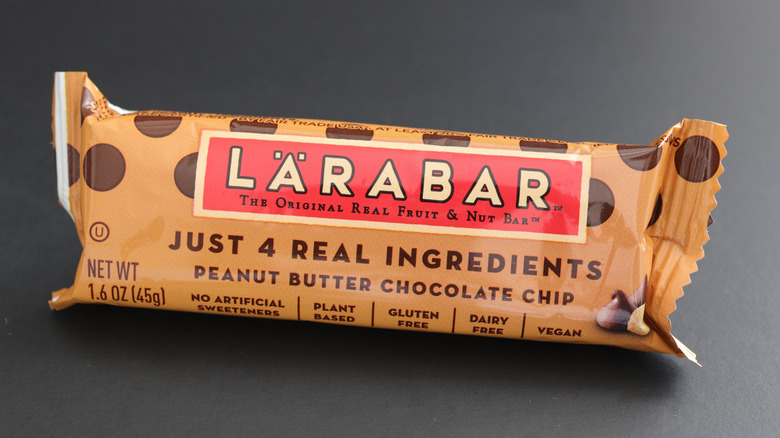
Eating healthy when you have a busy schedule can be tricky, which is why so many of us turn to pre-packaged bars that are easy to eat on the go. You can easily grab one when you're on your way out the door, and there's no cooking required. There are seemingly countless supposedly nutrition-based bars for you to choose from, but Larabar may just be one of the most popular. This line of bars comes in a surprising number of flavors, including favorites like banana chocolate chip, coconut cream pie, and chocolate raspberry truffle.
But if you thought you were buying from a small food brand when you picked up your Larabars from your local grocery store, you've been sorely mistaken. Larabar is actually owned by General Mills, a massive food corporation that owns more than 100 worldwide brands. The megacorp has come under controversial fire for pushing anti-diet messaging through online dietitians, who in turn may push consumers to eat more processed foods, like the ones General Mills produces. We're not saying that you shouldn't enjoy a bar like Larabar from time to time — but it's good to have an understanding of how and why the product is produced.
Primal Kitchen
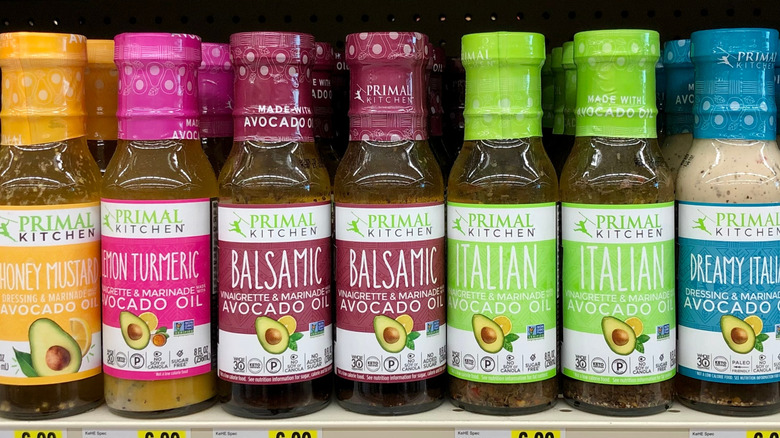
If we're being honest, we almost always think that it makes sense to make your own salad dressing at home, but we know that sometimes, you just need to take advantage of a shortcut by buying bottled salad dressing. As you wander down the salad dressing aisle, you may skip the larger brands to select the seemingly smaller ones with the assumption that they might be better or more artisanal than, say, a standard bottle of Kraft Italian dressing. If that's what you're looking for, though, you should probably avoid Primal Kitchen's salad dressing offerings. Although the company boasts premium, "reimagined" ingredients in its dressings, including its sesame ginger and cilantro lime flavors, you might be surprised to find out that this company is actually owned by Kraft Heinz.
Kraft Heinz didn't build the brand from scratch — rather, it acquired Primal Kitchen in 2019, with the intention of allowing it to operate as an "autonomous company." Still, as one of the biggest companies in the food business, its ownership of Primal Kitchen may cast doubt on the "small" company's values.
Bolthouse Farms
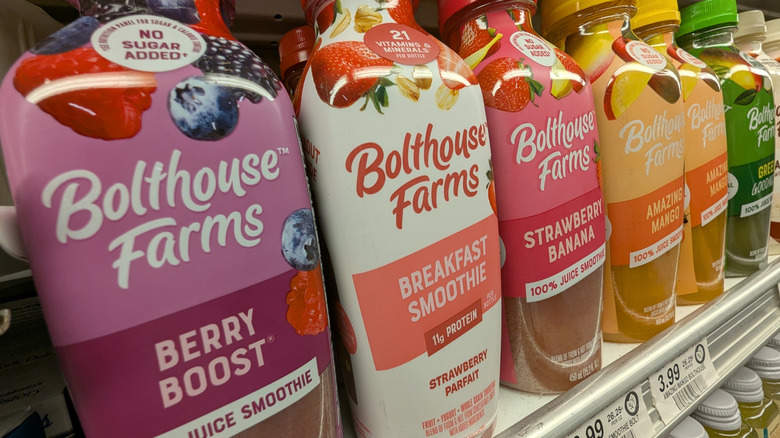
Whether you're craving a bottled juice or smoothie or you're just looking for a nice salad dressing to drizzle over your veggies, Bolthouse Farms has you covered. The brand is perhaps best known for its beverages, including a line of bottled smoothies that tend to be thinner albeit more convenient than anything you can make with a blender at home. Its dressings, though, are also popular, with unconventional offerings like everything seasoned ranch and fire chili ranch that you probably aren't going to make at home. The company also sells fresh carrots. But although the company may seem like it's relatively small, especially compared to the larger, more iconic brands out there, it's actually owned by Butterfly Equity, a large private equity firm that has its hands in many food-based businesses.
Originally, the company was owned by Campbell's (yes, the soup brand), but in 2019, Campbell's sold Bolthouse Farms to Butterfly Equity for $150 million. Seems like it's not such a small company after all. In 2024, Butterfly Equity decided to split the company in two, with one arm handling beverages and the other focusing on the fresh produce end of the business.
Justin's
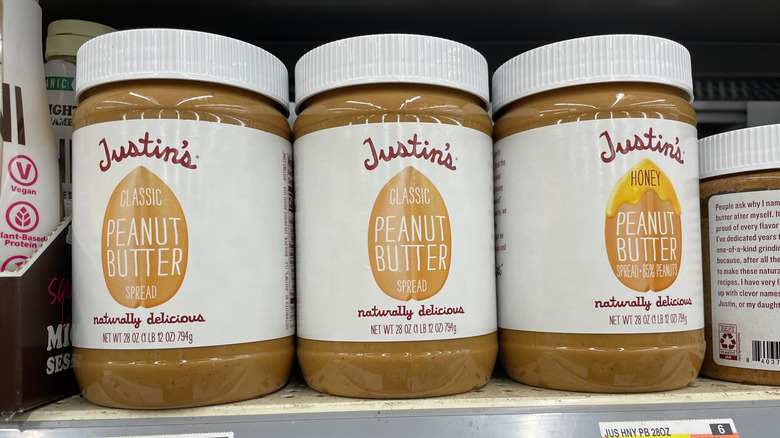
Justin's is known for both its peanut butter along with its variety of nut-based dessert snacks. We have to admit that Justin's nut butter cups are some of the best in the candy aisle, with their thicker-than-average chocolate coatings and natural-tasting nut butter inside. Because this is a brand that seems to be a step up from similar peanut butter companies, you may assume that it's a smaller company than, say, the bigger names in peanut butter out there. In reality, though, Justin's is owned by Hormel Foods, another giant in the food business.
Justin's was originally founded back in 2004, but it wasn't until 12 years later in 2016 that Hormel finally acquired the brand. Former chairman of the board and current interim chief executive officer at Hormel Foods, Jeffrey M. Ettinger, said in a statement that "Justin's naturally delicious, high-quality nut butters, nut butter snacks and organic peanut butter cups align perfectly with our goal of complementing our existing brands with new offerings that resonate with younger, on-the-go and more health-conscious consumers," back in 2016. Almost 10 years later, it seems like the brand is still holding strong.
RXBar
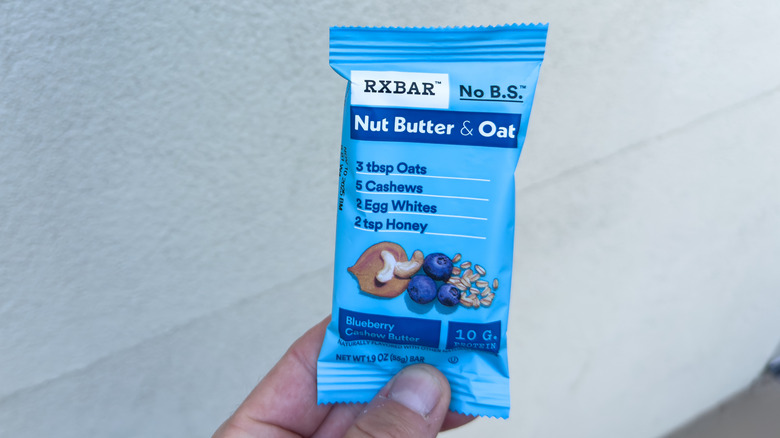
RXBar is definitely one of the more unique protein bars you'll find on the market. The front of the packaging tells you exactly what's inside, from egg whites to dates to almonds and cashews. This may give some consumers the impression that they're getting a product that's minimally processed and comes from a small company dedicated to providing a less-processed product. As it turns out, though, RXBar is owned by one of the biggest corporations in the food game: Kellogg. Yes, like the cereal brand.
Kellogg actually owns many companies, including several names that you'd almost certainly recognize. It wasn't until 2017, though, that the brand brought RXBar into its portfolio, paying $600 million for the already successful company. Although it's not our favorite protein bar brand, it's one that's undoubtedly seen a lot of success in its sector. Just don't think you're getting a small-batch product the next time you snag one at the grocery store, though.
Skinny Cow
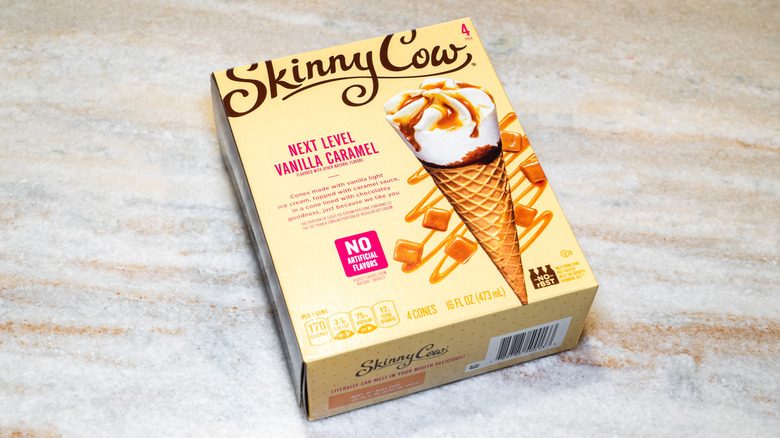
Want to indulge in ice cream without all of the extra calories? That's where Skinny Cow products come into play. This popular ice cream brand can probably be found in the frozen section of your local grocery store, and it boasts products like ice cream bars and ice cream sandwiches that offer a lower-fat version of the beloved treats. Although the name might not be quite as ubiquitous as, say, Ben and Jerry's, it's actually not that small of a brand at all. Once upon a time, Skinny Cow was owned by Nestle, which also owned other ice cream companies like Drumstick and Haagen-Dazs. But in 2019, Nestle sold Skinny Cow — along with its other ice cream businesses — to a private equity firm called Froneri.
The acquisition cost Froneri $4 billion, although that money was from the sale of all of Nestle's former ice cream brands, not just Skinny Cow. Regardless, Skinny Cow is part of a family of major ice cream companies and not the tiny, artisanal brand you might have assumed it was.
Naked Juice
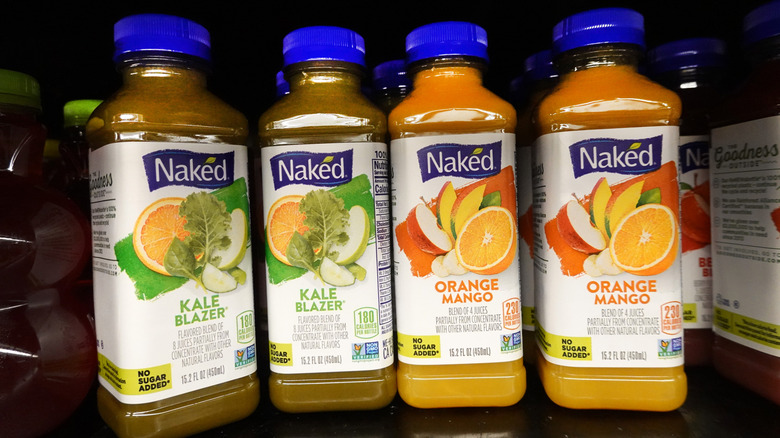
Another smoothie company that you've almost certainly come across if you've been to the produce section of your local grocery store is Naked Juice. These "juices" are somewhere in between actual juice and a smoothie — they're thicker than juice, but they don't have quite the same body as a smoothie you'd make at home. Regardless, they can be a solid option when you want to get in something more substantial than liquid but you don't feel like eating much ... or just when you want a fruity treat. But don't let all the colorful images of fruits and vegetables on the labels of these drinks fool you: Naked Juice is owned by a private equity firm called PAI Partners. It was sold to PAI in 2021 by PepsiCo, one of the largest drink manufacturers in the world.
Our advice? If you're interested in a small batch smoothie with quality ingredients, just buy some frozen fruit and make your own at home. In our books, Big Smoothie can never truly compete with the real, fresh thing.
Annie's Homegrown
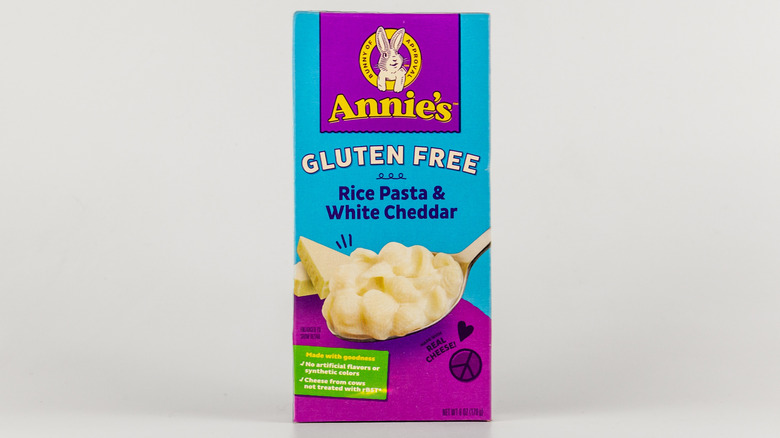
Head to the organic food section at the grocery store, and you'll probably find plenty of products from Annie's Homegrown. The brand might be best known for its truly tasty mac and cheese, but you can also find snack mixes, fruits snacks, dressings, and more from the brand. A big part of its appeal is the fact that it has the word "organic" plastered on many of its products, which may seem healthier than other options on store shelves. Because of this, it's understandable to think that Annie's is a relatively small company, despite the number of different goods it produces. Annie's is another brand owned by General Mills, though, one of the largest food companies in the business.
This acquisition happened more than a decade ago, in 2014. According to a General Mills representative, this was an attractive acquisition to the corporation because Annie's focused on "convenient meals and snacks," which General Mills was already known for.