

9 Tips For Shopping In The Bulk Food Section

Whether you want to keep a more sustainable kitchen or you're just looking for ways to save money on grocery shopping, bulk bins should be your go-to option when you're stocking up for the week or month. Not only will you find some crazy good deals, but you'll also avoid excess food packaging waste. What's not to love about that combo?
If you're lucky, your local grocery store may have bulk bins where you can buy a lot of the foods you eat regularly. Alternatively, you may be able to find a smaller, local shop that has some bulk bins. Perhaps you have to travel a bit further than you'd like to take advantage of bulk bins at a store that's not super close to your home, so you only visit once every few months. Whatever the case may be, these tips will help you navigate whatever bulk bin shopping you have access to and ensure that you leave the store happy with your purchases ... no extra plastic required.
Bring your own repurposed reusable containers
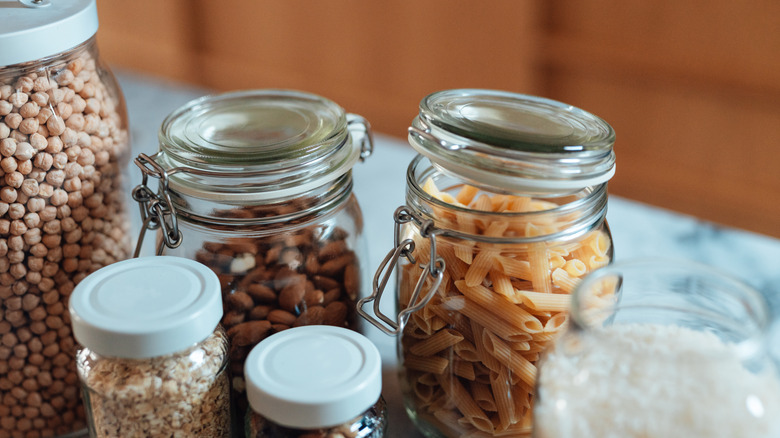
One of the main points of shopping at a store that has a bulk bin section in the first place is the fact that you don't have to deal with the plastic, glass, and paper packaging that these foods normally come in. Let's be honest: The way most of us grocery shop creates an incredible amount of waste, and opting to use bulk bins instead means that we don't have to use plastic packaging from the store. That's why you'll want to bring your own repurposed, reusable containers with you to the bulk bin store.
Choosing repurposed containers means that you're not going out of your way to buy new containers in which to store your food. Instead, you can use containers you already have. Empty jars and bags you have from food products you've already purchased can come in handy here, and they don't cost anything. You can also reuse produce bags you already have on hand, buy new reusable produce bags, or make them yourself from scrap fabric you have lying around the house. Then, all you have to do is remember to bring them with you whenever you go to a store that has bulk bins.
Remember to weigh your containers before adding food
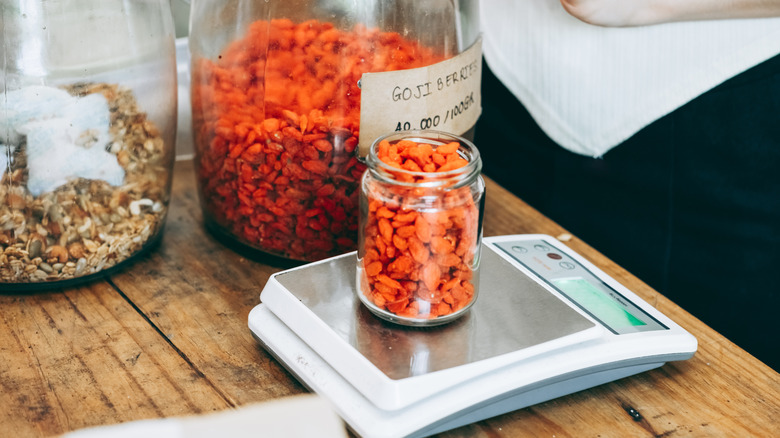
If you're trying to cut down on how much plastic you bring into your house, you probably don't want to package the stuff you get in the bulk bin section in plastic bags. At the same time, though, you likely don't want to pay more for the food you're buying in the bulk section just because you're using your own bags that happen to weigh more than the standard plastic ones. That's why it's important to make sure that you weigh your containers before filling them with food. This way, you won't have to pay for the weight of the bag, and you'll be able to avoid using plastic packaging. This step is even more important to consider when you're using jars, which can be quite heavy.
Generally, you'll want to ask an employee at the store how you can go about weighing your containers. Sometimes, you might be able to put a sticker on the container that shows the accurate pricing for the food you're getting, or a staff member will be able to assist you as you weigh your containers. Yes, this is an extra step you have to think about when you're grocery shopping at the bulk store, but it's worth it when you consider the amount of money you'll save (and all that plastic that you can avoid using).
Don't buy extra if you don't need it
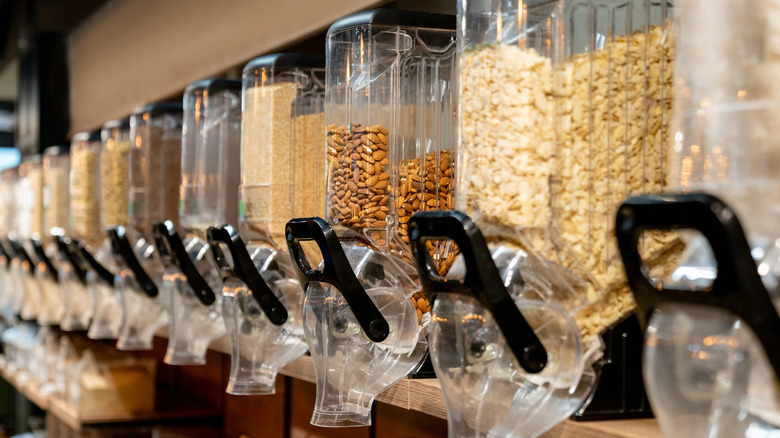
When you're shopping from a grocery store's bulk bins, you may assume that you have to buy everything in bulk. However, that's not the case, especially when you have limited food storage space in your home. Instead, focus on only buying what you need. That way, you can ensure nothing goes to waste.
That doesn't mean that you can't buy a large amount of something you use regularly. For example, if you eat rice several times a week, you can go ahead and scoop a decent amount of dried rice into a bag or jar so you know you have enough for the rest of the month. However, if you only eat rice once or twice a month, you don't have to stock up on it just because you're shopping from the bulk bin section. The same can be true with spices. Only need enough of a niche spice for a specific recipe? Don't stock up on it if you don't need it — one beauty of the bulk bin section is that you can take as much or as little as you want of any given item.
Don't touch any food you're not taking home with you
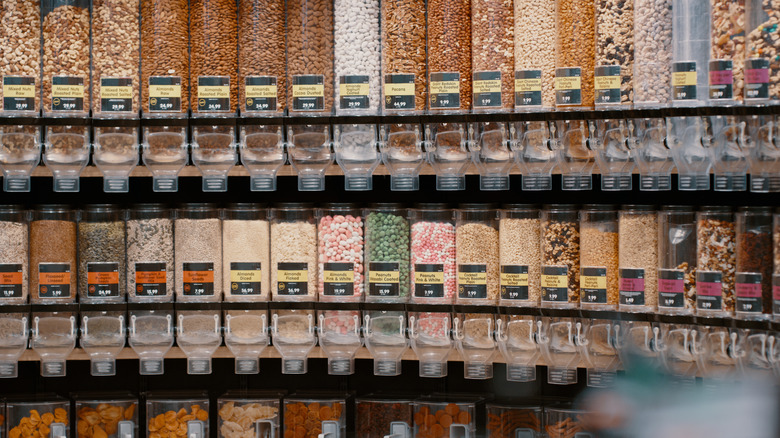
Some people consider bulk bins at the grocery store to be gross and unsanitary, and although we reject that notion, we still think it's important to make sure you're shopping in a clean and responsible way. Therefore, it's imperative that you don't touch any food that you're not taking home with you. This means that you should always use the scoops provided in the bulk bin section and never stick your hands into the bins. This contaminates the other food, introducing germs, dirt, and the oils on your skin to food that other people will eventually eat. It's just basic manners to avoid touching food that you're not going to take home with you.
Although this is especially important to remember when you're shopping from bulk bins, it's also a good practice when it comes to produce. Don't handle a ton of apples before you decide which ones to buy — it's not polite to the other shoppers who will come after you.
Label your containers with purchase dates
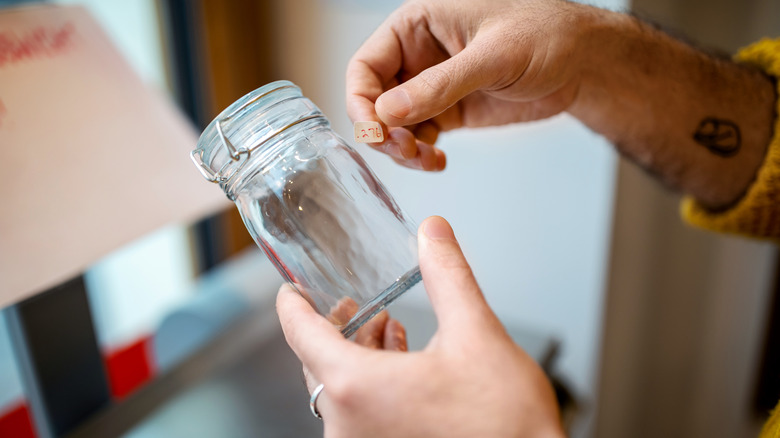
When you buy a packaged product from the grocery store, you'll usually find a best-by or expiration date on the container telling you when it's time to throw the product in question out (although some of these items can be used past the expiration date). These dates help you make a better decision about whether the food product you found in the back of your pantry is still okay to eat. But when you shop at the bulk bin section and use your own reusable packaging, you won't have the benefit of seeing that expiration date.
But there's an easy solution: Make sure that you label whatever foods you're getting from the bulk bin section with the date you bought them. You'll have to look up how long the product in question lasts, but since most of the products you'll find in bulk bins are relatively non-perishable anyway, you can likely keep them on hand for quite some time before they go bad. Still, knowing when you purchased a specific product will be good information to have when you find a random bag of beans in your pantry a year in the future.
Don't use the same scoop in different bins
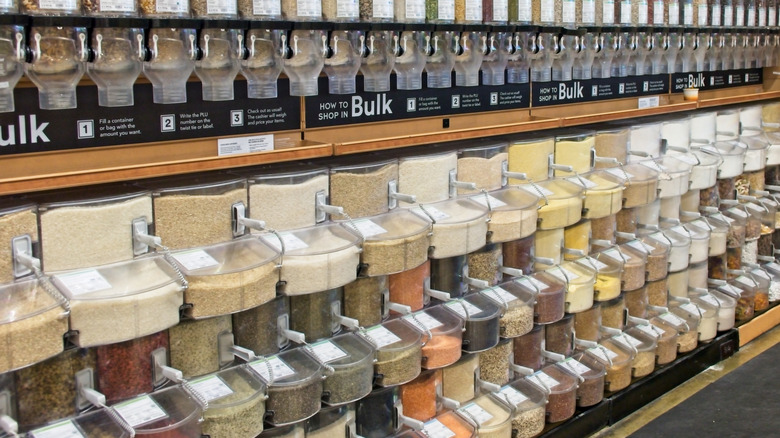
One of the most important tips you can remember regarding the bulk bins at grocery stores is to never use the same scoop in different bins. If you've been to a bulk section before, then you've probably noticed that there's a scoop for every single bin. There's a good reason for that: The store doesn't want to create any cross-contamination between products. Just imagine someone who has celiac disease, who is intolerant to gluten, uses a scoop that's previously been used for wheat flour for their corn flour. This could cause serious health complications for them. Anyone with food allergies or sensitivities needs to be sure that they're not getting any residue from foods that could be harmful to them.
Therefore, make sure that you're using the properly designated scoop for every different bulk bin you use. Luckily, they'll usually be clearly labeled, so it shouldn't be difficult to figure out which scoop goes where. Making extra sure you're using the right scoop keeps everyone at the bulk bin section just a bit safer.
Focus on non-perishables
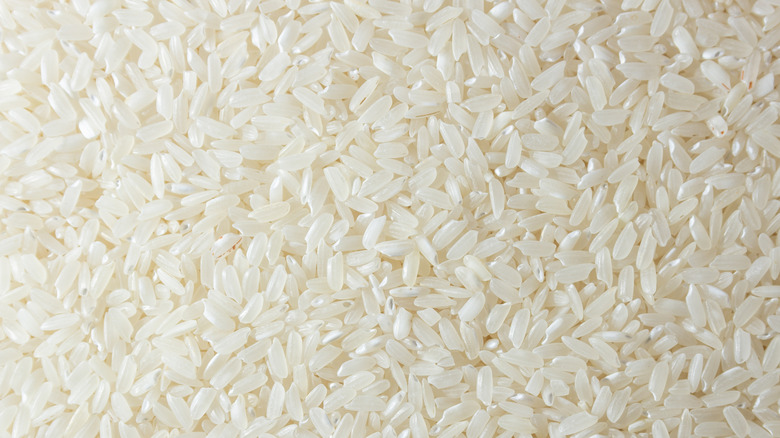
A lot of the products you'll come across in bulk bins are non-perishable. For example, dried beans, pasta, and rice are going to last a long, long time in your pantry. That means that buying larger quantities of them makes sense — after all, there's an excellent chance you're going to use it all up while it's still far from its expiration date.
That being said, there are some food items in the bulk bins that may not last quite as long as others. For example, peanut butter can only last about two to three months in the pantry after it's been opened. Therefore, it doesn't make sense to buy a ton of peanut butter from the bulk section. You're better off sticking with a smaller quantity of the stuff. We like to focus on dried foods that we can store for a long period, especially if we're truly buying in bulk. Next time you go to a store with bulk bins, stock up on dried beans, nuts, and grains to get the most bang for your buck.
Search for spices
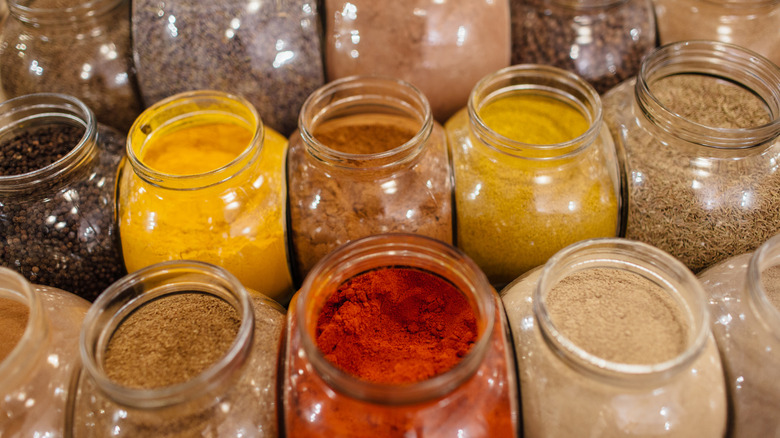
It's no secret that spices can be prohibitively expensive when you buy them packaged from a standard grocery store. Want to make a specific recipe that calls for a spice that you don't have on hand? You may be paying close to $8 for an ingredient that adds nothing but flavor to the dish in question. Plus, you have to take the whole plastic bottle that the spice comes in, even though you already have an empty one at home.
This is exactly why we love buying spices in bulk. They're often much, much cheaper than buying them already packaged, and often, they taste fresher too. If you use a certain spice frequently, you can get a ton of it at one time. Alternatively, if you know you're only going to use a specific spice for a recipe or two, you can opt for a modest amount that might cost little more than a few cents. Find a local shop that has a decent bulk spice section, and you'll never want to go back to buying those tiny plastic bottles again.
Share with friends and neighbors who can't access a store with bulk bins
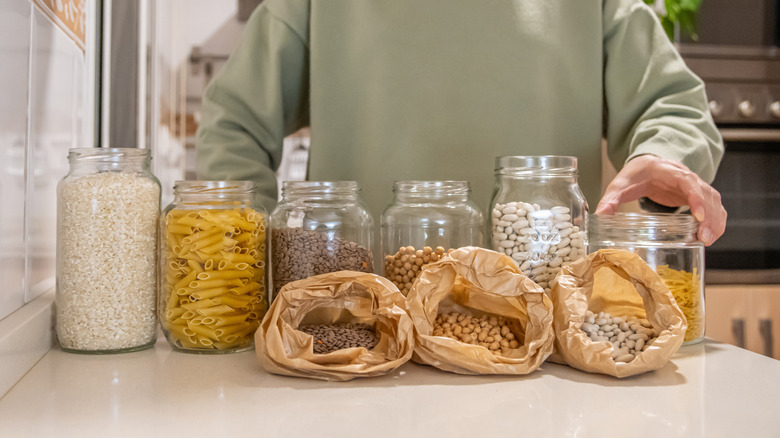
Unfortunately, not everyone has access to a store with bulk bins. Maybe it's too far away, it's not disability-friendly, or the people in your life simply don't have the time to go out of their way to get groceries. However, if they're interested in buying pantry staples in bulk and you're willing to do a bit of shopping for them, you might be able to help your friends and neighbors access more affordable, sustainable food.
Before you go to your favorite bulk bin store, ask around to see if there's anything you can pick up for someone else you know in your neighborhood or your community. Maybe you'll want to split a big bag of rice or a batch of pasta. By sharing with your friends and neighbors, you're making sustainable and affordable food more accessible and building community in the process. Sounds like a win-win to us.