

The Small Differences That Set Cabinets Apart From Cupboards

Have you ever tried searing a steak in a pot? Or boiling pasta in a pan? Probably not, because you know the difference between a pot and a pan, and what they're meant for. But not all household terms are treated with the same clarity. Take cupboard and cabinet, for instance. Most people use them interchangeably without a second thought. Which feels inconsequential until you're giving instructions to a carpenter, or trying to tell a friend where the snacks are. So if you want to make sure you keep your linen away from your Tupperware stash, read on.
The difference between a cupboard and a cabinet often comes down to form and function. Cupboards are either meant to keep things out of sight or put them proudly on display. Think of a china cupboard showing off heirloom dishes behind a glass door, or a linen cupboard keeping towels neatly tucked away. Cabinets, on the other hand, are built for everyday access: They're where your plates, spices, and cooking tools live within easy reach. Structurally, cupboards are typically free-standing pieces of furniture, while cabinets are usually custom fitted onto walls or built into kitchen layouts.
The wide world of kitchen cabinets
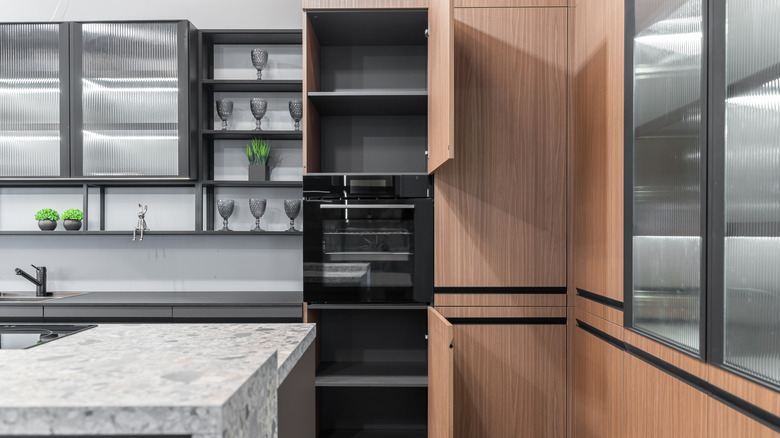
Modern kitchens are havens for smart storage, thanks in no small part to the sheer variety of cabinets available today. Cabinets might not be cheap (it can cost between $150 and $500 per foot for new installations) but they tend to be super convenient and worth every penny. From base units that support countertops to deep smooth-slide drawers that make pots and pans easy to grab, every element is designed with accessibility and organization in mind. Wall cabinets keep everyday essentials within arm's reach without crowding the workspace, while tall cabinets (which can be floor-to-ceiling), offer pantry-style storage that makes the most of vertical space.
The modern kitchen's obsession with order and convenience has seen the use of cabinets extend to how appliances are integrated into the space. This has fueled the popularity of concealing items such as fridges and dishwashers, which become seamlessly integrated into the cabinetry. How about a pull-out shelf for your toaster? Far from banishing your blender to a forgotten corner of a base cabinet, these clever solutions keep your everyday appliances handy, while maintaining a clutter-free countertop.
As for those appliances you never really needed but bought anyway, you can always find a storage cupboard in a corner somewhere to hide them away.