

Here's What You Need To Know About Using Milk To Fight Mildew In Your Garden

We may receive a commission on purchases made from links.
Something is awry — those prized tomato plants no longer have deep-green leaves. Instead, they're mottled powdery white. Nothing ruins a gardener's morning like the realization they've been "mildewed." Yet, whispers of an antifungal solution are spreading around allotments: milk might be the answer.
Put bluntly, the hows and whys are a little shaky as research is limited, and evidence of effectiveness is heavily anecdotal. However, there are findings to suggest that it's the protein within milk that acts as the mildew-fighting component. Lactoferrin is believed to react with sunlight, forming antifungal compounds that limit any mottled outbreaks, before they take hold. This creates a reliance on sunshine, however, which is rotten luck for anyone in less sunny states like Maine or Washington.
Mildew calls for serious measures, so it's worth investing a few dollars on a carton of milk. Besides, it even might work. "I tried every treatment I read about. Nothing worked until I tried milk," raved one user on Reddit. So, add it to the list of everyday kitchen items that can be repurposed in your garden – there's hope, yet.
How to apply milk to protect plants from mildew
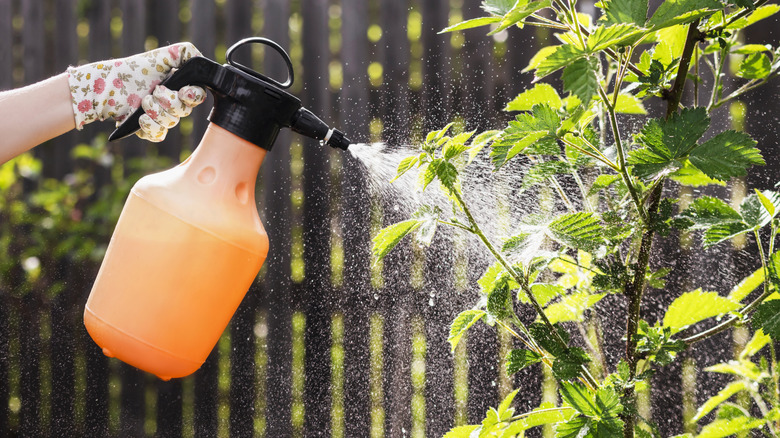
To get yourself organized ASAP, start by grabbing the right container like Bontip's Glass Spray Bottle or AORAKI's Plant Mister. Perfecting the recipe comes next. It might be a "milk treatment," but the secret lies in adding a splash of trusty H2O. Some even add a sprinkle of baking soda – a simple trick that can even boost your tomato harvest. A reliable rule of thumb is to add a 40:60 ratio of milk to water. Then, pour into the spray bottle, shake, and you're ready to roll.
Strategic application is the most important factor in dictating success. So, learning exactly how to apply milk is also essential. Plants should be sprayed preventatively on a fortnightly basis. For the best results, apply liberally, ensuring every surface of the plant has been doused. Since the worst weather for mildew is high temperatures with humidity, keep bottles on standby in summer. Certain produce may more susceptible than others, too. For instance, squash, cucumber, and parsley are all particularly prone to mildew infections, so spray them as needed.
It's amazing what a little dairy can do for your garden. This milk-based hack is proof that sometimes the absolute best gardening tips for beginners could even include items already sitting on your cupboard shelves.