

Sprouts Are Healthy, But They're Likely To Cause Food Poisoning. Here's Why

To sprout a seed is to invite life, but sometimes pathogenic bacteria show up to crash the party. Sprouts come back into style every couple decades, usually alongside a wellness revival. They had a heyday in the vegetarian movement of the '70s, a detox moment in the early 2000s, and now, they've been reborn (re-sprouted?) in your coworker's mason jar on their standing desk. Broccoli sprouts are the latest reincarnation, showing up in powders, supplements, and TikToks touting their sulforaphane content.
Broccoli sprouts are hot right now, which is ironic, because it's the very fact that they're not heated that makes them so risky. To sprout a seed, you give it warm, humid, nutrient-rich conditions. Unfortunately, those are the same conditions that bacteria like E. coli and salmonella love. That's why sprouts are one of the top foods linked to outbreaks of foodborne illness, despite their health halo. Sprouting isn't just a Pinterest project. It's a low-tech, high-ingenuity way to grow nutrient-dense food that dates back over 500 years; no soil, sunlight, or supermarket needed.
Sprouts show up in ancient Chinese medicine, Ayurvedic texts, and traditional Korean, Indian, and Southeast Asian cuisines. In many of those contexts, sprouts were cooked, fermented, or treated in ways that likely reduced microbial risk. The real issue isn't that we sprout, but how we sprout. More specifically, that we've become disconnected from the careful practices that traditionally kept these live foods safe, like tossing mung sprouts into a hot wok, blanching them before seasoning, or adding them to pho so the broth does the sterilizing for you.
The perfect conditions for chaos
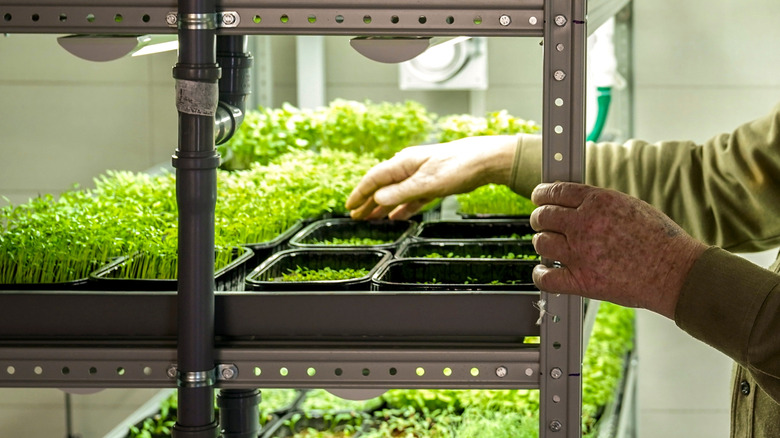
Seeds aren't sterile. Even before they're sprouted, they're coated in microbes picked up from the soil, harvesting machinery, storage containers, and shipping routes. Most of these microbes are harmless, but some can turn virulent. There's salmonella from animal waste in irrigation water or E. coli from human handling during transport. When you sprout seeds by soaking them in water and keeping them warm and moist for days, you create ideal conditions for bacteria to multiply rapidly. If the seeds are contaminated before sprouting, rinsing won't help; the bacteria can be pulled inside the tissue, growing with the sprout itself.
The Food and Drug Administration recommends commercial sprout producers test seeds and irrigation water, but a single missed test or improper rinse can lead to outbreaks. Mass production makes it hard to monitor every variable, and sterilizing a seed without killing its ability to sprout is tricky. This isn't just a sprout problem. Cut produce, like bagged spinach or pre-sliced melons, can also host bacteria in the tiny wounds left behind by blades, where moisture and sugars provide prime conditions for growth.
All food prep is inherently a microbial negotiation. We've just memorized rituals around things like raw chicken (which you should not rinse), but not for alfalfa; no USDA poster (yet) has ever stated that "employees must wash hands after mung beans." Interestingly, most outbreaks come from commercial sprouts, not your crunchy friend's countertop jar. Home sprouting, like sourdough or fermentation, can actually be safer than industrial sprouting when done with care, because it's a closed loop.
Eat the sprouts, just know the rules
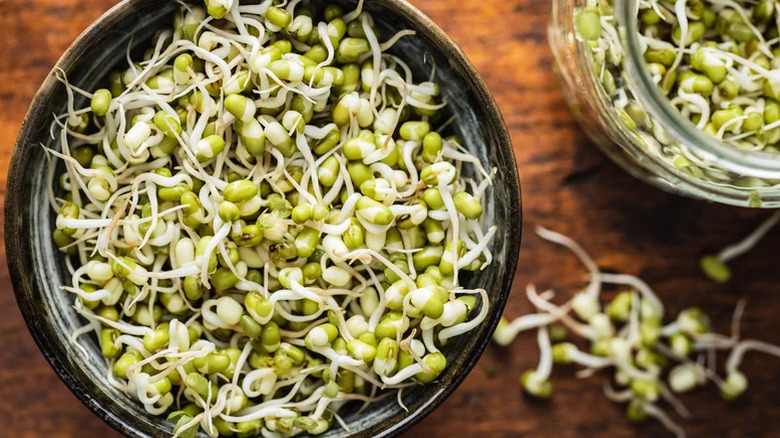
For most of human history, people lived surrounded by their own waste. Dysentery, cholera, and typhoid were everyday risks. Thankfully, indoor plumbing and germ theory, along with antibiotics, changed that. With that shift to modernity came the idea that food could and should be sterile and predictable, handled by someone else, safely out of sight. But food is still grown in dirt, washed in water, and handled by humans. We trust that grocery stores and restaurants follow protocols, but those systems depend on attention, compliance, and infrastructure.
So, should you eat sprouts? If you're immunocompromised or pregnant, it's probably best to skip raw sprouts. Instead, opt for the power of microgreens, which are similar in flavor and nutrient content but grown above soil and harvested above the root, lowering contamination risk. For everyone else: rinse your seeds, sanitize your jars, use filtered water, refrigerate them after sprouting, and consider blanching before eating.
Sprouting is an elegant food technology: coaxing fresh, living nutrition out of a dry, shelf-stable seed with nothing but water and patience. Like fire or fermentation, it's part of a long human tradition of transforming what we can't digest into something nourishing. You don't have to fear it, but you do have to respect it. Being a good cook has always meant being a good microbe manager.