

Marbling On Beef Is Delicious, But It Isn't Always Very Good For You. Here's Why

We're often led to believe that the best steak is the one with lots of marbling. And, to be fair, that is often the case. All of those thin ribbons of fat not only improve the tenderness of the meat, they also add a lot of flavor and lead to a juicer finish. But while marbling makes beef taste delicious, it doesn't always make for the healthiest meal, unfortunately.
Marbling comes from a cow's intramuscular fat; fat that sits within the muscles themselves rather than just between them. The levels present fluctuate depending on breed, feed type, and the part of the animal the meat comes from. For example, the muscles that are worked the least, like those around the ribs (compared to the well-used hind muscles) have more fat. This is why a perfect rib-eye steak tends to have a lot of marbling, while sirloins have very little.
The issue is that those fattier cuts are typically high in saturated fat, which isn't good for heart health. But quantity is worth thinking about here: A little saturated fat every so often is okay, but those with high cholesterol levels need to be more conscious. Registered dietitian Angel Luk told Tasting Table that a good aim is to keep your daily intake under 16 grams (which is around half an ounce), and to opt for less-marbled, leaner cuts. "Lean cuts of red meat, such as round, sirloin, or loin, are lower in saturated fat and can be part of a healthy diet," she said.
Intramuscular vs intermuscular fat
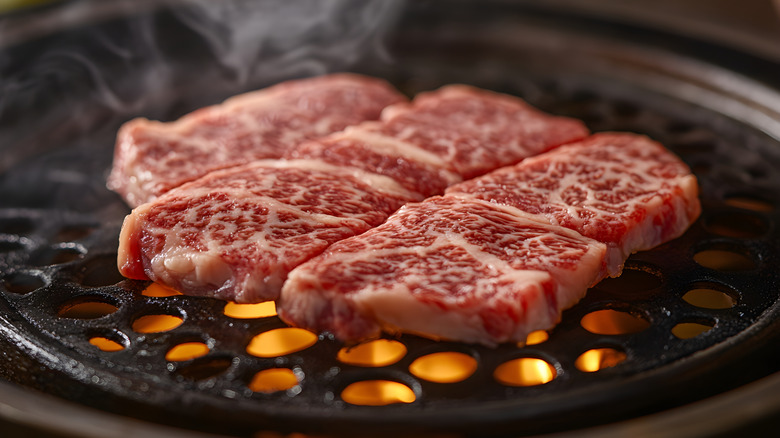
However, there is also research that suggests marbling may actually be beneficial for health. A study published in the "Journal of Animal Science" found that as intramuscular fat develops in a cow, the saturated fat levels in the meat drop. This corresponds with an increase in oleic acid, which is the same healthy fatty acid found in olive oil.
And according to another study in the "Korean Journal for Food Science of Animal Resources", there might also be other essential fatty acids present in marbling, and there's evidence to support the idea that it leads to higher quality beef. Prime cuts of meat like wagyu have higher levels of oleic acid, so if you do want a marbled steak, those are the ones to go for.
What you really want to avoid are any cuts with intermuscular fat, which is the fat found in between the cow's muscles, rather than inside them. That fat should be cut off before cooking, as it doesn't impart any flavor on the meat. No matter what the science is, marbling will lead to a better-tasting steak. So if you're not watching your health too much, it might be okay to fire up the grill for that Tomahawk rib-eye steak or easy carne asada every so often. Like with anything, it's all about moderation.