

Gose Beer: The Salty German Ale You Should Know About

In Lower Saxony, a German state situated in the country's mountainous northwest corner, the Gose River winds through the historic town of Goslar. A gentle and unassuming sliver of water, it lacks the grandeur of the Rhine, but has its own claim to fame as being the river the eponymous German sour beer is named after.
Gose (pronounced "GOH-zuh") is a historic German ale in the sour category, brewed using lactic fermentation to create its tart, acidic flavor profile. What makes gose stand out from other sours is the addition of salt and coriander. If you're a martini lover, especially of the dirty variety, you may have an affinity for gose due to its savory likeness. Gose is famed for its salinity, which allegedly came from the Gose River's rich mineral deposits. Today, salt is added along with coriander. The result is a refreshingly tart beer with a light body, a slightly briny flavor, and subtle notes of spicy, floral coriander. With an ABV of 4 to 5%, it's a sessionable brew that is ideal for hot summer afternoons.
Here, we explore gose's origins, flavor profile, brewing process, and what to pair it with. Once nearly on the brink of extinction, this tart, salty beer has regained worldwide recognition and is a favorite among craft brewers and drinkers alike.
History of gose

One of the first mentions of gose, found in preserved documents from the Ilsenburg Monastary in Germany, dates back to 1332, though legend places it even further back — to Emperor Otto III in the 10th century. Goslar's mineral-rich water — fed by the Harz Mountains — provided early brewers with water that had a latent salinity, lending the beer its legendary briny character. Coriander has long been used as a flavoring agent in alcoholic beverages (the Greeks and Romans are known to have put it in wine) so it's not surprising that it eventually found its way into beer.
Though it originated in Goslar, gose found its foothold in Leipzig. The town became known as Gosenstadt, the gose city, with upward of 80 gosenschenkes (licensed gose taverns) populating the city by the late 19th century. Following World War II, gose production declined steeply, and it wasn't until later that Lothar Goldhahn reopened Ohne Bedenken — one of Leipzig's historic gose taverns — after painstakingly restoring it. Its revival in the late 20th century began in Leipzig, but with the craft brewing movement at its apogee in the United States in the early aughts, it quickly caught the attention of small brewers interested in reviving extinct and historic beers.
Westbrook Brewing in South Carolina is often credited with the beer's Americanized resurrection. However, several breweries — including Hollister Brewing Co. in Goleta, California, and Cascade Brewing in Portland, Oregon — were experimenting with gose-style beers even earlier, around 2010.
What does gose taste like?
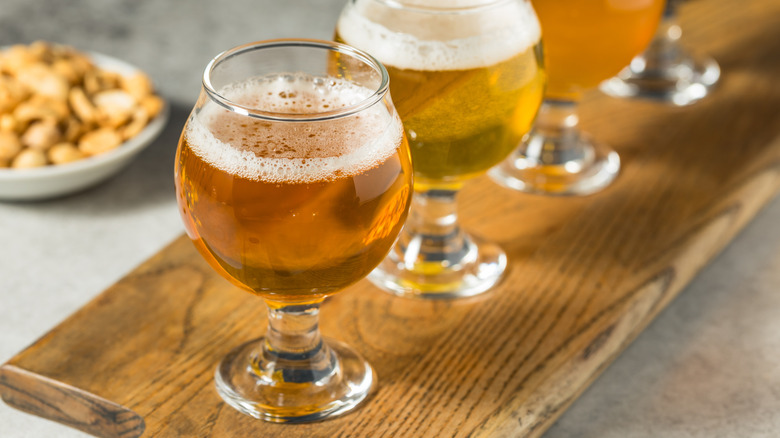
Gose is subtly tart yet refreshing, with a clean salinity and a pop of herbal citrus from the coriander. Lactobacillus imparts a citrus-like acidity that's intense but balanced, without the wild and unruly funk that is characteristic of some sours. According to the Beer Judge Certification Program, "The coriander should have a fresh, citrusy (lemon or bitter orange), bright note, and not be vegetal, celery-like, or ham-like. The salt should have a sea salt or fresh salt character, not a metallic, iodine note." A good gose elegantly balances these salty, sour, bitter, and herbal qualities.
Traditional gose only includes salt and coriander as the two flavor additions, but modern breweries, inspired by gose's bright acidity, have taken liberties. Since 2016 more than half of the goses produced in the U.S. include fruit, according to Tavour. American brewers have experimented with unorthodox and avant-garde flavors, like Westbrook's Key lime pie gose, and other countries have caught on to the experimentation craze, such as Scotland's brewery, Futtle, which makes a seaweed gose.
Gose, though brewed with hops, uses only small quantities, and the bitter-herbal nature of the hops resides in the background. Bitterness is kept very low, typically around 5 to 12 IBU (International Bitterness Units), mainly intended for balance rather than strong flavor. One of the main reasons why gose is not a hop-forward beer is because the hops can affect the growth of the Lactobacillus — the primary souring agent in gose.
How is gose made?

Gose brewing begins with grains — typically malted barley and unmalted wheat in the traditional style, though contemporary versions can differ — which give it a pale, opaque appearance and a light mouthfeel. To achieve its signature sourness, most contemporary brewers use a technique called kettle souring, where bacteria — usually Lactobacillus, the same strain found in commercial yogurts — are introduced to the wort (unfermented beer) before boiling. This method produces a tartness that's more controlled and predictable than the funk-forward profiles of wild-fermented sours, and is also much faster than other souring methods which require months of fermentation in large wooden barrels.
Instead of inviting wild yeasts in and embracing the microbial mystery that ensues — a process known as wild or spontaneous fermentation and what historical versions of gose would have relied on — kettle souring is a tightly controlled operation. The beer is fermented in large steel kettles, and the wort is boiled before any stray microbes can wander in and produce that animalistic musk some sours are known for. The process differs from brewer to brewer, but salt and coriander are generally boiled with the wort (liquid extracted from the grains). The amount of hops depends on the brewer's preference, but is kept to a minimum.
There has been so much experimentation with gose that the Brewer's Association has made a distinction between Leipzig-style gose and newer styles, noting that brews made with fruits, spices other than salt or coriander, darker malts, or other ingredients fit in the category of contemporary-style gose.
How to drink gose
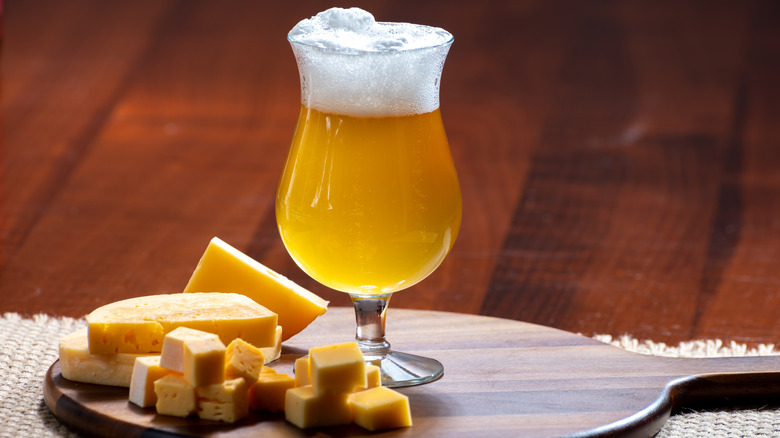
Light in body and low in alcohol, gose is ideal for summer afternoons. Throw together some rye bread or crackers, an aged gouda, any fruit you have on hand (though tropical varieties have a similar citrus piquancy that is especially fantastic), and you have a solid summer picnic. Gose complements just about anything that would find its way onto a cheese or charcuterie board, though pairing it with a mild, creamy cheese, which usually contains less salt than harder varieties, is a wonderful way to put the salt in gose to work.
For pairing with meals, the same rule applies: There are few things that gose won't complement, but in general it's safe to pair light beers with lighter foods, especially white fish and seafood. If you're working with a fruity gose, try pairing it with fish tacos or chicken sliders, or try a deeper berry gose, like blackberry, to pair with red meats, like this lamb burger recipe. Its sour acidity makes it a great pairing with deep fried foods, like panko fried shrimp, as its citrus astringency cuts through the richness of the fat and oil.
Gose is best served at a temperature that isn't frigid but isn't lukewarm, like some ales. It is typically served between 41 to 45 F. This is a cold temperature that is refreshing, but not so cold that it diminishes the flavors. In general, the warmer or more tepid a beverage is, the more flavor compounds the palate is able to register.
Gose vs. other sour beers

Sour beers are a broad family, but among the European old guard are a few stalwarts: Berliner Weisse, lambic, gose, and gueuze. What separates one sour from another — aside from geography, tradition, and the brewer's own proclivities — is how the fermentation is done. On one side, there are controlled inoculations, usually referred to as kettle souring, where brewers pitch in a known strain of bacteria (typically Lactobacillus), which ensures the predictability and consistency of the final product.
Spontaneous fermentation, alternatively, is when the wort is left open to the elements and the local microflora colonize it — a much more wild-west-inspired way of brewing sours that results in a funkier beer with layers of complexity. An example of this would be a lambic, which has a distinctly unconventional and earthy flavor profile (sometimes described as having a barnyard flavor –which is up to the specific imbiber as to whether or not that is a positive quality). Gueuze is simply a blend of young and old lambics and offers incredible complexity as it blends an already complex and layered beer. Berliner Weisse, sometimes called the "Champagne of the North" because of its light effervescence and easy drinkability, is a wheat sour with a low ABV (around 3%) and arguably the mildest of sours. Berliner Weisse, like gose, is kettle-soured, meaning Lactobacillus is added to achieve a consistent flavor and a quick fermentation turnaround.
Gose's literary connections
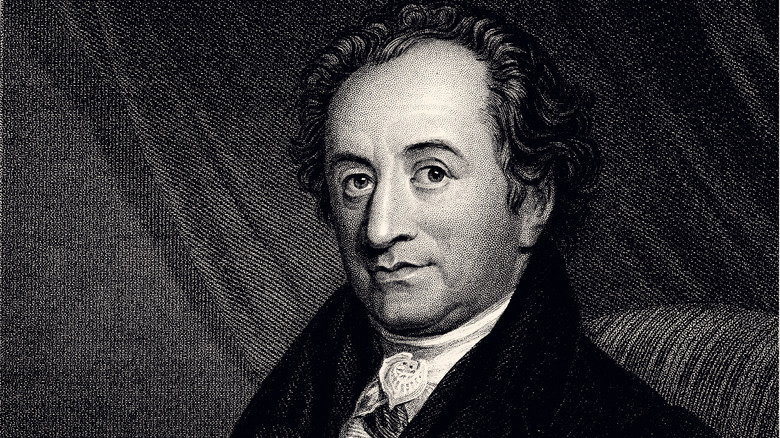
Gose, being more of a niche and obscure beer in Germany's beer canon, does not have the main-character status that other beers, like pilsners and lagers, have enjoyed throughout history and literature. Nevertheless, one of Germany's literary greats, Johann Wolfgang von Goethe (author of "Faust"), is said to have mentioned the famous gose taverns that populated Leipzig in the late 1700s and early 1800s, though it is ultimately hearsay — not historical fact.
Goethe, a respected man of the pen, did not only sit around all day scribbling abstruse metaphysical literature and pining after lost loves; he also had a healthy appetite for merrymaking and Leipzig's taverns, which happened to be serving a lot of gose at the time. Allegedly, Goethe once proclaimed, in his typical dramatic brevity, "Yes, I have been at the gose taverns too." Whether apocryphal or true, this reference lives on in gose's lore.
You can visit a historic gose tavern in Leipzig

The Gosenschenke (gose tavern) Ohne Bedenken (which translates to "without concerns" or "without hesitation") in Leipzig is still open today (it is sometimes referred to as Ohne Zweifel.). By 1905, it had become one of the largest of its kind in the city. Though heavily damaged during WWII and closed in 1958, it was revived in 1986 by Lothar Goldhahn, sparking a renewed interest in gose. Goldhahn meticulously restored the tavern's historic wood paneling and gas lamps, turning it into a "pilgrimage site" for gose devotees.
In 1990, Dr. Hartmut Hennebach took over the tavern, and with the help of brewer Thomas Schneider, who began producing gose en masse at the Bayerischer Bahnhof (Bavarian train station), gose was set to reenter the world beer stage. You can visit Ohne Bedenken today in Leipzig for a taste of what the convivial gose taverns of 19th-century Germany might have felt like.
As gose was being revived by Goldhahn and his team in the late 20th century, they allegedly coined a new toast unique to gose: Look your drinking partner in the eye, clink glasses, and exclaim with your chest, "Goseanna!" (pronounced "GOH-zuh-AH-nah").
Gose does not meet Germany's purity laws
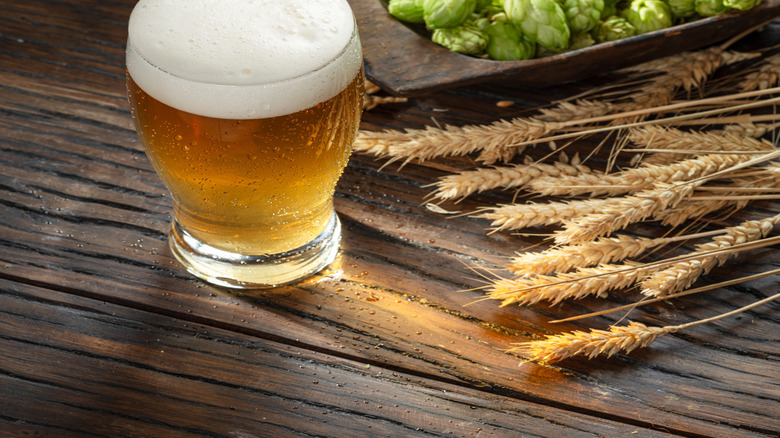
The Reinheitsgebot, or the German beer purity law, was first enacted in 1516 in Bavaria and later enforced throughout Germany. It originally dictated that beer could only be brewed with water, barley, and hops (yeast was added to the law after its discovery). Wheat was banned so as not to compete with bread production. The law was first introduced as a way to ensure beer quality and protect public health by banning questionable ingredients and to protect consumers from unfair prices. Over time it became the standard and was enshrined in German law in 1906. The Reinheitsgebot became a defining feature of German brewing tradition, solidifying Germany's reputation as a producer of clean, consistent, and "pure" beer. Gose includes ingredients not permitted under the purity law, such as coriander and salt, and is soured with Lactobacillus — deviating from typical ingredients and production methods the law allows.
But, as with all rules, they bend. Certain historical regional styles like gose are exempted from the Reinheitsgebot due to their cultural and historical significance, in addition to other reasons, such as the fact that the law originated in Bavaria, rather than in the region of Germany where gose was first made.