

15 Classic German Dishes To Try At Least Once
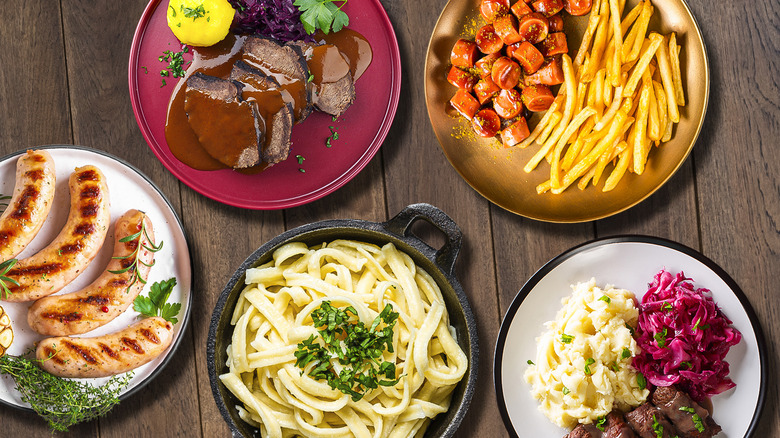
Germany has given the world many things. The television you almost certainly have hanging on the wall right now was invented in Germany, and so was the aspirin you take for a headache. X-rays? Computers? Cars? Yep, all German inventions.
But some of the best things to come out of Germany are, arguably, edible. Without Germany, we wouldn't have bratwurst, or its flavor-laden spin-off, currywurst. We also wouldn't have many of the Christmas cookie classics, either. But there are also some lesser known German dishes that deserve the spotlight, too. We're thinking of the ultimate brunch dish rührei mit krabben and the crispy potato pancakes known as kartoffelpuffer.
Feeling hungry for all of the above and more? Us too. Below, we've listed some of the best German dishes you need to try at least once in your life. From hearty pot roasts to spiced cookies to potato dumplings, there's something for everyone.
1. Sauerbraten
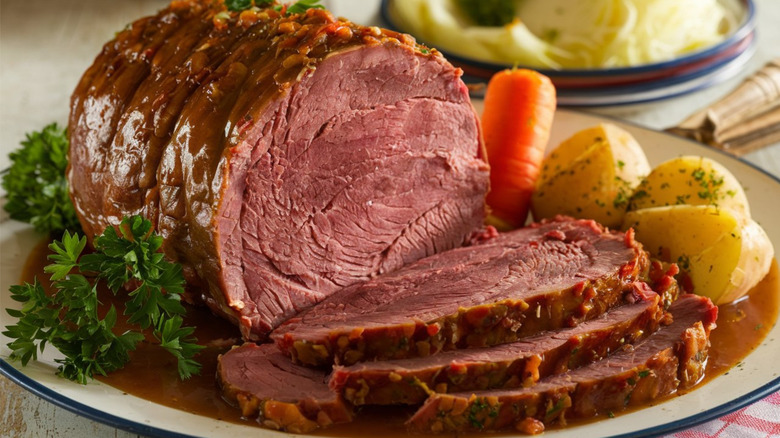
Sauerbraten is a traditional German pot roast. It's usually made with beef, which is marinated with ingredients like onions, carrots, celeriac, parsley, sugar, spices, and red wine for a long period of time (we're talking several days, not hours). The meat is then slow-cooked in that same marinade, alongside some more sugar or spiced biscuits. This unique combination of ingredients gives sauerbraten its distinct sweet and sour flavor profile. In German, sauerbraten means "sour roast."
Sauerbraten is especially associated with the Rhineland in western Germany, and it likely dates all the way back to the Roman era (when it may have been made with horse meat). Today, sauerbraten recipes vary from region to region, and even from household to household. Sauerbraten from Franconia, for example, is often made with a creamier, gingerbread sauce.
Traditional sauerbraten might be made with beef, but it is possible to make this classic German dish meat-free. Some opt to make it with seitan, for example, or store-bought beefless chunks.
2. Böfflamott
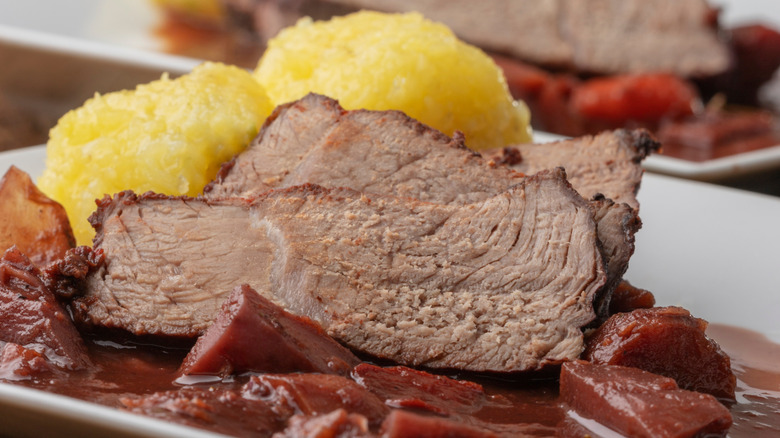
Böfflamott is similar to sauerbraten in many ways. It's a pot roast and it's made with beef (usually shoulder), for starters. But there are a few key differences. Böfflamott tends to be made with less vinegar and sugar, for example, but a lot more wine.
Böfflamott is a Bavarian dish that is very similar to the French dish boeuf à la mode, although that version usually contains pork fat, too. In fact, boeuf à la mode may have actually been the inspiration for böfflamott, after the original French dish was brought to the region during the Napoleonic Wars. One theory is that Bavarian chefs thought the name boeuf à la mode was too much of a mouthful, so they decided to refer to it as böfflamott instead.
Böfflamott is often eaten in Germany with spaetzle (more on that shortly) and glazed vegetables, but you can pair it with whatever sides you like. Some opt for red cabbage or potato dumplings, for example.
3. Bratwurst
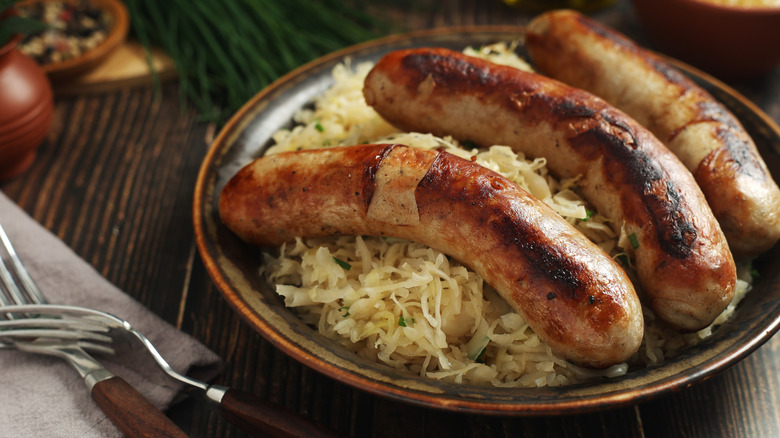
Bratwurst is well-known around the world, particularly in areas with a high population of people with German heritage, like Wisconsin in the U.S. But, of course, one of the best places to try the iconic sausage is in Germany, where it was invented.
The first known record of a bratwurst, which is usually made with fresh and finely chopped meat and marjoram, dates back to early 14th century Nuremberg. Small and pork-based, this was likely the first regional version of the sausage, now known as Nürnberger Rostbratwurst. The first record of the Thüringer version of bratwurst, made with a mix of pork and veal, came just under a century later in 1404. Today, there are more than 40 different versions of bratwurst eaten across Germany.
You can even enjoy meat-free versions of the popular German sausage. Vegan alternatives are usually made with ingredients like seitan, tofu, and beans.
4. Currywurst
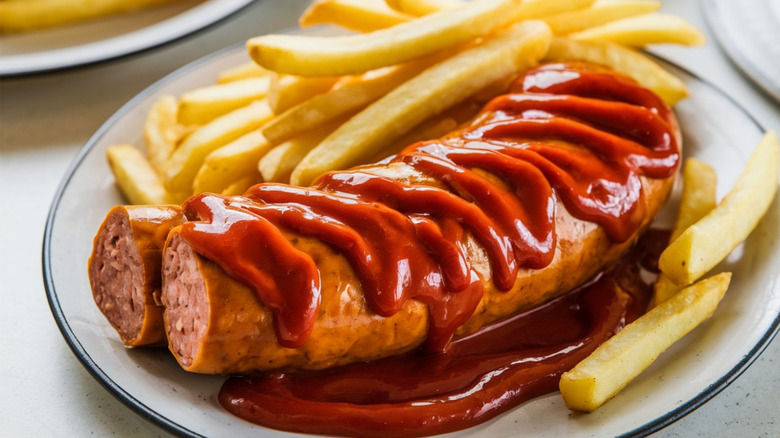
After World War II, a complicated period of history ensued, as Germany was occupied by the Allies while the aftermath of the Nazi regime was dealt with. Food was incredibly limited at this time, and many had to rely on imported rations. But this tough era actually ended up paving the way for one of Germany's most beloved foods, currywurst.
During their occupation, British and American forces brought in two ingredients that hadn't been known in Germany previously: ketchup and curry powder. In 1949, snack bar-owner Herta Heuwer allegedly tried to create something new for the people of Berlin (most of whom were living on plain sausages, potatoes, and bread) by combining these two ingredients with Worcestershire sauce. She poured it over sausage, and currywurst was born.
Heuwer's signature recipe was never shared, but that didn't stop imbiss (street food) stands across Berlin and beyond from attempting to imitate it. Today, you can find currywurst sold everywhere in different variations. Some prefer it with the skin on, others with the skin off, and you can even find vegetarian and vegan options in many places, too.
5. Spaetzle
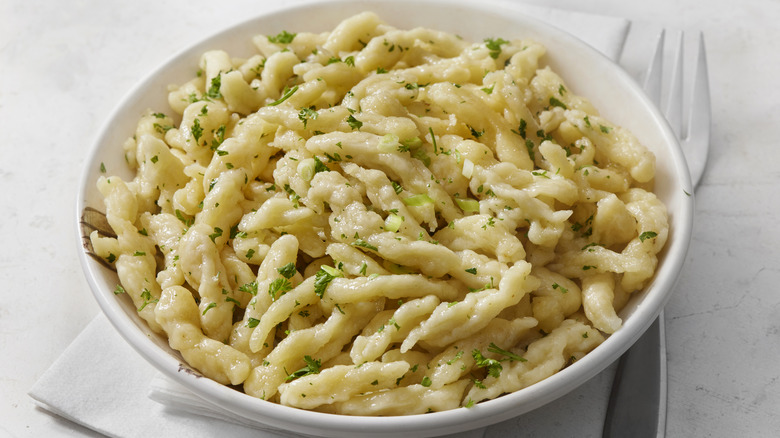
Each region in Germany is known for its own distinct foods. Berlin gave the country currywurst, and Swabia, a region in southwestern Germany, was responsible for spaetzle. The dish is very simple; it's basically noodles made with a batter of eggs, flour, milk, and water. It's kind of a cross between pasta and dumplings, and it's mainly popular for its versatility. Spaetzle is often served with everything from stroganoff to goulash and bratwurst.
While spaetzle is Swabian (the first recorded mention in the region dates back to 1725), the simple and nourishing side dish has become popular across Germany. You can find tasty versions served in restaurants everywhere, from Frankfurt to Munich to Berlin. You can even find versions of spaetzle in neighboring countries. In Austria, for example, spaetzle is often enjoyed with lots of melted cheese and onions. The simple dish is also popular in Switzerland, the Czech Republic, and Hungary.
6. Rouladen
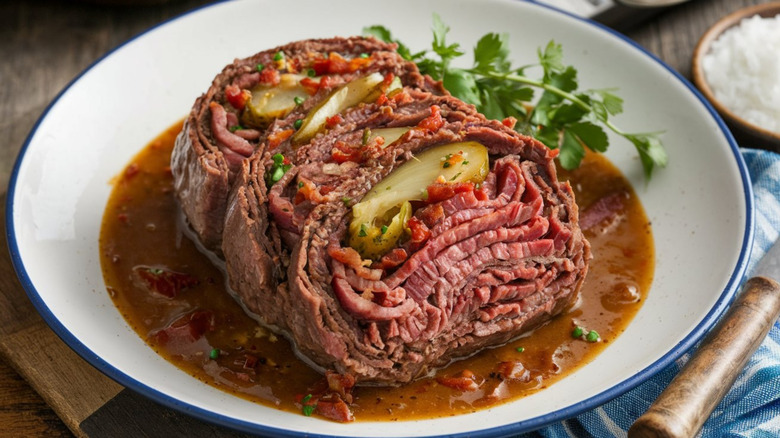
Rouladen is a rich, meaty dish that involves layering thin slices of beef with mustard, bacon, onions, pickles, and then rolling it all together. Similar to sauerbraten, it's cooked low and slow in stock, which is then thickened with cornstarch and drizzled over the rolls as sauce. Rouladen sounds like meat-central, and traditionally, it is, but you can also make plant-based versions of the popular German dish with ingredients like soy steak and tofu.
Like many traditional foods, recipes for rouladen are different depending on the region and the household. Some prefer to make it without the pickles, for example, while others add hard-boiled eggs into the filling.
It's not certain where rouladen comes from, exactly. But it has likely been eaten in Germany since at least the 1700s. It may have been influenced by the French initially. The name comes from "roulade," which is French for "to roll."
7. Schweinebraten
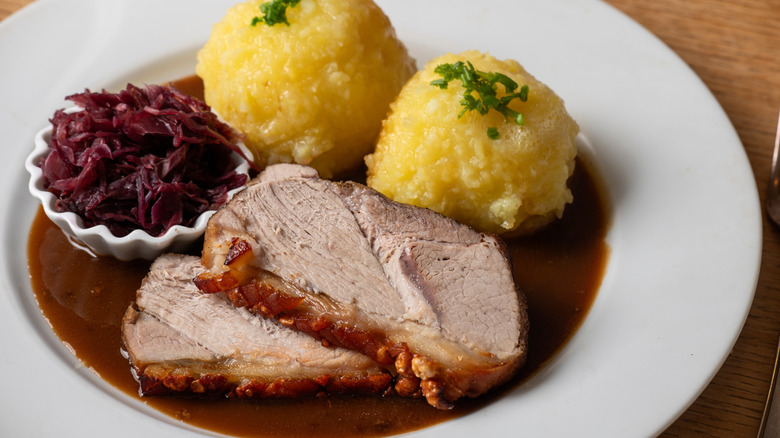
Pork has long been a cornerstone of German cuisine (that much is evident from the sheer amount of sausages eaten in the country). While demand has dropped a bit in recent years, it still makes up more than half of the meat eaten across Germany.
Alongside bratwurst and currywurst, another classic German recipe that revolves around pork is schweinebraten. The popular Bavarian dish, again, consists of meat that has been cooked low and slow until tender, and then served with sides like sauerkraut and vegetables. It's often eaten as a hearty Sunday lunch or offered in Bavarian beer halls — some even choose to add beer to the marinade for extra flavor.
If, like a few Germans, your appetite for pork has dwindled, don't worry: As with many traditionally meaty dishes, you can still enjoy schweinebraten with plant-based ingredients. Once again, seitan is usually the star of the show, thanks to its meaty texture and ability to soak up lots of flavor.
8. Potato salad
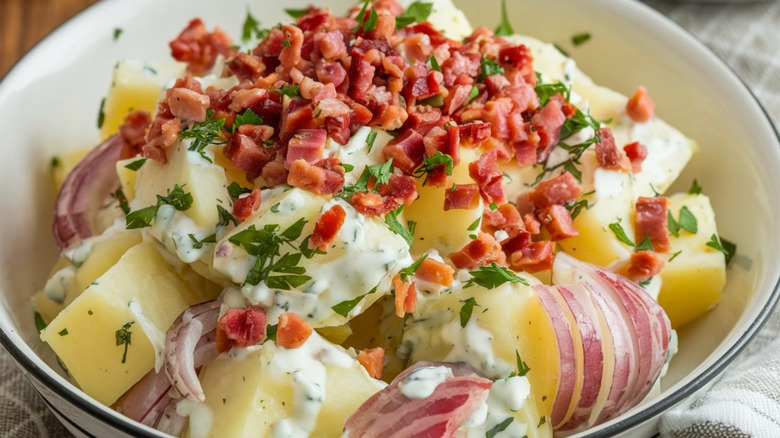
You'll find potato salad at most American cookouts and barbecues, and most people have their own version of the recipe. Some like it spicy, for example, while others like to load it up with lots of dill. Germans love potato salad, too, but their take is quite different from the kind you'll find in America.
While in the U.S., potato salad is usually a cold dish, in Germany, it's often served warm or hot, at least in the south, anyway. Swabian potato salad, for example, is made with broth and mustard, and the Bavarian version is often made with hot crispy bacon and cornichons.
In the north of Germany, however, potato salad is often served cold. It's also much creamier, and made with ingredients like pickles, eggs, and mayonnaise. Most variations of potato salad complement many other German dishes. You can eat it with everything from sausages to schnitzel (which is actually Austrian, but has long been a favorite in German households).
9. Mettbrötchen
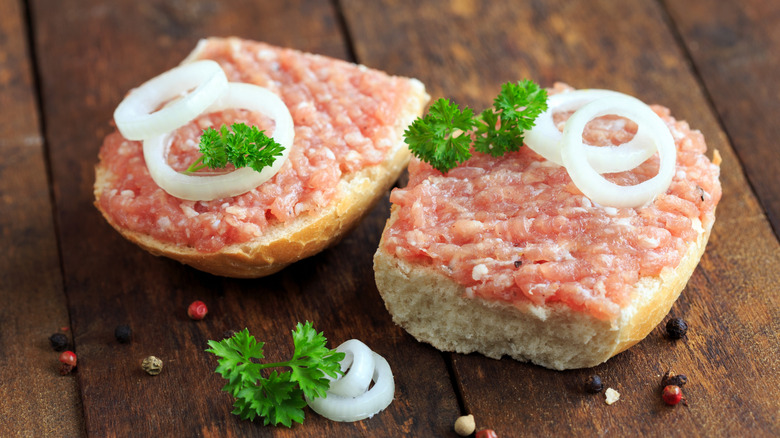
To most, eating raw pork feels like a big no-no, and it makes sense. Consuming undercooked pork can increase the risk of parasites and foodborne diseases. But in Germany, eating raw pork is a tradition born out of trust. Mettbrötchen, a type of open sandwich topped with seasoned raw minced pork, has been eaten in Germany for centuries. It was enjoyed by laborers as street food before refrigeration was even invented, because back then, people trusted their local butchers to know if the raw meat was dangerous or not.
Today, mettbrötchen is still eaten across Germany (although it's less common in the south, where the pork sausage is king). And again, people just trust eateries not to make them sick. This is helped by strict regulations that dictate that mett (that's the word for the raw pork in mettbrötchen) can only be served the same day that it's ground. Fun fact: Another way to serve mett is in a mettigel, which is the same raw pork but with slices of vegetables in to make it look like a hedgehog.
If you can't get past the idea of eating raw pork, then there are plant-based versions out there. Some make it with a mix of rice waffles and tomato paste, for example, while others use a base of kidney beans and water to create a similar texture.
10. Kartoffelpuffer
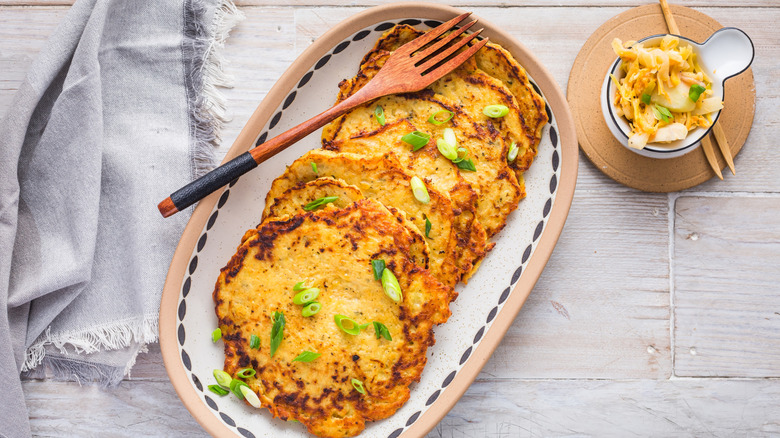
Potato pancakes are a staple in many European countries. In the Czech Republic, for example, raw, shredded potatoes, garlic, and marjoram are combined to make a thin and crispy pancake called bramborák. In Switzerland, rösti is thicker and nearly always made with pre-cooked potatoes. Germany's answer to the potato pancake is kartoffelpuffer, which is usually made with very finely grated raw potatoes, eggs, grated onion, and flour. Everything is then fried together to make a crispy potato treat that goes well with everything from eggs to roast pork.
Germans have probably been making kartoffelpuffer since medieval times, but the name changes depending on where you are in the country. In Bavaria, potato pancakes are known as reiberdatschi, for example, and in the Rhineland, they're reibekuchen. In Saxony, they're simply referred to as puffer. But whatever the name, the dish is still the same: Crunchy, crispy, golden, potato pancakes that are as satisfying as they are versatile.
11. Kartoffelknödel
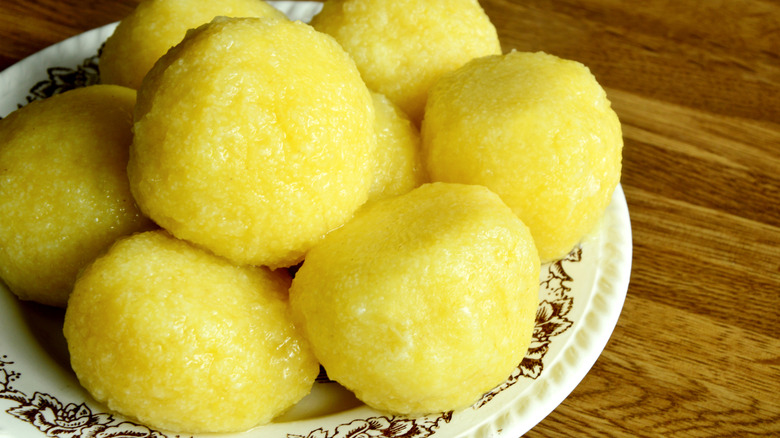
Kartoffelknödel is one of those dishes that has been lovingly made in German households for generations. Each household and region has their own twist on the recipe, but in a nutshell, kartoffelknödel is a potato dumpling.
The hearty dish is very similar to Italian gnocchi or Polish kopytka, and is usually made with a mix of ingredients like eggs, riced potatoes, potato starch, and salt. Depending on the region, the quantity of each ingredient changes. For example, Thüringen uses mostly raw potato with a little bit of cooked, while Franconian kartoffelknödel is usually made with half cooked and half raw.
Kartoffelknödel is loved for its pillowy, comforting texture, as well as its versatility. It's particularly good at soaking up sauce, and is often served with gravy, roast meat, and vegetables. It also works well with sauerkraut and bratwurst, goulash, or pretty much anything else you have a craving for.
12. Strammer Max
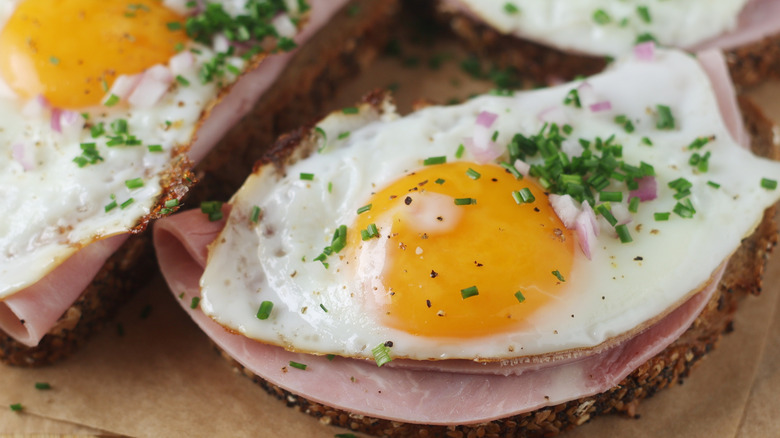
We've had mettbrötchen, and now it's time for another meaty German open sandwich: Strammer Max. But if you're nervous about raw meat, don't worry, this one only features cooked pork. Usually, Strammer Max is made with a combination of cured ham and fried eggs. The bread varies, but thick, seeded varieties are a common choice. It's similar to the French croque madame, which is a sandwich with ham, egg, and cheese.
The Strammer Max hails from Berlin and Saxony, where it has likely been eaten since the early 20th century. If you're wondering about the name, there's an interesting explanation: Strammer means "firm or strapping" and Max is just the common male name, which leads some to think it might be slang for, well, you know. Wink wink.
There are a few variations on the Strammer Max sandwich. Strammer Otto, for example, is usually made with salami or beef, while Stramme Lotte is made with cooked ham.
13. Rührei mit Krabben
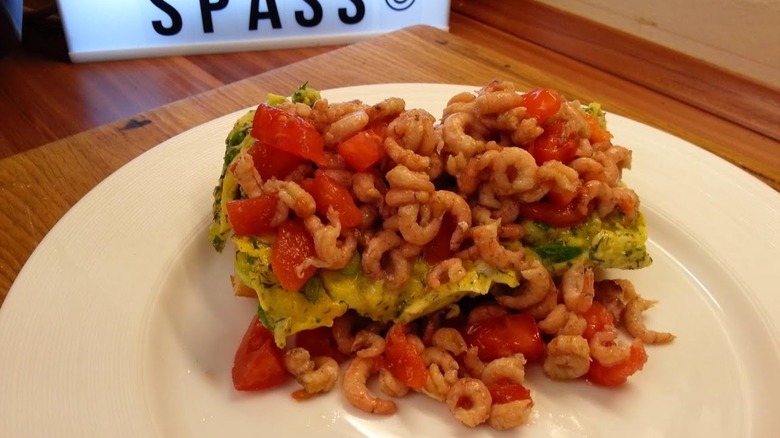
Quite a few German dishes include egg. As well as Strammer Max, there's Bauernomelett, for example, which is a type of omelet made with bacon, onions, potatoes, and cheese, and senfeier, which is eggs in mustard sauce. There's also rührei mit krabben, which translates to scrambled eggs with crab. But it's not actually made with crabs, it's made with shrimp.
Somewhat confusingly, the specific type of shrimp used in the dish is called North Sea crab. Known as Nordseekrabben, the shrimp has been caught and eaten in East Frisia in Lower Saxony since the 17th century. As you might expect, rührei mit krabben is typically eaten for brunch with a slice of fresh, hearty bread.
Depending on your preference, Nordseekrabben can also be eaten in a sandwich with mayonnaise and dill, stirred into a soup, or mixed into a salad with other ingredients like hard-boiled eggs, mushrooms, walnuts, Tabasco, and apple.
14. Pfeffernüsse
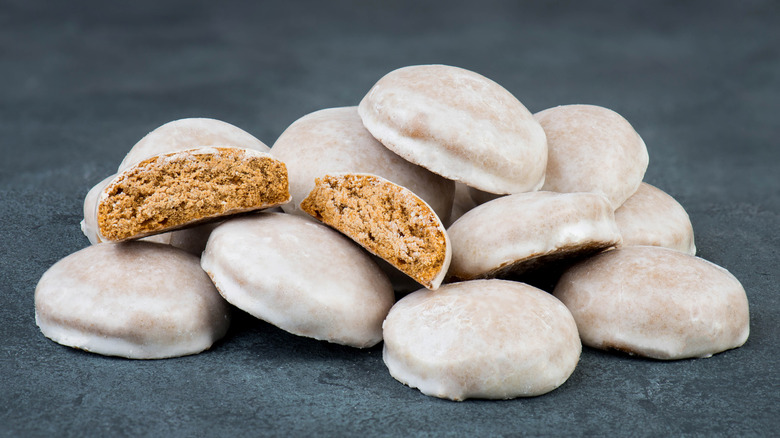
Now, we're onto the sweet treats. Pfeffernüsse, which is usually eaten during the holiday season, is a German classic. They're popular in the U.S., too, where they were introduced by German immigrants.
The small, round, crunchy cookies are usually iced and loaded with those classic warming festive spices, like cloves, cinnamon, star anise, allspice, and pepper. While combinations can vary, nearly every recipe calls for anise and white pepper. The name actually translates to "pepper nut," although there aren't usually nuts in the recipe. Some believe the nut part might be related to the hard texture of the cookie.
Germans have been indulging in pfeffernüsse cookies for a very long time. In fact, one origin story claims that they were first created in a town near Frankfurt in the 1750s by a pastry chef called Johann Fleischmann. Today, they're popular across the U.S. and many European countries. In the Netherlands, they're often eaten in celebration of Sinterklaas on December 5.
15. Lebkuchen
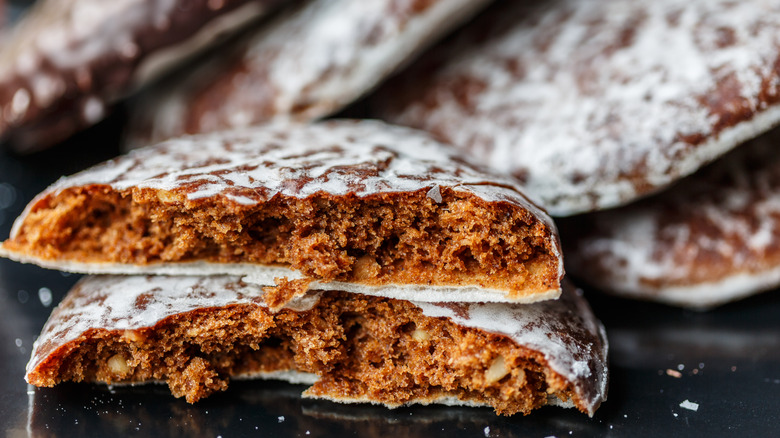
Another classic German cookie is lebkuchen. It's also usually eaten during the holidays and is made with nuts, honey, and warming spices, like cinnamon, nutmeg, and ginger. In fact, the specific blend of spices used to make lebkuchen is lebkuchengewürz, which is known as German gingerbread spice. Lebkuchen is also not as hard as pfeffernüsse, and is usually soft, chewy, and a little cakey.
Lebkuchen is another centuries-old favorite in Germany. In fact, the first recipe dates all the way back to 13th century Nuremberg. Back then, it was likely first baked by Franconian monks, who had access to honey in the forests, as well as spice trade routes. In the centuries that followed, generations of Nuremberg bakers perfected the recipe. To this day, many think that the very best lebkuchen is found in Nuremberg, where many artisanal lebkuchen bakeries are located. In fact, Nuremberg lebkuchen even has a protected designation of origin.