

Here's How Long You Can Safely Keep Your Restaurant Leftovers
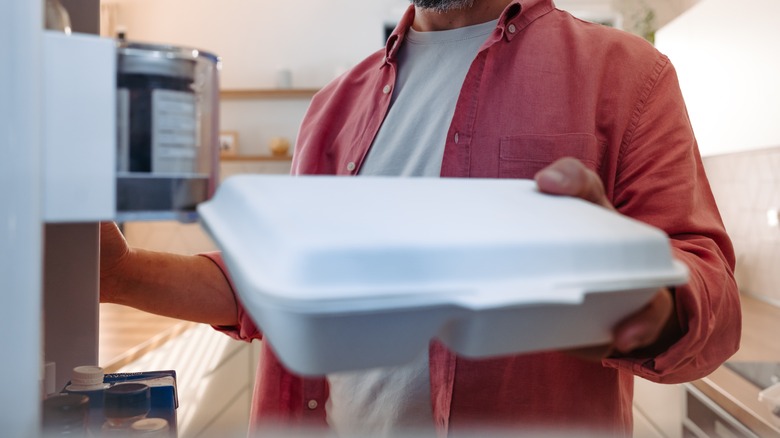
That pasta you ordered the other night was so bangin' — thank goodness there were leftovers (tasty double feature). But come to think of it, how many days ago did you hit the restaurant? Are your leftovers still in good shape? According to the U.S. Department of Agriculture (USDA), restaurant leftovers must be refrigerated within two hours.
Unless the restaurant is egregiously far from your house, most foodies will be well within the safety window if they pop their leftovers in the fridge as soon as they get home. For extra longevity, a proper airtight seal is always a good practice in food safety. To get the most mileage out of your leftovers, transfer them to a resealable container. It's a quick extra step that can make a noticeable difference in quality. In the fridge, your restaurant leftovers will be safe to eat for three to four days. However, this time frame regards food safety, not food quality. For the best-tasting leftovers, we recommend the 2-2-2 rule. Use them up within two days if you can. If not, they'll still be fine three to four days later.
Never reheat your leftovers in their takeout container, either. Always transfer them to a microwave-safe plate or bowl before nuking. If you're reheating leftover soup, bring it to a boil for maximum food safety. For soups and heavy sauces, it might be worth breaking out the saucepan and firing up the stove.
Restaurant leftovers will last three to four days, if you refrigerate them promptly
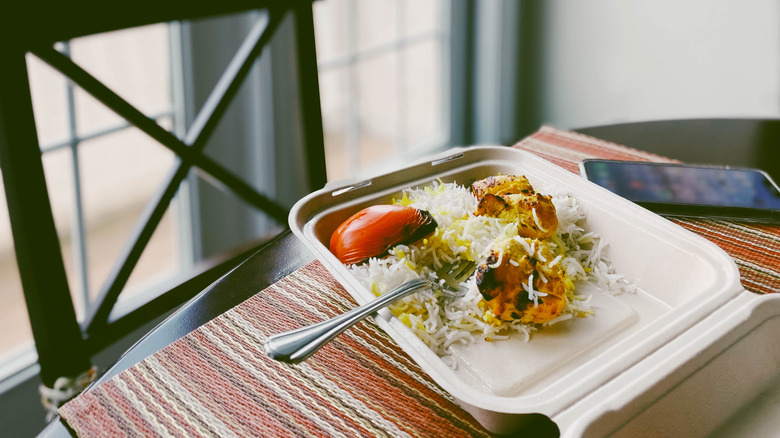
If you aren't headed straight home after dining at the restaurant, things can get tricky. Any errands should be brief, not exceeding that two-hour safety window. On a hot day, when temperatures exceed 90 degrees Fahrenheit, the window shortens to just one hour, according to the USDA. In that temperature zone, harmful bacteria can grow and multiply rapidly.
To play it safe, keep your takeout box cool and stash it in the fridge as soon as possible. And as always, if your food looks or smells a little off, it's better to be safe than sorry — pitch it. Alternatively, if you plan to be out for the day after your meal — catching a movie or hitting the mall — it's best to leave any leftovers behind. Also, keep in mind that some foods simply don't hold up well in the fridge. While cold spaghetti and meatballs rule (and are even chef Alex Guarnaschelli's all-time favorite midnight snack), a Styrofoam takeout box of soggy fries offers substantially less appeal — and probably isn't worth rushing home to save.
A study in published in Plos One, led by Brian Roe, an applied economist at Ohio State University, tracked eating habits with a focus on leftovers. The findings? To reduce food waste, Roe suggests to avoiding over-ordering. Speaking with Scientific American, he said, "Choose a smaller meal, and you're less likely to generate leftovers. And that's a good thing because leftovers, all else equal, tend to be wasted more often."