

Here's Why Some People A Put Coin In Their Freezer Before Leaving For A Trip
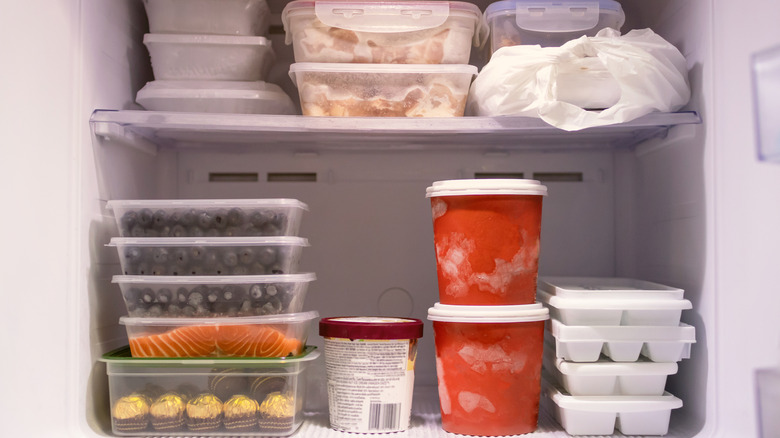
When packing for a trip or getting ready to go away, you probably have a to-do list in mind already. Things like "don't forget toothpaste" and "throw away the mushy bananas" (unless you want to make a quick, easy banana bread) are top of the list, but some people add an extra step to ensure their belongings stay protected while out of town. It involves leaving a coin (like the quarter you need for an Aldi cart) on top of a frozen cup of water in the freezer, but why the strange ritual?
This hack is designed to help determine if your home loses power while you're away, even for a few hours. The thought process is that if you return and the coin is still firmly on top of the ice, you never lost power. If you notice that the coin is below the surface of the ice or somewhere towards the middle of the frozen cup, it indicates that you lost power for a period of time.
Lastly, if the coin is fully sunken to the bottom of the ice, or you open the freezer to the coin at the bottom of a cup of liquid water, then you know the power went out for a dangerously long time. The whole "coin in the freezer" trick has been passed down by word of mouth for generations, though it gained popularity on social media about a decade ago and has swarmed the internet ever since.
The frozen coin trick can indicate how long you've lost power
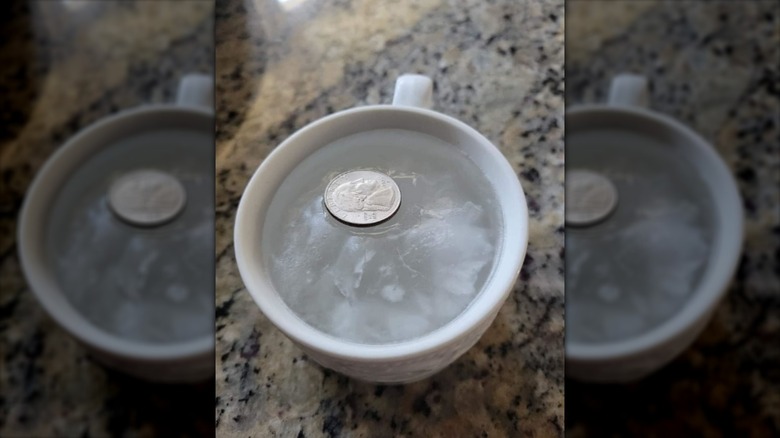
The coin trick is useful on a trip, but also especially useful during natural disasters. Whether you're evacuating ahead of a storm or experiencing an outage while sheltering, the coin trick can help determine if your food is still safe. According to the CDC, foods will be safe in a refrigerator with no power for up to four hours and in a freezer for up to 48 hours. The catch is that the doors need to remain closed, and temperatures can't rise above 40 degrees Fahrenheit; otherwise, you run the risk of dangerous foodborne illnesses. So, if you open the freezer and see that the coin is sunken in a cup of ice, it may be an indication that the power was out for more than four hours.
FoodSafety.gov put together a comprehensive list naming the best safety practices for handling cold and frozen foods during a power outage, including the advice that you should "never taste food to determine its safety." Some refrigerator items are safe to keep if the temperature gets a little warm — such as hard and processed cheeses, fresh fruits and vegetables, and baked goods such as muffins and bread — while other items need to be thrown in the trash, like meats, shredded cheeses, and most milk-based products.
When it comes to the freezer, you can refreeze many items if there are still solid ice crystals, but if temperatures rise above the threshold, it's best to throw away all meats, milk-based products, and home-cooked goods.