

19 Items To Try At A German Bakery
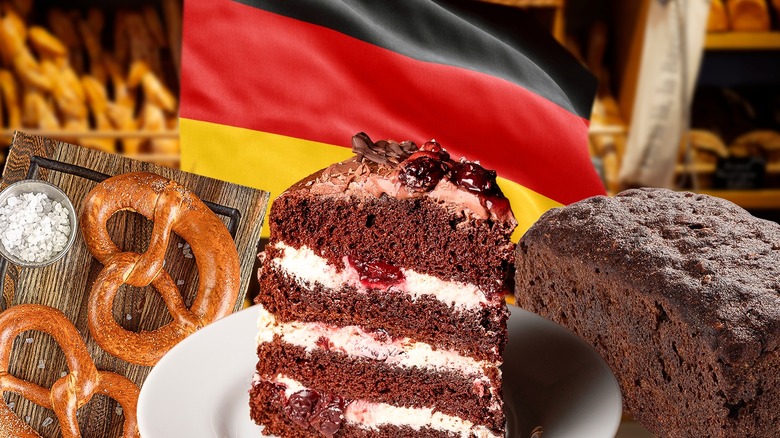
With foreign names and often unfamiliar ingredients, it can be difficult to confidently order from a bakery while traveling through Germany. You'll find yourself needing to choose between a plethora of breads, pastries, and sandwiches, many of which have bold, sharp flavors. Ultimately, sampling these baked goods can be an eye-opening experience and instill you with plenty of inspiration for your home kitchen, but it helps to have some foundational knowledge.
This guide will introduce you to a variety of breads and pastries commonly found in German bakeries. While not all of them have German origins, they are nevertheless staples nationwide. Over the course of your travels, you might find each item in several variations; for instance, bread in Germany is often sprinkled with coriander, fennel, anise, and caraway seeds. With an open mind and a hungry belly, you will usually be able to find at least a few options that strike your fancy.
1. Croissants
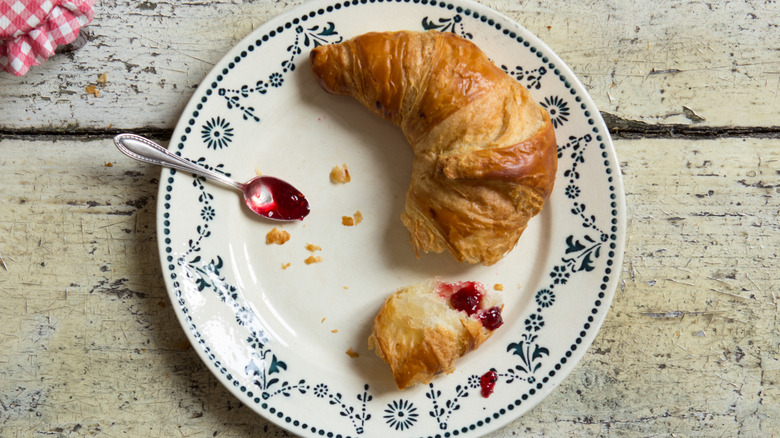
Despite being known as a Parisian delicacy, croissants hail from Austria, where they were originally called kipferl. The Austrian baker who introduced Paris to croissants used a brioche dough rather than the laminated yeast dough that is ubiquitous today. In modern times, croissants can be found all across Europe, including in Germany.
French style croissants are readily available in Germany, where they are often eaten with Nutella, butter, and/or jam. You can also try Franzbrötchen for a German spin on the classic Parisian staple. Franzbrötchen similarly feature a base of laminated dough, specifically a variation known as plunderteig. A decadent and buttery cinnamon mixture is then added before the dough is rolled and cut into small, slightly flat pieces. You can distinguish franzbrötchen from Parisian croissants because they are not crescent-shaped.
2. Brötchen
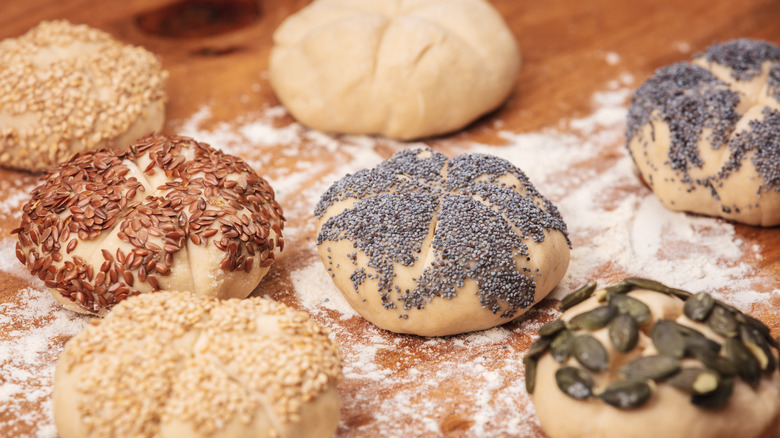
A typical breakfast in Germany would be incomplete without brötchen, bread rolls that can easily be grabbed by hungry hands, layered with condiments, and devoured in just a few bites. Brötchen is the diminutive form of brot, the German word for bread, and these baked goods are indeed much smaller than bread's other avatars. Brötchen are known for being crunchy on the outside, yet soft on the inside, and they come in many variations.
Schrippen (or schnittbrötchen) are beloved in northern Germany and are basic enough to accommodate any condiment. Kaisersemmeln, or Kaiser rolls, also feature a neutral flavor and are fashioned with a star on top. Meanwhile, laugenbrötchen are dipped in a solution of lye or baking soda before being baked, making them similar to the brezeln for which Germany is famous (more on that in a moment). Then there are mohnbrötchen, which are covered in poppy seeds. Notably, not all bread rolls are round. Laugenstangen, for example, are an oblong version of laugenbrötchen.
3. Brezeln
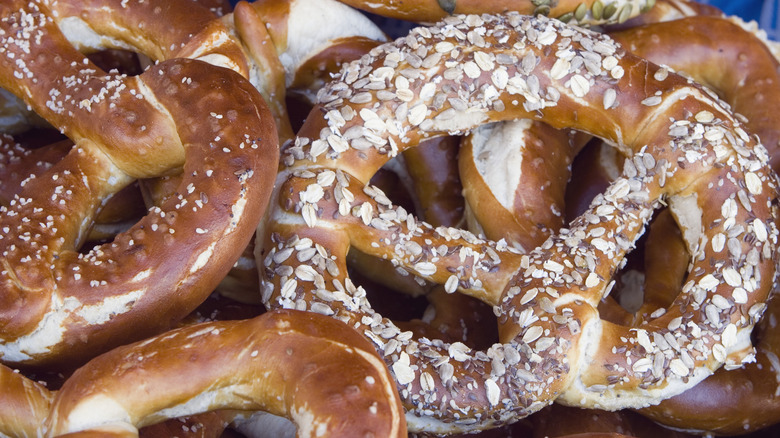
It would be impossible to picture a Bavarian beer garden without also imagining a profusion of large, soft pretzels. Known as brezeln in Germany, these scrumptious baked goods are so sizable that one could be a meal by itself. Brezeln also serve as a filling snack when split with friends. Frequently served plain, brezeln are often slathered with butter and stuffed with herbs or covered in a tantalizing layer of baked cheese. At Christmas markets, you might even see them dipped in chocolate.
Brezeln are usually composed of basic ingredients like wheat flour, salt, yeast, and water (and sometimes a bit of sugar and butter). The magic comes in how they are prepared. Bakers achieve the signature glossy crust of brezeln by dipping the shaped dough into lye before baking the brezeln in an oven. Because the lye solution is alkaline, the surfaces of the brezeln become gloriously brown, crisp, and flavorful. Home cooks can alternatively use a baking soda solution in place of the lye.
4. Mischbrot
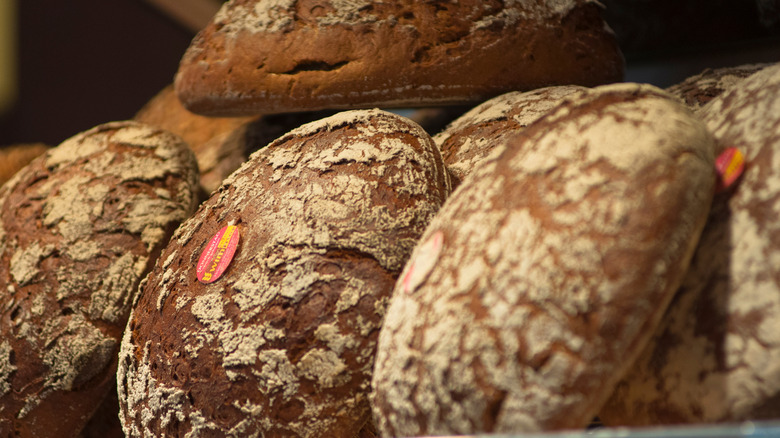
Mischbrot, which translates to "mixed bread" in German, refers to a loaf that includes both wheat and rye. Compared to other German breads, it has a somewhat subdued flavor. This is good news for travelers accustomed to eating white bread; the malty, somewhat sour flavor of rye can take some getting used to. In northern Germany, you are likely to encounter loaves of mischbrot with more rye, while in southern Germany, wheat is more prominent. In addition to its crowd-pleasing flavor, mischbrot's texture is also alluring; the presence of wheat helps give the bread a moist, airy crumb, distinguishing it from other German breads that can be dense.
There are myriad kinds of mischbrot, including bauernbrot (translating to "farmer's bread") and landbrot (meaning "country bread"). Because of the many regional variations and recipes, it can be tough to draw distinctions between mischbrot categories. Regardless, you can rely on the fact that this multi-purpose bread is an excellent base for cheese, jam, honey, meat, lettuce, and more.
5. Schwarzbrot
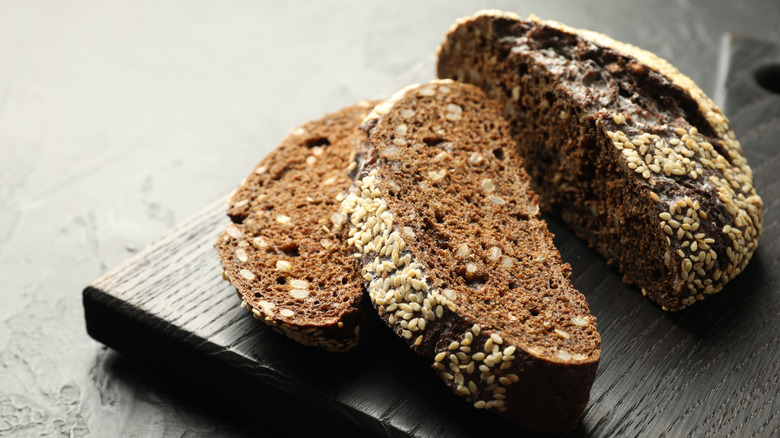
Don't be fooled by the name: Although schwarzbrot literally translates to "black bread," this style of bread is actually dark brown. That's because it is made with rye flour and other whole grains, and often a bit of molasses or sugar cane syrup. Though it can be found nationwide, schwarzbrot is ubiquitous in northern Germany, where it has been enjoyed for hundreds of years.
Those looking for healthier options often favor schwarzbrot for its high fiber content. Indeed, many recipes forgo refined wheat altogether, ensuring that the grains' nutrients remain robust and plentiful. However, schwarzbrot is much more than a health food. This bread is deliciously sour, thanks to its long fermentation period. This makes it a good partner to honey and various cheeses. Other common accompaniments to schwarzbrot include butter, pickles, smoked fish, and cured meats.
6. Vollkornbrot
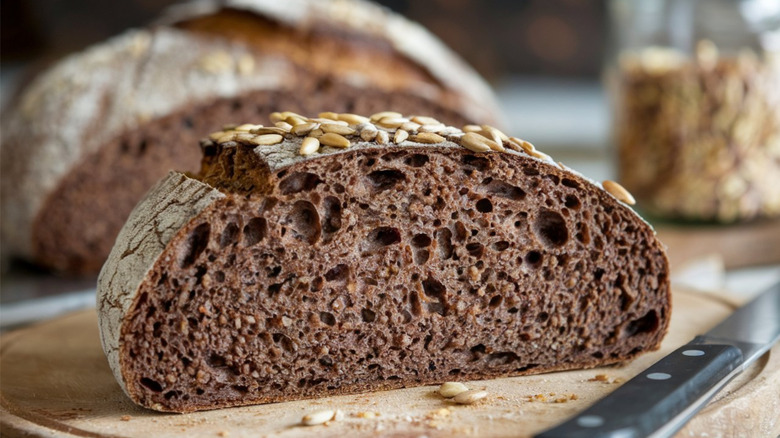
Vollkornbrot literally translates to "whole grain bread," is a nutritious choice made using dark rye flour and sourdough culture. It is earthy in flavor while also offering a noticeable tang. Vollkornbrot has a dark brown hue and dense texture that pairs well with butter, jam, meats, and more. Impressively, the shelf life of vollkornbrot can be weeks long when it is secured in plastic wrap and stored in the refrigerator.
Despite their similar translations, It is important not to mix up vollkornbrot with the multigrain breads that bakeries often sell. Recipes for the latter are diverse, and although they frequently feature rye flour, they can also include ingredients like wheat flour, sunflower seeds, pumpkin seeds, sesame seeds, flax seeds, and linseeds. Vollkornbrot has a darker flavor than these multigrain breads, as well as a denser texture.
7. Kartoffelbrot
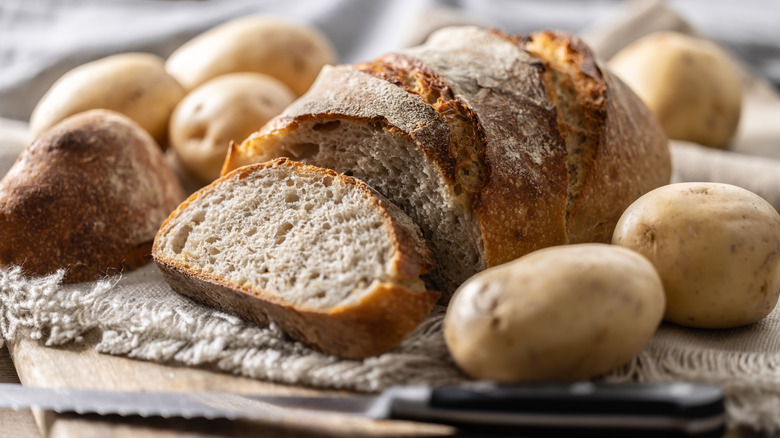
Kartoffelbrot, which literally translates to "potato bread," is a German specialty that brings together two of the most common ingredients in German cuisine: Potatoes and bread. It's no wonder that bakers have been selling kartoffelbrot for centuries, either; it's perfectly crunchy and mouthwateringly delicious, easy on the wallet, and can be made in a jiffy. In addition to potatoes, kartoffelbrot can also feature ingredients like rye flour, wheat flour, yeast, and sourdough culture. You might also find versions made with spelt flour. If you are interested in baking kartoffelbrot at home, it can be a great way to use up leftover mashed potatoes.
You can use kartoffelbrot in many of the same ways as you would use other German breads: for sandwiches, spreads, and dipping into soup. Just don't expect this bread to be as soft as a typical American potato roll, which is known for its pillowy nature.
8. Pumpernickel
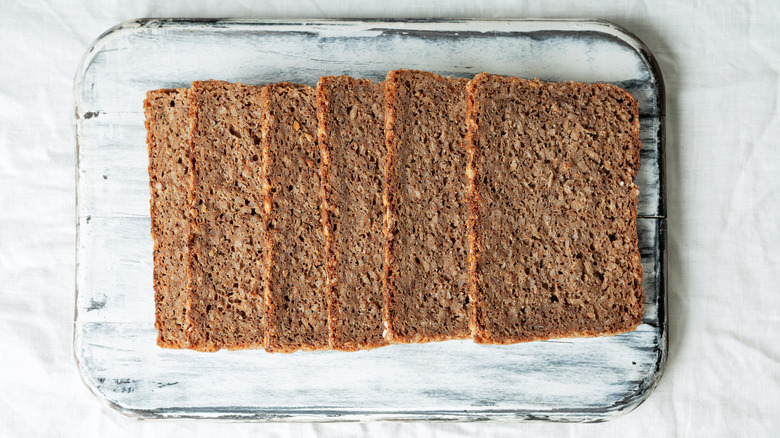
Like vollkornbrot, pumpernickel is made with rye. Nevertheless, the two breads are distinctly different. In pumpernickel, bakers favor unbolted rye. Plus, pumpernickel requires patience, as each loaf can require hours in the oven. The shape of a pumpernickel loaf can be circular, square, or rectangular, and you might not even notice a crust. These attributes help explain why German pumpernickel is so different from American pumpernickel.
The name of this bread draws upon a bit of dark humor, as it translates to something along the lines of "farting devil." However, most modern recipes are tasty and easy on the stomach, so you can reliably use pumpernickel for your sandwiches and toasts. It pairs well with robust flavors like pickles, smoked fish, and sauerkraut, as well as sweet flavors like jams and honeys. It is also an excellent accompaniment to soups.
9. Schwarzwälder kirschtorte
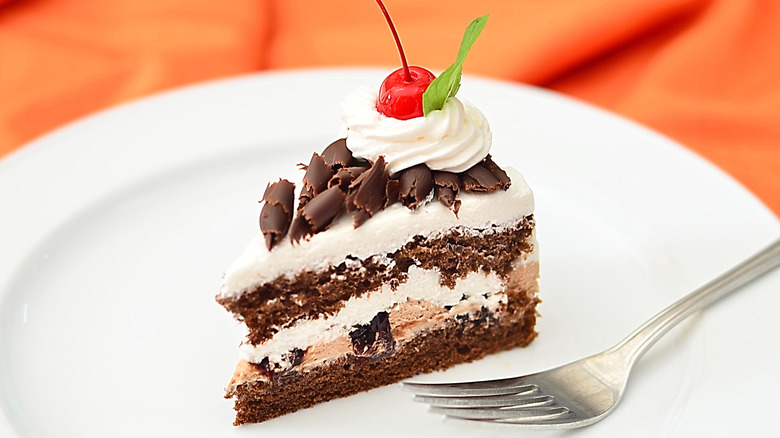
Schwarzwälder kirschtorte, or Black Forest cake, can be found at many bakeries around the world and is a popular choice for those in need of a chocolate fix. A traditional recipe for schwarzwälder kirschtorte will create a layer cake using ingredients like cocoa powder, sugar, flour, cherry brandy, cherries, and chocolate shavings.
Despite variations between bakeries and regions, traditional schwarzwälder kirschtorte will always include kirschwasser, or cherry brandy. In fact, this one ingredient may explain how Black Forest cake got its name. Whipped cream complements the rich, slightly boozy flavors of this cake with its light texture and subtle sweetness. A cup of coffee also makes for an excellent accompaniment. No matter what, have your camera ready to capture the stunning beauty of this dessert.
10. Apfelstrudel
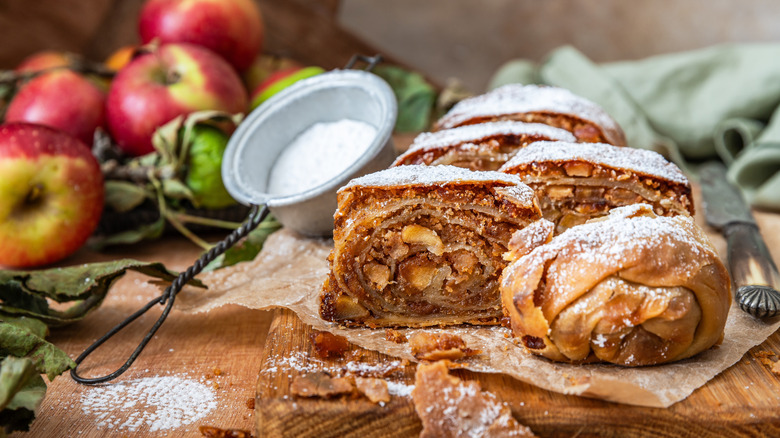
Strudels come in many variations, both sweet and savory. Apfelstrudel, or "apple strudel," is one of Austria's most iconic desserts, but its sweet, fresh flavors have also captured the hearts and tastebuds of Germans. It is especially succulent between the months of August and October, when apples are in season in Germany.
Some say this delicacy traces its roots to baklava and it often features puff pastry instead of strudel dough. However, the two desserts are significantly different; while both are composed of multiple layers of dough, apfelstrudel is less cloyingly sweet and calls for different fillings. Apfelstrudel will typically feature the earthy flavors of cinnamon, the tartness of apples, and the richness of butter. Raisins and rum commonly make an appearance as well. Save plenty of space in your belly for this dessert; apfelstrudel is frequently served alongside vanilla ice cream, vanilla sauce, or whipped cream.
11. Käsekuchen
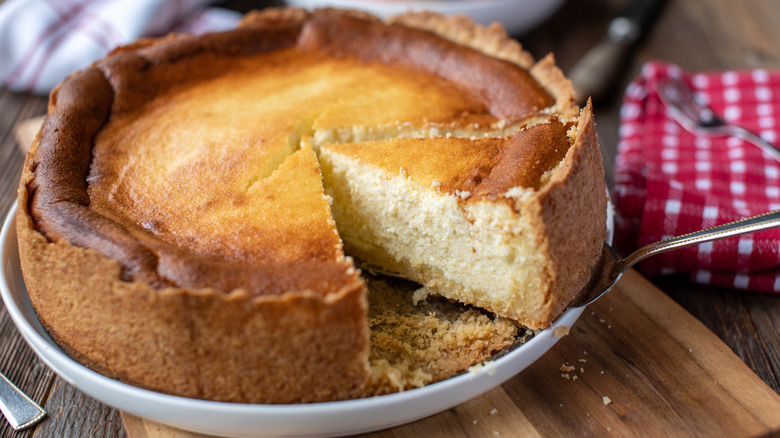
New York-style cheesecake may hog the spotlight on menus around the world, but once you taste your first bite of käsekuchen, you'll be telling all your friends about it. Part of what distinguishes this creamy German dessert item from other versions of cheesecake is its use of quark, a type of cheese made from cow's milk that has been soured and strained. Quark gives käsekuchen a fluffy, voluminous texture that makes you feel as if you are chowing down on a sweet, but not too sweet, cloud.
Which brings us to our next point: Further separating most German käsekuchen recipes from American cheesecake recipes is the lesser amount of sugar. Instead, käsekuchen capitalizes more on the tanginess of quark. A final point of differentiation is the type of crust usually featured in käsekuchen; forget graham crackers because bakers usually prepare a shortcrust pastry for the base of this delicacy.
12. Berliners
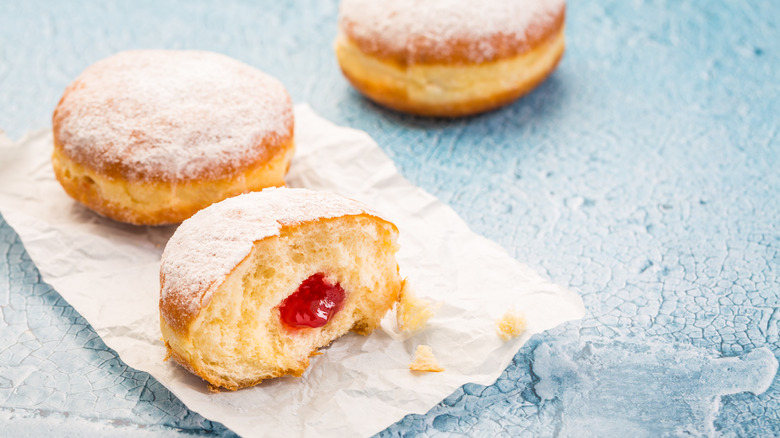
While traveling through Germany, you may see these donuts referred to by other names, such as "Krapfen" or "Pfannkuchen." Generally, though, no matter which moniker is listed on the menu, you can expect the same delicious pastry: a jam-filled ball of dough that has been fried until golden and then dusted in powdered sugar or lightly glazed with icing. Berliners are typically filled with jam, such as strawberry, raspberry, cherry, or apricot. However, you can sometimes find these donuts filled with Nutella, plum butter, vanilla custard, or another innovative ingredient. Yeast, eggs, and butter are usually non-negotiable.
Berliners have been around for centuries and were allegedly FDR's favorite breakfast pastry. They are a hallmark of the festival known as Carnival and therefore ubiquitous each year before Lent. Berliner consumption also rises during New Year's Eve festivities. Despite their increased popularity during these holidays, Berliners are readily available year-round at countless bakeries across Germany.
13. Nussecken
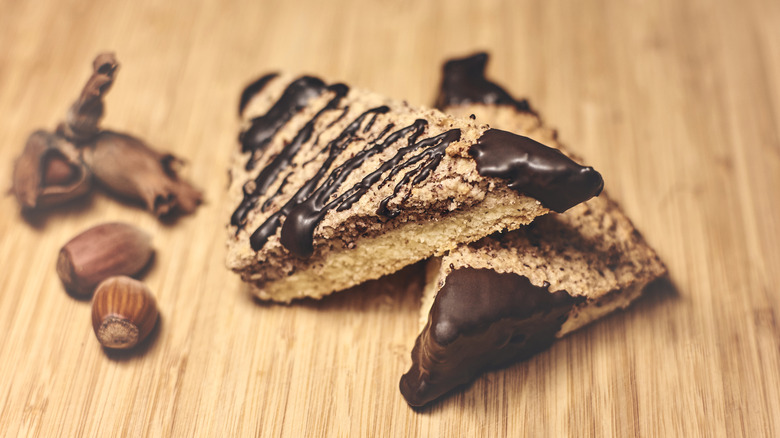
Nussecken, translating to "nut corners," have been around for hundreds of years, and so modern recipes are diverse and plentiful. The base of nussecken requires a few simple ingredients, like eggs, flour, sugar, and butter. This shortbread-esque crust is then slathered with apricot jam before being topped with a concoction of sugar, butter, and nuts (typically hazelnuts or almonds). After a stint in the oven, the dessert is sliced into triangles, at which point the corners of each nussecke are commonly dipped in chocolate.
Baked in large quantities during the Christmas season, you can nevertheless find nussecken at many German bakeries year-round. Germans love pairing these sweet snacks with coffee, whether at breakfast time or in the afternoon. And if you are looking for a dessert that you can easily bring back home to friends and family, nussecken are a great choice; they keep for several days unrefrigerated.
14. Schnecken
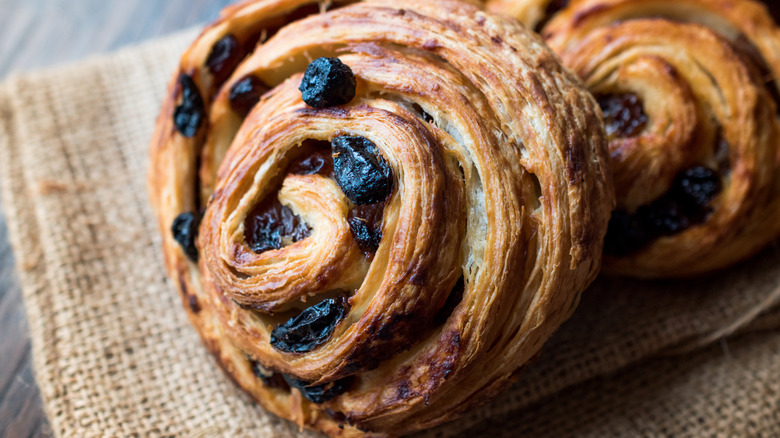
The word "schnecken" may translate to "snails," but these pastries are fit for vegetarians. Several variations of schnecken exist, including ones with poppy seeds, nuts, raisins, cinnamon, and even quark. Due to their shape and flavor, you'll find yourself thinking of cinnamon rolls when chowing down on this German dessert. Buttery, fluffy, gooey, and crunchy when nuts are included, schnecken taste as wonderful as they smell. In fact, you may have already seen schnecken in American bakeries; they are a popular dessert in Jewish cuisine and were brought to the United States by German immigrants in the 1800s.
Similar to cinnamon rolls, schnecken can be adorned with a conservative drizzle of sweetened glaze, or they can be drenched in caramel syrup. However, there is one major difference between the two pastries: Schnecken do not rise as tall as cinnamon rolls, largely because they are spaced apart (not smushed together) on a pan before being baked.
15. Schweineohren
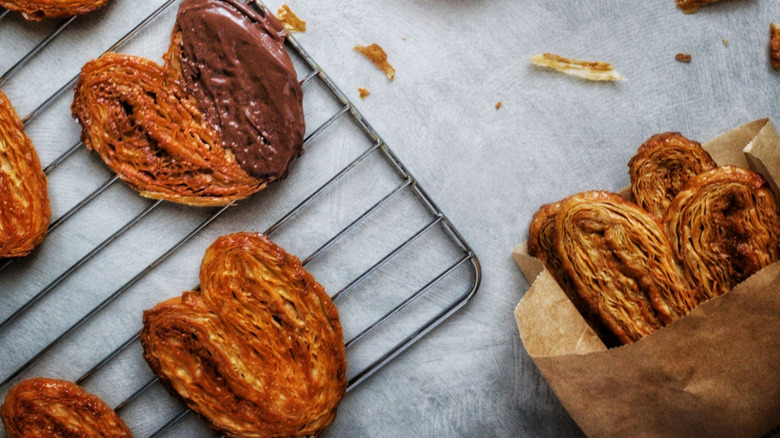
In the warm, cozy environment of a German bakery, the word "schweineohren" refers not to pig ears, as its literal translation suggests, but to palmiers. These French — or perhaps Austrian — cookies are also known by names like "elephant ears" and "palm leaves." To make schweineohren, puff pastry is rolled alongside granulated sugar into the shape of a log before being sliced, coated in more sugar, and finally baked.
In Germany, schweineohren are sometimes brushed with apricot jam, and their ends are frequently dipped in chocolate. Cinnamon can also make an appearance between the layers of dough. Because of their crunchy, flaky texture and sweet nature, schweineohren are nice accompaniments to a cup of coffee or black tea. You can also enjoy them with a rich, refreshing scoop of ice cream or dollop of whipped cream.
16. Mohnkuchen
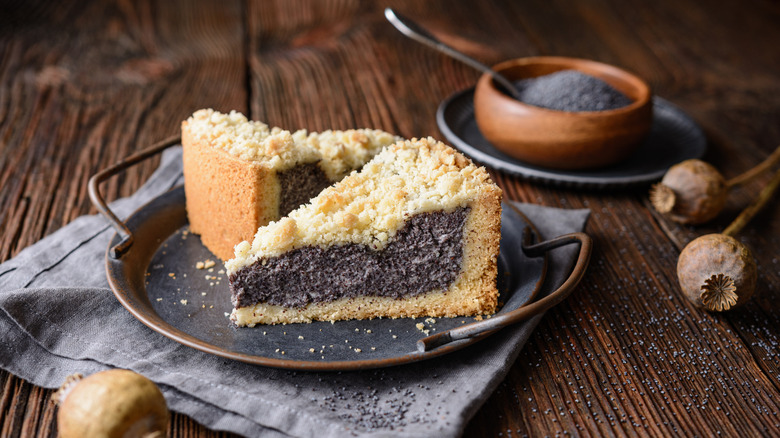
Mohnkuchen translates to "poppy seed cake" and is just what it sounds like: a cake with poppy seeds. In one of the most common versions of mohnkuchen, the poppy seeds are incorporated into a creamy filling that is sandwiched between a shortcrust base and a streusel topping. The poppy seeds must be finely ground so that the texture of the cake remains satisfyingly smooth. In addition to poppy seeds, the filling might also include ingredients like sour cream, eggs, vanilla sugar, and quark.
Not all mohnkuchen feature these three distinct layers; indeed, some mohnkuchen recipes incorporate poppy seeds throughout the batter. No matter what, though, this cake can be served with whipped cream or powdered sugar, as well as a cup of coffee, to help balance its distinct flavors and textures.
17. Bienenstich
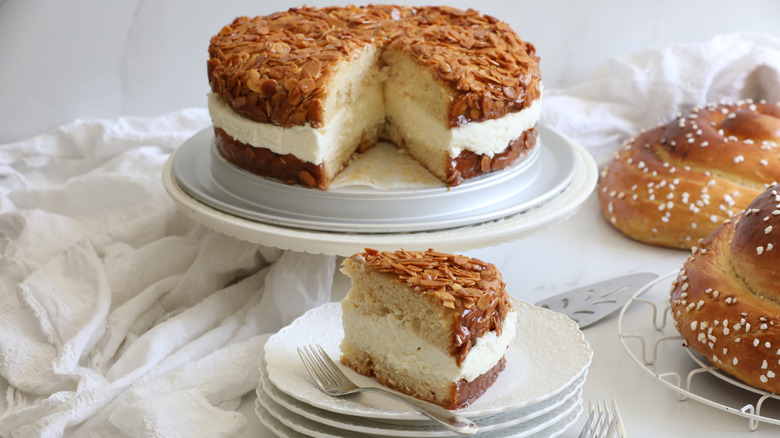
Bienenstich translates to "bee sting," but in the context of a bakery, it refers to a multi-layered cake starring almonds and a creamy vanilla filling. The name of this cake has a few possible origin stories. It could refer to a fight that took place in 1474 in the German town of Andernach. According to legend, two boys flung beehives at attackers to help protect the town, and this cake was chosen to commemorate the occasion. Alternatively, the name may refer to bees' attraction to sweet treats like this cake. Regardless, it is immensely popular across Germany and can be found at many bakeries, especially during the summertime.
This cake features simple ingredients in the dough, like butter, milk, eggs, yeast, flour, and sugar. Meanwhile, the pudding-like filling often makes use of vanilla bean paste, gelatin, and heavy cream. Finally, the caramelized almonds can pay additional tribute to bees if prepared using honey, though this is not always the case. Like many other cakes, bienenstich is a common choice for enjoying alongside a cup of coffee.
18. Stollen
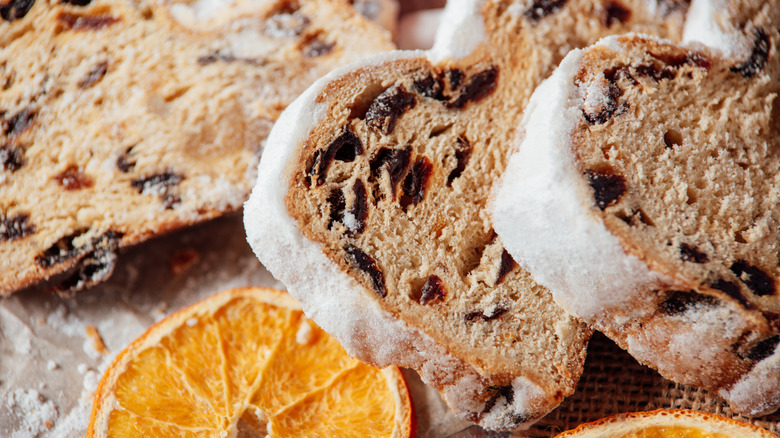
Lebkuchen, or gingerbread, may get more attention from tourists when December rolls around, but stollen is another German bakery item worth trying. Available year-round, this bread frequently goes by "Christstollen" or "Weihnachtsstollen" during the holiday season. Typically filled with nuts, spices, and dried fruits, it will warm you up from the inside out.
This bread is composed of a basic dough, an optional marzipan filling, a brushing of butter, and a dusting of powdered sugar. Like fruitcake, it is frequently baked in advance and generally believed to have a more complex flavor after resting for a week or so. It is also common practice to soak the raisins and almonds in rum before incorporating them into the batter, which can help balance the often dry texture of this bread. Because of its long shelf life, you can easily take this bread back home for friends and family to try, or you can try making it yourself with this recipe.
19. Mandelhörnchen
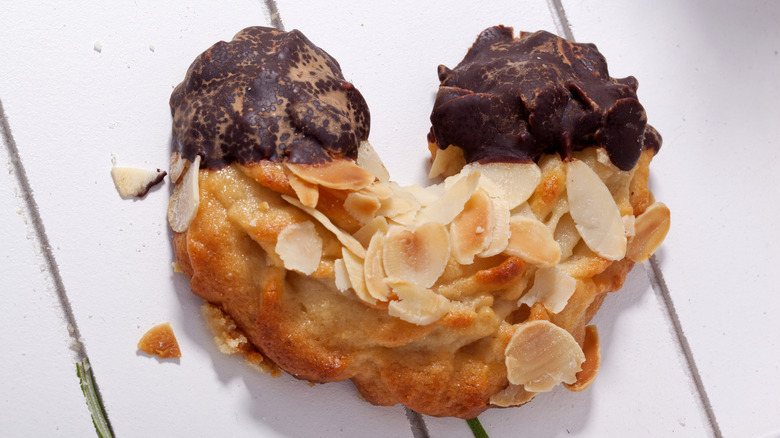
Mandelhörnchen, known in English as "almond horns," are almond-based cookies that are shaped into crescents, baked, and dipped in chocolate. They range from soft to chewy and can be either large or small. You will see more mandelhörnchen during the holiday season, alongside other crescent-shaped cookies like vanillekipferl.
Despite being a breeze to prepare, the flavors of this cookie are intricate. Several variations of almonds can star in a single recipe, including sliced almonds, almond flour, almond meal, and/or almond paste. These nuts are further complemented by sweet ingredients like marzipan and powdered sugar, as well as egg whites, which provide textural integrity to the cookies. Bakers often toast the slivered almonds and opt for dark, bittersweet chocolate to help balance out the sweetness of mandelhörnchen.