

Is There Any Difference Between Ribeye And Entrecôte Steak Cuts?

If you've shopped for steak on both sides of the Atlantic, you've probably seen both ribeye and entrecôte on menus or at the butcher counter. But these names actually refer to what is essentially the same prized cut of beef. Both the ribeye (in the U.S. and English-speaking countries) and the entrecôte (in France and other parts of Europe) are steaks carved from the same general section of the cow, known for their generous marbling and rich, beefy flavor. In practice, the differences are subtle and mostly come down to butchery style and tradition.
Over time, these definitions have overlapped even more, making the distinctions less about anatomy and more about language and the implication of local custom. In the U.S., ribeye can be served bone-in or boneless, but it's always highly priced and coveted for that perfect balance of tenderness and flavor. Entrecôte, on the other hand, simply means "between the ribs." A staple on European steakhouse menus, it's typically a boneless cut that's often sliced thinner than American ribeye, then finished with classic sauces.
Both steaks, along with the tender prime rib, specifically come from the longissimus dorsi muscle of the cow, which runs along the upper ribs. Because this muscle isn't heavily used for movement, it retains a generous layer of intramuscular fat, known as marbling, which is key to the steak's tenderness and flavor. As the fat gently renders during cooking, it bastes the meat from within, creating the juicy, tender, and downright beefy bite that makes ribeye a favorite from backyard barbecues to Michelin-starred menus. Whether you prefer ribeye or entrecôte, you're in for a steak that brings sizzle and succulence.
Steak your claim with a classic ribeye or entrecôte
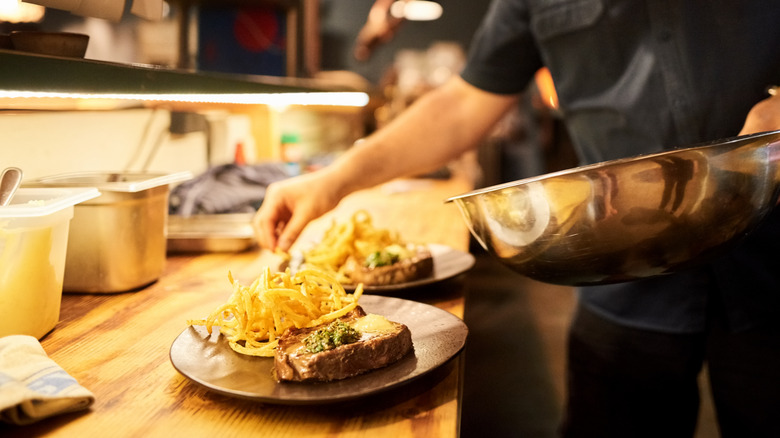
Steak culture adds its own flavor. In Paris, "entrecôte" often means one thing: the iconic restaurant-quality steak frites. Many bistros are devoted almost entirely to this single dish, serving the steak thinly sliced and topped with a signature sauce, with a mountain of fries on the side. In the U.S., the ribeye is the showpiece of the steakhouse, usually grilled or broiled to order, sometimes carved tableside, and paired with classic sides of creamed spinach, loaded baked potatoes, or buttery dinner rolls. These traditions shape how the same cut is enjoyed around the world, and why steak lovers seek out both versions for different occasions.
The French approach to entrecôte — a cut Anthony Bourdain favored — is more about speed and sauce. Steaks are often cut thinner for quick searing over high heat, resulting in a crisp exterior and rosy center, then finished with a rich, velvety sauce, like béarnaise or peppercorn, that seeps into every caramelized bite. Sides are minimal: always fries, maybe a bitter greens salad.
American ribeye, meanwhile, tends to be cut thick, grilled or pan-seared to develop a deep crust, and finished simply with butter or pan juices. Here, the emphasis is on the beef's marbling and natural flavor, often without sauce, allowing the richness of the steak to take center stage. Both traditions offer plenty to savor, but the techniques and the eating experience are distinct, if only by a little bite.