

The One Secret To Making An Evenly Baked Cake Every Time
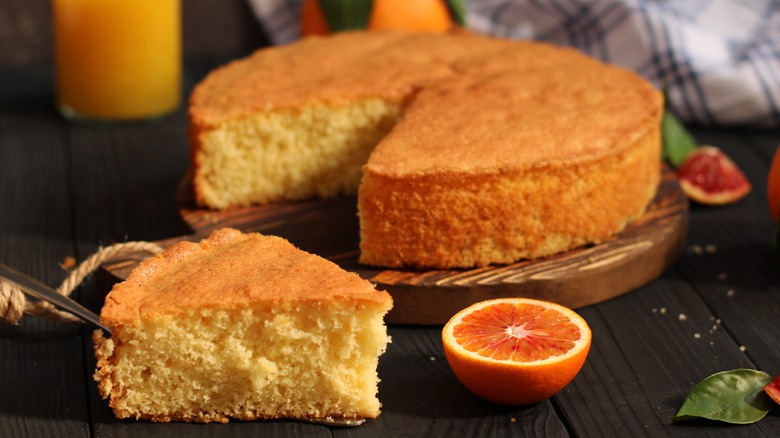
Everybody wants to make a perfectly level, evenly baked cake ... except the cake. Your cake doesn't want to behave; it's an unpredictable melding of ingredients and chemical reactions thrown into a hot oven. Your cake wants to blow up into a big dome or brown on the outside too fast while the center stays undercooked.
That's why it needs to be tamed and coaxed into being the best cake it can be, using all of the precise measurements and little tricks that make baking baking. And there are some cake secrets that carry more weight than others. That's why we reached out to an expert, Joy Wilson, also known as Joy the Baker, a pro baker and cookbook author, to ask her about the biggest tip for making an evenly baked cake.
Wilson tells us, "Baking is all about managing variables. One easy tip I suggest for more consistent, evenly baked cakes is: Room temperature everything." She recommends making sure all of your cake ingredients, like the butter, eggs, and milk, lose their chill before being mixed together. This is because room temperature ingredients will combine better to create a more smooth, uniform batter before you bake. Or as Wilson says, "Even ingredients = even mixing = even baking." And while it's ideal to take your ingredients out early and let them de-chill, you can also accelerate the process with cheats, like putting your eggs in warm water and slicing your butter into thin pieces that hit room temperature faster.
Room temperature ingredients and even heat distribution are key

While combining ingredients that are all the same level of room temperature is the big first step for even cake, it isn't the only one. Once your batter goes in the oven it's still subject to heat variables that can cook some parts faster than others, which is part of why things like domes on cakes and sinking happen. Wilson advises, "Don't forget to rotate your pan about ¾ of the way through baking. This will ensure the cake has had time to rise and for the crumb to set before moving the pan, hopefully preventing a tragically sunken center."
Another thing you can do ahead of time is pick out the right material for your baking pan. The best cake pans are usually made with aluminum or similar materials like aluminized steel. This is because aluminum conducts heat better than other options like glass or ceramics, which leads to more even heat around your cake. You also want to stick with lighter colored aluminum pans, as darker pans conduct heat too fast, which can burn the outsides of your cake.
Finally, you can also turn down the temperature on your cake recipe a bit. It will take longer to cook, of course, but lowering your oven by even 25 degrees Fahrenheit can slow the rise of your cake enough to make sure it stays more even. Sometimes, a more perfect cake really is that easy.