

6 Classic Beef Dishes From China You Should Try Once In Your Life
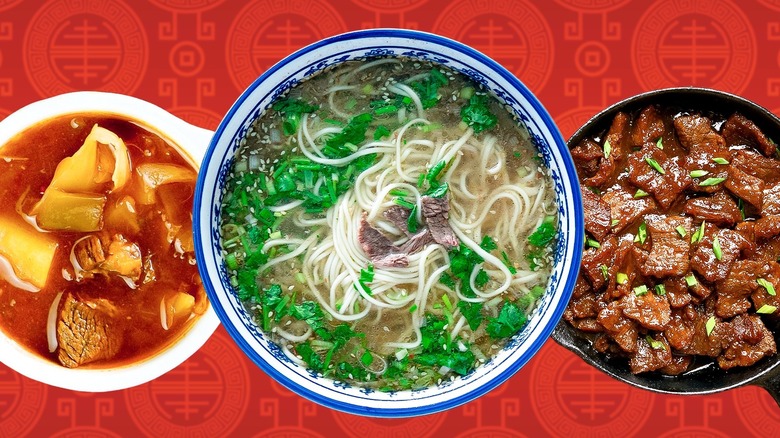
If you consider yourself a food enthusiast, you probably have a list of dishes to try at least once in your life. You add to it constantly, taking time to map out a pilgrimage to get them into your wanderlust-ful belly as quickly as possible. If your list isn't taking you to the different regions of China, where some of the most delicious beef dishes hail from, you should absolutely adjust your culinary compass accordingly. And whether or not a flight is maybe in the cards to take a never-ending culinary field trip to China, the flavors of the Far East are actually never far out of reach.
For Richard Chen, executive chef at Washing Potato and Chyna Club at the Fontainebleau Hotel in Las Vegas, creating modern takes on classic dishes requires having a deep understanding of the region where each dish comes from. For his beef dishes, specifically, it also means being knowledgeable about the different cuts of beef required for different dishes. "... The crucial ingredient I use is the quality of the meat," he says. "For those looking to cook these dishes at home, I would suggest doing research into the choice of meat typically used, as that can make all the difference in the dish."
Of course, chef Chen knows that your pantry will also play a big role: chicken stock, Szechuan chili pepper, spicy chili paste, Szechuan peppercorn oil, potato flour, regular soy sauce, and dark soy sauce are all ingredients to keep your kitchen stocked with. With a few key components, and perhaps a great Chinese restaurant or Asian grocery store nearby, you can — and should — try these classic beef dishes from China that need to be experienced at least once in your life.
Mongolian beef
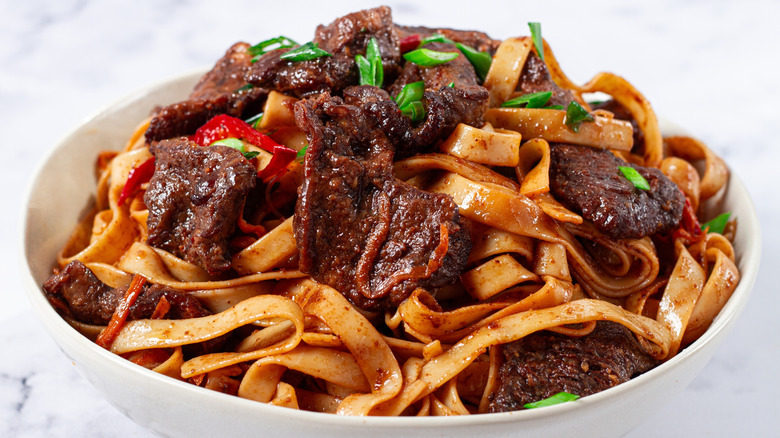
Credited as being a Chinese beef dish that appeals to all tastes and spice tolerance levels, Mongolian beef's origin story doesn't exactly come from mainland China. In fact, the namesake for this stir-fried beef dish comes from Mongolian barbecue restaurants in Taiwan. Chinese-American restaurants like P.F. Chang's then took the Mongolian beef name and ran with it, making it extremely popular, but also assigning it a reputation for being too sweet and oily.
To really get an idea of the potential this dish has, you can either visit a more traditional Chinese restaurant, or even take a recipe and whip it up at home. With the right ingredients and a wok that can get ripping hot, you can have a plate of Mongolian beef ready in about an hour. Mongolian beef is typically made by marinating flank steak with brown sugar, soy sauce, ginger, and garlic. The beef is then stir-fried in a wok at a high temperature, often garnished with ingredients like scallions, and served with rice or noodles. While this may be the standard, there are levels to the Mongolian beef game.
Some recipes for Mongolian beef use neutral oil, Shaoxing wine, light soy sauce, water, and baking soda as the beef marinade. The beef is then dredged in cornstarch and stir-fried until crispy, then later coated with a sauce made with ingredients like soy sauce, garlic, scallions, and dried chilis. Served with steaming hot white rice, it's this kind of recipe that shows just how far this dish can go in terms of flavor and texture.
Lanzhou beef noodle soup
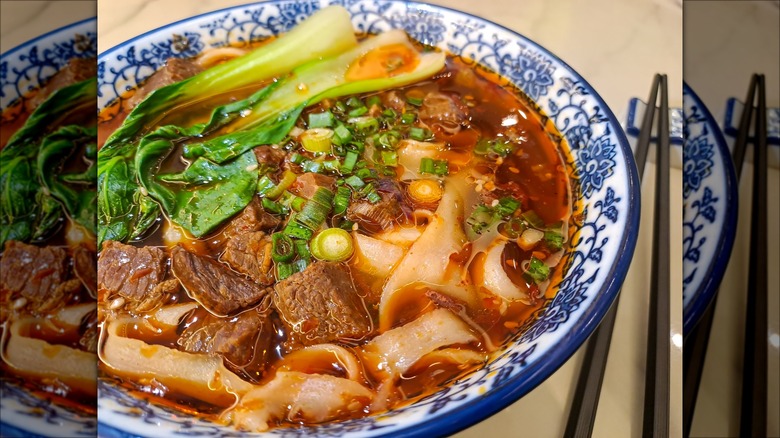
On a cold and rainy day, there's nothing like a piping hot bowl of savory noodle soup to warm up your chilly bones. But this shouldn't just be any bowl of soup — for a truly out-of-body experience, it needs to be Lanzhou beef noodle soup. The history of Lanzhou beef noodle soup goes back to the 1800s in Henan province, where it was a version of a curry-based noodle soup. A man by the name of Chen Wei Jing took the recipe to Lanzhou in the 1900s, and in 1919, Ma Bao Zi — known to some as the "godfather" of Lanzhou beef noodles — opened a restaurant in Lanzhou to serve bowls of the soup to the masses. From there, the popularity of the dish drastically increased, meaning that this bowl of chewy, spicy noodles is easy to get your hands on.
Beef with noodles may seem simple enough, but this deeply flavored dish has nuance. For starters, the noodles themselves require serious kneading, and are made with a special wheat-based flour that gives them that signature chewy texture. Some recipes call for the broth to be made with over a dozen spices, as well as beef, of course, and ingredients like yak and chicken bones. Once the broth is at a boil for hours, it's then typically slicked with a fiery chili oil, giving the dish a kick of heat and tying everything together with a rich, salty, and spicy bow.
If you don't have the means to hop the next flight to Lanzhou, find your nearest quality Chinese noodle shop and order this bowl of soup immediately. You'll feel the love in every slurp.
Beef chow fun
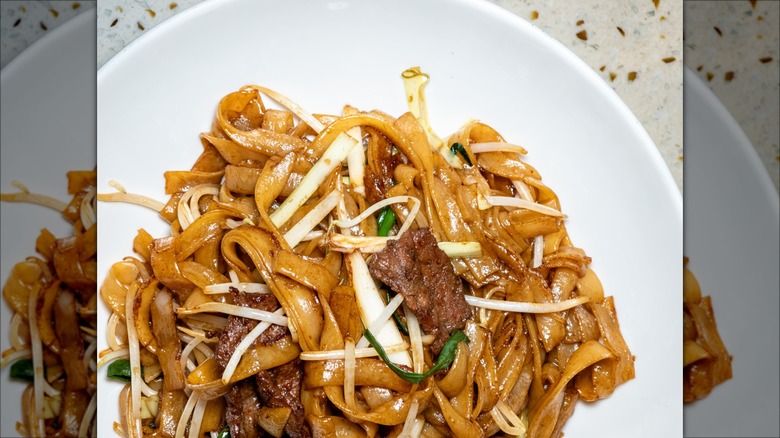
Scrambled eggs. Roast chicken. Steak and potatoes. These are just a few examples of classic yet basic dishes that can really showcase your cooking skills, as there's little room for error. In the case of Chinese beef dishes, the Cantonese classic beef chow fun is setting that standard both at home and in professional kitchens.
It's said that this dish comes from the same town where its flat rice noodles originated: Shahe, which is in Guangzhou, Guangdong, where it was reportedly first made in the midst of World War II. And while it's simple enough to make, it can still tell you a lot about the person doing the stir-frying. In its simplest form, beef chow fun typically takes thinly sliced, marinated beef and stir-fries it with flat rice noodles and bean sprouts. The key to success lies in the heat of the wok — the hotter, the better — and the ability to stir-fry the beef and noodles without the noodles sticking to the pan.
At the Washing Potato at the Fontainebleau Hotel in Las Vegas, chef Richard Chen's beef chow fun is popular among both patrons and the chef himself. Described to us as "a fresh rice noodle, wok-charred in a high flame, with thinly sliced beef and Chinese chives, with additional seasoning from the wok breath's flavor," chef Chen says that it's one of his favorites to serve guests. He adds, "With or without the hint of chili paste, I really enjoying eating this dish."
Pepper steak
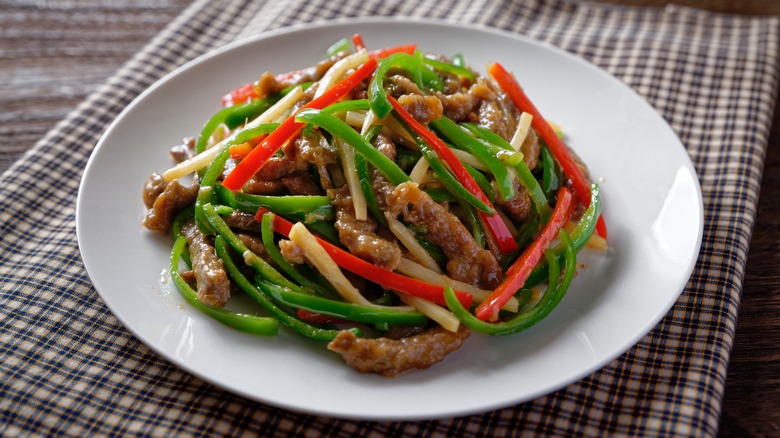
The history of Chinese pepper steak is a bit of a head scratcher — mostly because the dish started out as a pork dish, not a beef one. Additionally, while it hails from Fujian cuisine, it went through a makeover once it made its way from China to America in the 1940s. In addition to appealing more to the American palate by enhancing the seasonings, that changeover from pork to beef essentially made it a different dish altogether.
That said, it is still a dish with authentic Chinese roots, and as such, shouldn't be skipped as you make this pilgrimage through can't-miss beef dishes from this part of the world. To get this dish just right, many recipes will call for thin slices of flank steak to be seasoned with a hefty dose of black pepper, then marinated with ingredients like soy sauce, sesame oil, rice wine, ginger, garlic, and cornstarch. The marinated strips of beef are then briefly stir-fried, typically with peppers and onions, and served over steamed rice.
If you decide to whip up some pepper steak at home, there are a few things you'll want to keep in mind. These include choosing the right cut of beef and marinating it properly to avoid any tough or chewy bites, cooking the meat and veggies separately to keep the onions and peppers a little crunchy, and measuring and mixing the sauce before stir-frying. Finally, pay attention to the heat as you cook, while aiming to cook the beef on high heat for as short amount of time as possible.
Braised beef stew
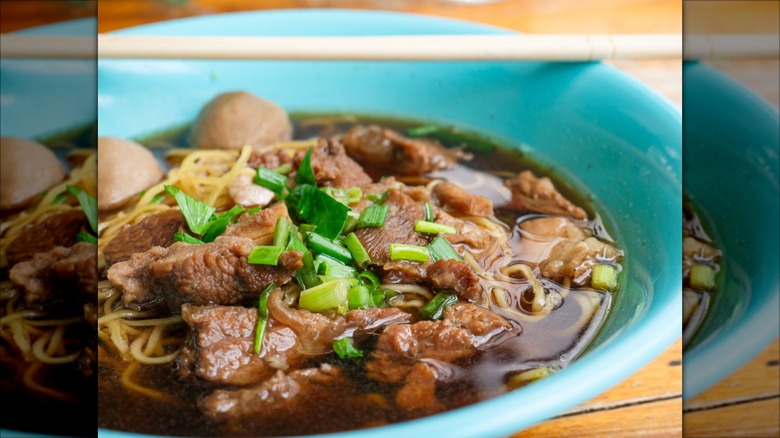
While a lot of classic beef dishes from China revolve around the heat of the wok and a quick cooking time, there are some dishes that require the exact opposite of that. In the case of braised beef stew, the name of the game is low and slow. This Cantonese classic is perfect for the cold weather months, when you have a lot of tasks to get done during the day, but also still want to get something wholesome and tasty on the dinner table. Starting this braised beef stew in the afternoon and letting it simmer away for the next few hours while you tend to this and that is the ideal scenario, letting the beef slowly tenderize and take on the flavors of the broth.
To make this classic dish at home, many recipes will call for starting with rough flank, not regular flank steak. Why? While both have plenty of flavor and need a lot of cooking time to reach peak tenderness, rough flank and all its connective tissue are designed for the long braise, and will end up delivering a richer, more unctuous flavor in the end. The rough flank goes into a large pot of water, typically with add-ins like oyster sauce, dark and light soy sauce, Shaoxing wine, ginger, scallion, star anise, cloves, and bay leaves, and is left to simmer. Once tender, daikon radish is often added in and left to cook for some time, as well.
Once the radish is fork tender, the stew is ready. Steamed rice and stir-fried leafy greens make excellent sides, or you can simply enjoy this stew on its own. Either way, it's an incredibly flavorful and comforting dish that just may become your go-to for all of your busy weekday dinner needs.
Tangerine beef
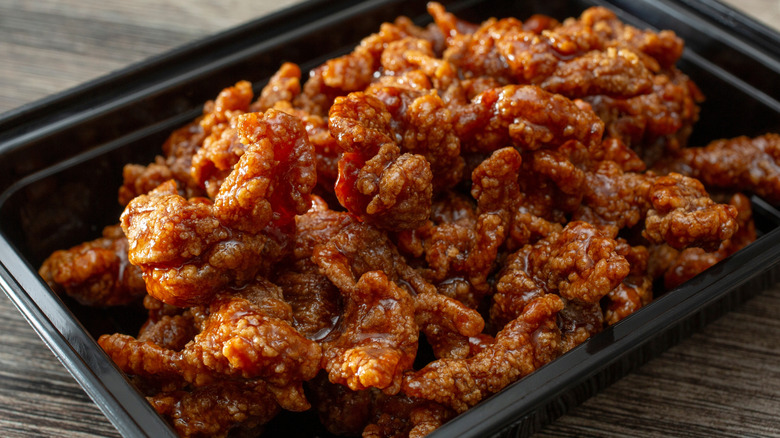
The word for "orange" sounds similar to the word for success in Chinese, and the word for "tangerine" sound similar to the word for luck. So, it should be no surprise that a beef dish brimming with tangerines would be so popular around Chinese New Year, when the hope is for health and prosperity in the new year. Like so many other Chinese beef dishes, tangerine and orange beef have become staples of Chinese-American cuisine, with a number of recipe variations available at restaurants and from food bloggers alike. No matter what variation you're lucky enough to have, the foundation of the dish lies in high-quality beef and bold citrus flavor, making this a can't-miss dish for palates of all kinds.
To get the best possible enjoyment out of tangerine beef, some recipes call for both dried tangerine peels and candied ones, giving each helping a balance of bitter and sweet flavor. Aromatics abound in this dish, typically in the form of ginger, star anise, red chili peppers, garlic, soy sauce, and brown sugar. The thinly sliced flank steak is often dredged in cornstarch, and then wok-fried in ripping hot oil, until a nice crust forms on the meat.
Some recipes then call for the sauce to be created in the wok, with the beef going back in to be coated in the sauce before being served alongside steamed rice. When a craving for crisp beef in a sweet, tangy, and savory sauce strikes, this is undoubtedly the dish to satisfy your desire.