

10 Retro Restaurant Chains That Went Bankrupt In The '80s
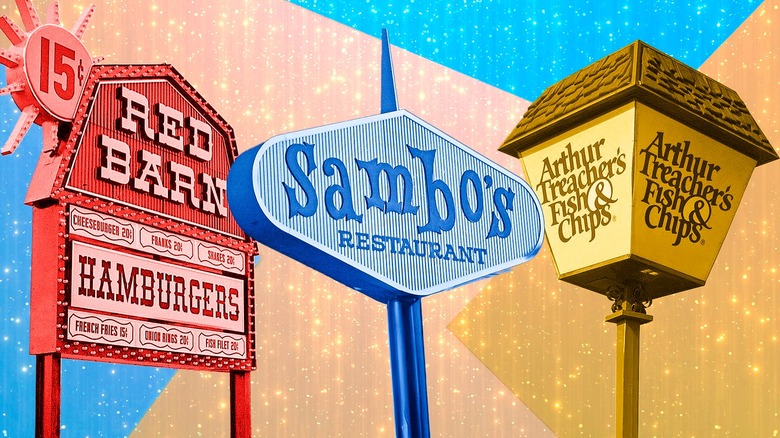
There were several restaurant chains that went bankrupt in the 1980s, all with different outcomes. While some seemed to give up completely, others managed to stick around for several years or even decades. Some are even still around, or perhaps you can find one of their famous menu items still lurking on the menu of another currently open restaurant.
No matter what, bankruptcy changed these once-thriving chains. If they managed to stick it out, it was usually with just a handful of remaining restaurants or a restructuring that resulted in a new name. Some merged with their competition or parent companies and others have been trying to make a comeback for years with different ideas. Many managed to gain traction again in multiple states after trying the ghost kitchen concept during the COVID-19 pandemic.
With only two of the ten chains on our list having completely disappeared without a trace in the 1980s, it seems that bankruptcy doesn't necessarily spell a restaurant's immediate doom. Some limp along, while others make the necessary changes to thrive, even if they don't have the same numbers or look quite the same as they originally did. So, let's take a closer look at all the restaurant chains that went bankrupt in the 1980s and exactly what happened to them.
Horn & Hardart Automat
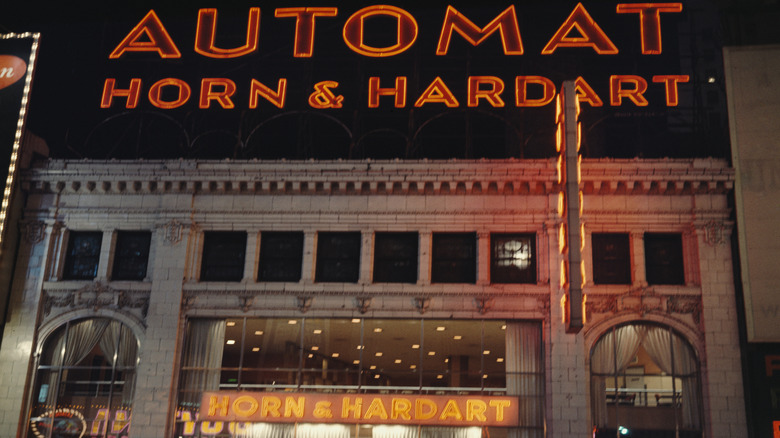
The oldest restaurant chain on our list that went bankrupt in the 1980s was the Horn & Hardart Automat. Once upon a time, automats were an iconic part of the food scene in places like New York City. With Horn & Hardart having been around since 1888 and introducing the automat dining format in 1902, it once seemed like a dining style that would always exist. Customers could come in and choose from coffee and a variety of cafeteria-style foods to buy from its vending machines. At the peak of its popularity in the 1950s, there were 171 locations open in Philadelphia and New York. With more than 750,000 people choosing to dine at Horn & Hardart daily, what could go wrong?
Well, it turned out that the type of food people wanted changed. Plus, there was competition from fast food. By 1969, the more profitable New York branch separated from the Philadelphia branch. It then reorganized in 1971 and finally filed for bankruptcy in 1981. However, it wasn't until 1991 that the last automat closed.
The company has changed hands and tried to reinvent itself several times. In the 1990s, 12 of its classic dishes were sold in grocery stores. Plus, there have been numerous attempts since the 1990s to revive its coffee, with its packaged Automat Coffee currently being available to purchase. While the company has been promising to bring back its original automat format, the Horn & Hardart Automat is still just a memory.
Sambo's
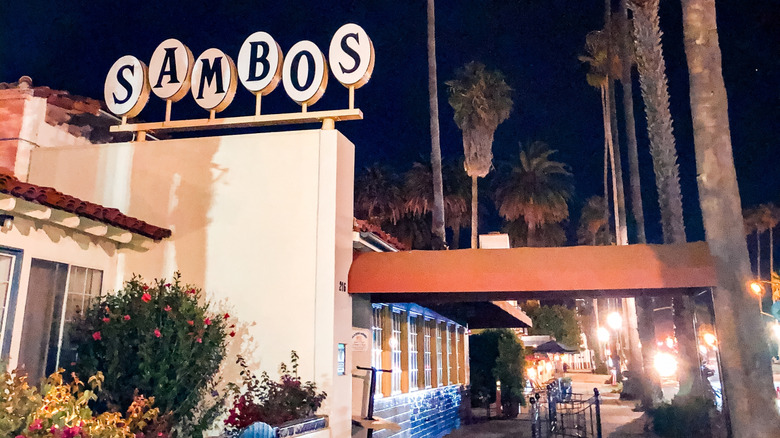
The original Sambo's opened in 1957 as Sambo's Pancake House in downtown Santa Barbara, California, but it fell into bankruptcy in 1981. Sambo's was known for its breakfast menu and originally served 21 different types of pancakes with its ocean views. At the height of its popularity, you could find 1,117 locations in all but three states in the U.S. You could also eat there 24 hours a day, with a 99-cent breakfast and a menu that eventually expanded to include non-breakfast foods like hot dogs and hamburgers as well.
While the name was supposedly a combination of the original owner's names, Sam Battistone and Newell "Bo" Bohnett, the restaurant's name was under fire several times during its existence. However, the name's racist undertones were amplified since characters from the racially insensitive children's book "Little Black Sambo" were used in some of its early decor and advertisements. Along with protests and lawsuits about the name, the restaurant started having financial, structural, and managerial problems in the 1970s despite rebranding to The Jolly Tiger, which resulted in its 1981 bankruptcy. As a result of the bankruptcy, 450 of the remaining locations closed down, leaving just the original location open.
While the original Sambo's in Santa Barbara, California, kept its name for 63 years, it finally changed its name to Chad's in 2020. As such, none of the original branding remains. Chad's still focuses on a brunch menu, which includes a 1957 breakfast sandwich as a throwback to the opening date of Sambo's.
Winky's
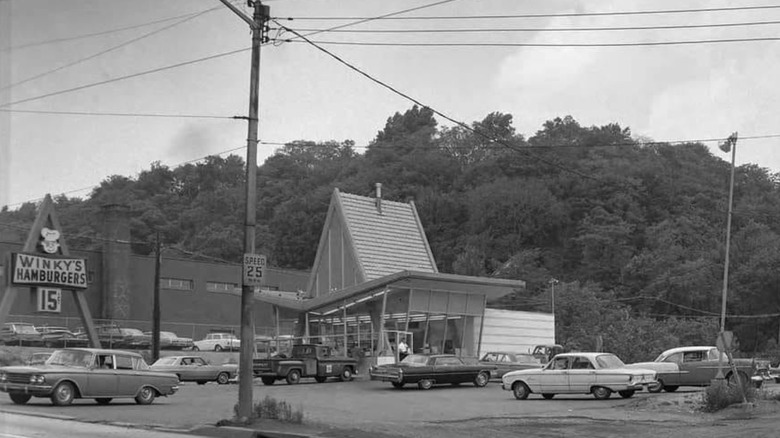
Another chain restaurant that went bankrupt around the same time as the first two on our list is Winky's. Winky's opened in 1962, borrowing heavily from the McDonald's concept and operating manual. The pricing, menu, and architecture were similar, while the colors were different. The original location also only had an ordering counter without seating. It also introduced some menu items that were different from McDonald's, like a fish sandwich, chicken dinners, and breakfast items like donuts. Eventually, McDonald's would become inspired by its Big Wink and call their new sandwich the Big Mac.
At its largest, the chain had 42 locations. Plus, it was in three states: Pennsylvania, Ohio, and West Virginia. Unfortunately, the expansion was problematic, with zoning issues and customer changes in the budgets of the people in the neighborhoods where it had been for 15-20 years. When it began business, it was the first fast-food chain in places like Pittsburgh. However, it began to face problems when so many other fast-food restaurants started to appear on the scene, trying to outcompete each other with promotions and coupon schemes. Bigger chains could absorb losses while trying to compete, while smaller chains couldn't.
After bankruptcy in 1982, the company tried to reorganize itself. It started by closing its most unprofitable stores, acquiring some Original Station Street Hot Dogs locations, and modifying its menu. Unfortunately, the remaining locations didn't last long, and there are no more Winky's restaurants today.
Arthur Treacher's Fish & Chips
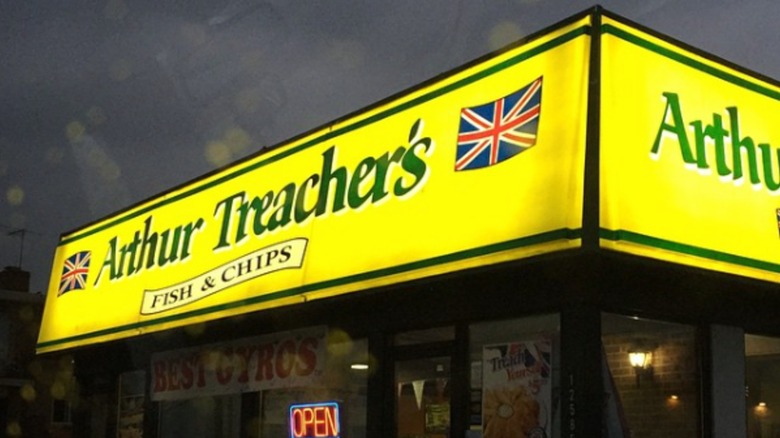
Arthur Treacher's Fish & Chips is another fast-food place that wasn't doing too well and had to file for bankruptcy in 1982. Arthur Treacher, an actor who often played the part of a British butler in several films, endorsed the restaurant and was its namesake. When it first opened in Columbus, Ohio, in 1969, Arthur Treacher's Fish & Chips had the exclusive rights to the fish and chips recipe from the London restaurant that claimed to have invented the fish and chips concept in 1865: Malin's of Bow. Before its bankruptcy, there were over 800 Arthur Treacher's serving fish and chips throughout the U.S.
Unlike most of the other restaurants on the list that went bankrupt in the 1980s, Arthur Treacher's has managed to limp along since then with more than just one location open. The recipes haven't changed at all except for switching from cod to pollock in the 1970s after the Cod Wars, when cod prices became too high. Unfortunately, the switch to pollock was cheaper but drove loyal customers away, eventually leading to bankruptcy.
It was looking rough in 2021 when there was only one location left. However, Nathan's was instrumental in reviving it in 2021 using the ghost kitchen concept, even bringing cod back to the menu when available. That move seems to have been a success since you can now find eight Arthur Treacher's locations open in four states, including two that combine with a Nathan's franchise.
Lum's
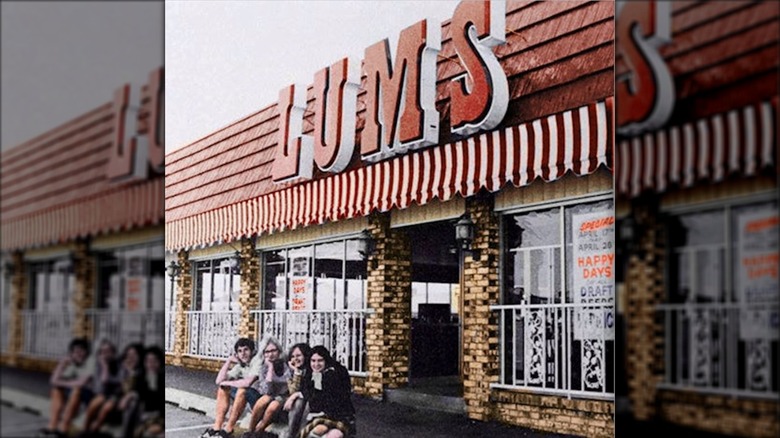
Lums first filed for bankruptcy in 1978, but another bankruptcy in 1982 seemed to do them in despite their best efforts to update menus and lower prices. It wasn't long before the beer-steamed hot dogs and other menu items that customers had grown to love in over 400 restaurants across the U.S. were gone forever.
While the restaurant operated locations as early as 1956, the downward spiral happened in the 1970s. One of the original owners of KFC, John Y. Brown, Jr., bought it in 1971, and the chain introduced the Ollie Burger and Ollie fries to the menu. Plus, there were other items, like grilled cheese on a poppy seed bun, hot roast beef sandwiches, a submarine sandwich, some seafood items, sides, desserts, and beer served in frosty glasses. However, Brown sold the chain in 1979, which was the same year he became Governor of Kentucky. A Swiss company called Wienerwald bought it and went bankrupt in 1982, bringing Lums down the bankruptcy road with it.
For those who have wondered what happened to Lums, it seems that all the beer-steamed hot dogs are long gone. However, you can still get its Ollie burger in a handful of restaurants with past connections to Lums. All the Lums restaurants started blinking out in the 1980s, with the last one finally closing in 2017. Yet, the Ollie burger lives on in the remaining Ollie's Trolley locations as well as in Flashback Diner locations that opened in Florida in former Lums restaurants.
Pizza Time Theatre
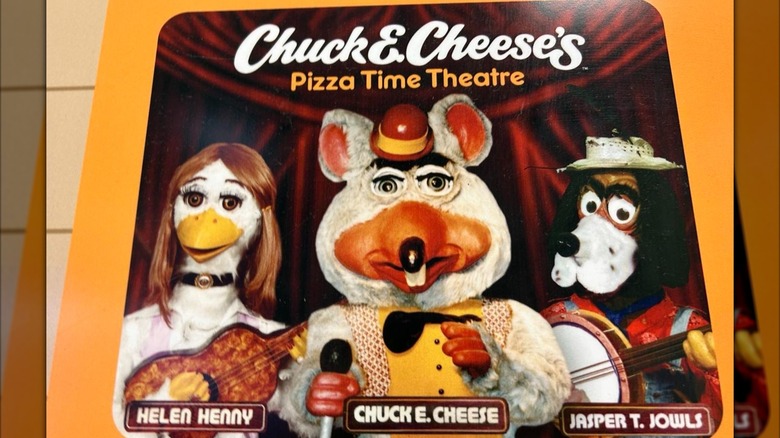
Your age likely determines which kid-centric pizza restaurant chain you first remember going to, but for some, it was Chuck E. Cheese's Pizza Time Theatre, which was dreamed up by Atari co-founder Nolan Bushnell in 1977. Under new ownership, it launched as Pizza Time Theatre in 1978. The chain was only around under that name for six years before it went bankrupt in 1984. At the time, there were 270 restaurants, which lured kids in with a promise of pizza, games, rides, and animatronic entertainment.
The bankruptcy happened after the chain started expanding too quickly and opening locations too close to each other. Another problem was that the food quality didn't match its high price. Plus, a similar chain, ShowBiz Pizza, showed up as a rival in 1980. After Pizza Time Theatre went bankrupt in 1984, the two companies merged, restructured, and became ShowBiz Pizza Time in 1985. In 1990, the merged version of the chain kept the Chuck E. Cheese character from Pizza Time Theatre, while getting rid of ShowBiz's animatronics. By 1992, the chain adopted the name Chuck E. Cheese's. As of 2019, it dropped the possessive version of the name to simply become Chuck E. Cheese. Chuck E. Cheese had to file for bankruptcy again in 2020 as a result of its entertainment-based restaurant model not working well during the COVID-19 pandemic. While it recovered and has over 400 locations in the U.S., there are rumors it's among many pizza chains not doing so well.
D'Lites of America
D'Lites of America was a healthy fast-food chain that probably appeared in the wrong decade and ultimately went bankrupt in the '80s. With the health food and fitness craze of the late 1970s and early 1980s, the company thought there would be more demand for the chain than there really was, since they reported strong early sales in Atlanta. Thus, it expanded to 100 locations throughout the U.S. in 1983 and reportedly had plans for 1,000 more locations over the next decade before the company realized that the country wasn't really ready for healthy fast food yet.
When the restaurant opened in 1978, it proudly boasted that its food had a lower calorie, fat, and salt content than regular fast food. Its fast-food menu items like hamburgers and chicken sandwiches cut calories by using leaner meat, whole grain high-fiber bread choices, lower-calorie cheese, and lower-calorie condiments. Plus, the chain offered salads, soup, baked potatoes, a veggie sandwich, frozen yogurt, and lighter versions of beer and wine for those looking for something different and potentially healthier.
Unfortunately, the chain expanded too quickly and didn't do as well outside of Atlanta. It didn't choose neighborhoods well, as many blue-collar customers preferred big-name fast-food restaurants. While it made a profit in 1985, it lost $18.7 million the next year, forcing the chain to file for bankruptcy in 1986 when it couldn't pay its creditors and leases. There are none left today.
Red Barn
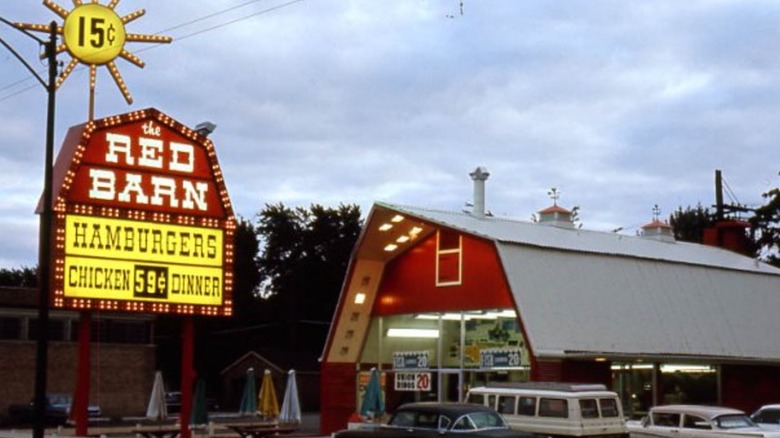
Another fondly remembered vintage fast-food chain that sought bankruptcy in 1986 was Red Barn. The restaurant had been selling fast food items like hamburgers, fried chicken, fried fish, chips, and fries since 1961. Plus, it had a salad bar. Whereas there had once been 300 to 400 locations across the U.S., Canada, and Australia, the numbers shrank to only about 100 by 1983.
The president of the company blamed a change in customer eating habits for its failures. Other chains were feeling the burn, too. Sales had started dropping for the Red Barn in the winter of 1985 and went down by 20%, forcing some locations to close. Location was important, and some of the Red Barn locations were in areas that weren't doing as well financially. Another problem was that there were so many fast-food chains competing in the '80s that customers weren't necessarily loyal to just one chain.
A few of the locations remained open for a while, with the company using new marketing strategies and adding new menu items. However, by the end of the '80s and certainly by the '90s, they'd all disappeared. Some of the buildings kept their barn shape and went on to host new restaurants. Another had already transformed into a restaurant called The Farm in 1983, which was prior to the bankruptcy. The Farm chain still existed for a few more decades, with the last one in Racine, Wisconsin, closing in 2020.
Victoria Station
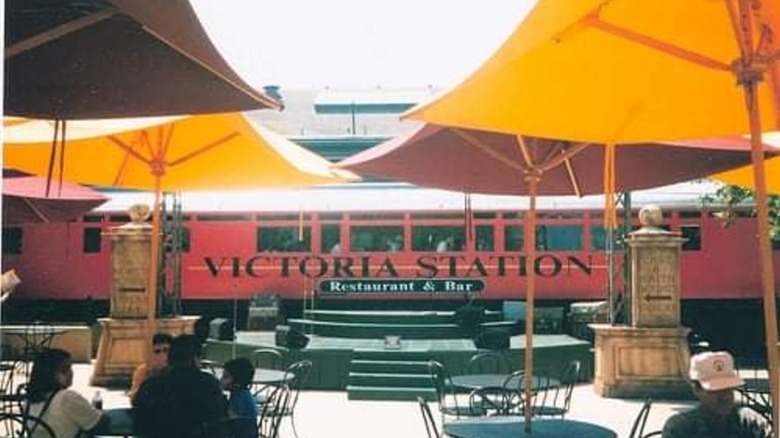
It wasn't just fast-food restaurants going bankrupt in the 1980s, as evidenced by the failure of places like Victoria Station. Victoria Station was a steak house that served diners a variety of beef dishes as well as menu items like prime rib and seafood, along with a salad bar. At its height, it had over 100 restaurants across the U.S., all with a British and Australian railroad station theme and dining taking place in retired railroad cars and cabooses.
The restaurant chain opened in 1969, with the first location grossing $90,000 a month from the start. Johnny Cash made a promotional train-based album that the restaurant sold, and there was even once a Victoria Station at Universal Studios Hollywood. However, as far back as 1971, reviewers were complaining that its prices were more in line with a fine-dining steak restaurant than a family-style, theme-steak restaurant.
The restaurant went bankrupt in 1986, with many locations closing down that year after continuing to lose money for a couple of years. However, a few were able to stay afloat for a few decades after restructuring and selling upscale hamburgers. Unfortunately, the last one in the U.S. closed in Salem, Massachusetts, in 2017, making it one of many steakhouse chains that have now permanently closed. Interestingly, there are six Victoria Station steak restaurants open in Malaysia that feature some railroad dining car options, but they claim a different back story and no official connection to the original chain.
Beefsteak Charlie's
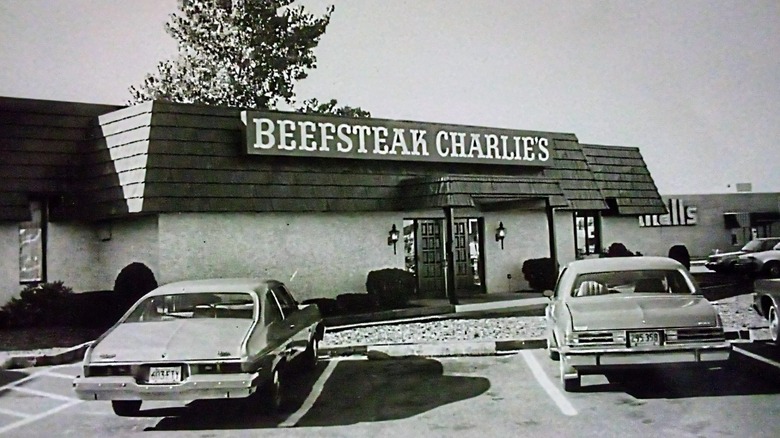
The final retro restaurant chain on our list that went bankrupt in the '80s was another non-fast-food restaurant called Beefsteak Charlie's. This was a restaurant that had been around since 1910, and one you might have been wondering about after it disappeared from sight. The original restaurant was a hangout for jazz artists, but the one most people remember started life as Steak & Brew and just bought the Beefsteak Charlie's name to use after its 1975 bankruptcy.
You could get a wide variety of menu items there, including everything from burgers, steaks, Chinese dumplings, broccoli, and chicken wings to fried clam rolls, ribs, soup, sloppy Joes, barbecued chicken, and Twinkies. Plus, the price of your meal included an all-you-can-eat salad bar with unlimited shrimp and as many alcoholic beverages as you'd like. Another thing you came to expect during your meal entertainment was everything from comedians to other forms of live entertainment and music.
At its most popular in 1984, you could find 68 locations. Bombay Palace Restaurants acquired Beefsteak Charlie's parent company in 1987, and it went bankrupt just two years later in 1989. Unfortunately, all that bottomless shrimp and all-you-can-drink alcoholic beverages, along with competition with other restaurants, led to them losing ever more money. However, a few locations managed to exist beyond the '80s. The last reviews about the permanently closed one in New York City near Radio City Music Hall were from 2016. So, it seems they're all gone now.