

What Is Green Coffee And What Does It Supposedly Do Better Than Regular Coffee?
We may receive a commission on purchases made from links.
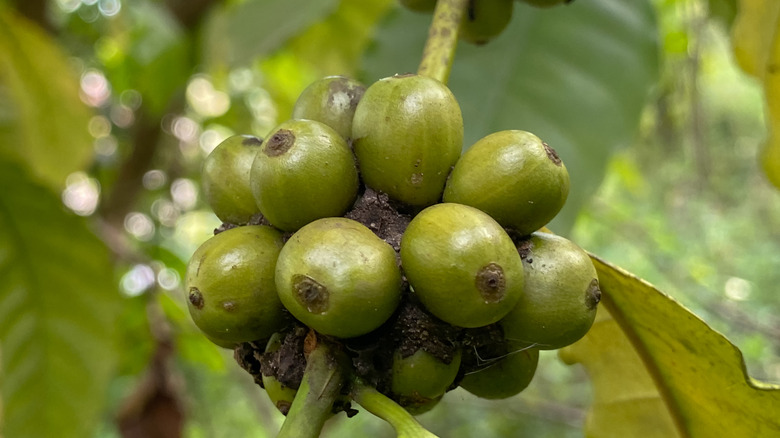
Coffee has many descriptors – specialty and craft, dark roasted, single-origin — but have you ever heard it described as green? If so, you may know that green coffee extract is sometimes used as a weight loss tool. But green coffee is actually just unroasted ripe coffee beans, otherwise known as raw coffee. Every coffee farm from Ethiopia to Colombia contains green coffee beans, which are first picked as yellow and red coffee berries. Until recently, these green coffee beans were much more difficult to find than regular coffee beans. But, with an increase in interest due to its potential health benefits, green coffee beans can now be found in specialty stores and your favorite coffee shop, though you'll still struggle to buy a brewed cup.
Besides the obvious color variation, the primary difference between green coffee and regular coffee lies in its nutritional benefits. Green coffee contains higher quantities of chlorogenic acid than regular roasted coffee. Studies have shown that this compound plays a role in regulating hypertension and improving health in individuals with diabetes and cardiovascular conditions (via "European Journal of Nutrition"). Antioxidant-rich chlorogenic acid has a positive effect on glucose and lipid levels, making it a beneficial swap for regular coffee in supporting individuals who experience issues with blood pressure, blood sugar, and high cholesterol. It's also great at fighting free radicals, which can slow aging, and is anti-inflammatory. Since green coffee is not roasted, it contains a slightly higher caffeine content than regular coffee, which can stimulate the metabolism, likely the reason it has been used for weight loss.
What does green coffee taste like?
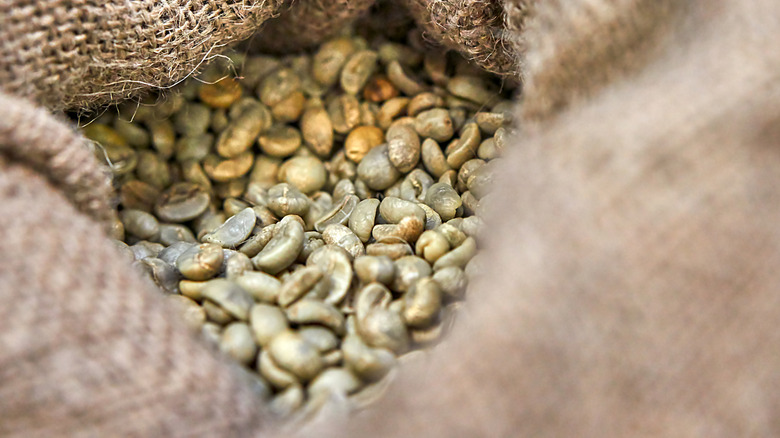
There are several ways to consume green coffee — in powder, capsules or pills, and brewed. However, as green coffee beans are unroasted, you won't get the same depth of flavors or aromas as in your favorite morning brew.
In fact, green coffee undergoes a similar extraction process to teas, resulting in a lighter and cleaner taste than regular coffee, with more vegetal and earthy notes, similar to those found in green tea. Some say that brewed green coffee has a slightly sour taste. These subtle flavors from green coffee offer a different tasting experience compared to your average cup of joe. For the freshest cup, make sure you store your beans properly in an airtight container away from light, heat, and moisture. As with regular coffee, the best way to brew a great cup of green coffee is to purchase high-quality beans and check the label for distinct tasting notes. You can buy it online in bulk, like this 3-pound bag of Nicaraguan single-origin green coffee beans or in smaller quantities, like this 1-pound bag of unroasted Costa Rican beans. When it comes to different brewing methods, such as French press, for green coffee, it's best to start at the most basic to find which flavors you like and go from there.