

10 Iconic British Cocktails You Need To Try At Least Once
We may receive a commission on purchases made from links.
Some nights just call for a cocktail, but if you find yourself falling back on the same old staple drinks, we have some advice: Look to Britain for some classic, delicious, and in many cases, easy-to-make cocktails. Whether you're looking for something super-refreshing to take the edge off the hot weather or something comforting that'll warm you from the inside on a cold night, Britain has come up with a cocktail for that.
Those in the U.K. take their cocktails seriously, and some have even become a part of quintessential British summer traditions. Others have roots that go back centuries, with histories that go back to Britain's great maritime history, or the nation's long and well-beloved pub culture. But, you might say, "Doesn't Britain have a reputation for bland and boring food served alongside warm beer?"
British cuisine has been much-maligned for a long time, and it's absolutely unfair. Let's do our part to help get rid of the stigma around British food and drink by taking a look at some classic cocktails that you are definitely going to want to make for yourself — particularly if you love a good gin cocktail.
Pimm's No. 1 Cup
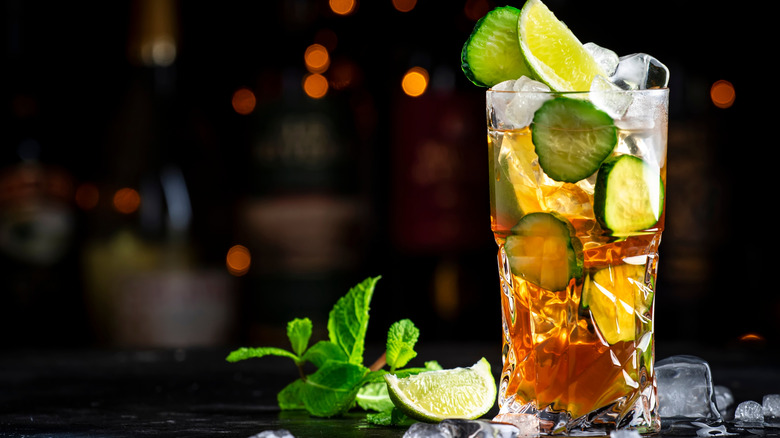
Many cocktails might call for a liquor in a generic sort of way — you can use any vodka in a Moscow mule, for example — but Pimm's No. 1 Cup is a little different. It's almost more of an idea than a cocktail with a recipe that's set in stone, with the liqueur of the same name being the crucial and irreplaceable component.
Pimm's has been made from a secret recipe since it debuted at a London oyster bar in 1840, and it was originally a sort of medicinal tonic said to help with digestion. Fast forward a century, and the Pimm's cocktail has been firmly entrenched in the British foodie landscape as the drink of choice for Wimbledon. Stateside, those familiar with the New Orleans bar scene are probably familiar with this particular cocktail as well, as it's a low-alcohol, ultra-cold, fruity drink that's ideal for hot weather — whether that's a New Orleans summer or a British one.
So, how do you make it? Start with Pimm's liqueur, and for anyone who's never had it, think of a gin that's heavy on the citrus and herbs. One of the most common ways to turn it into a cocktail is to mix it with lemonade and ginger ale, but you could also use lemon juice, lemon-lime soda, or sparkling lemonade. Fresh fruit is a must: Along with ice, add slices of citrus fruits, strawberries, and/or slices of cucumber, then, don't forget a sprig of mint.
The Corpse Reviver
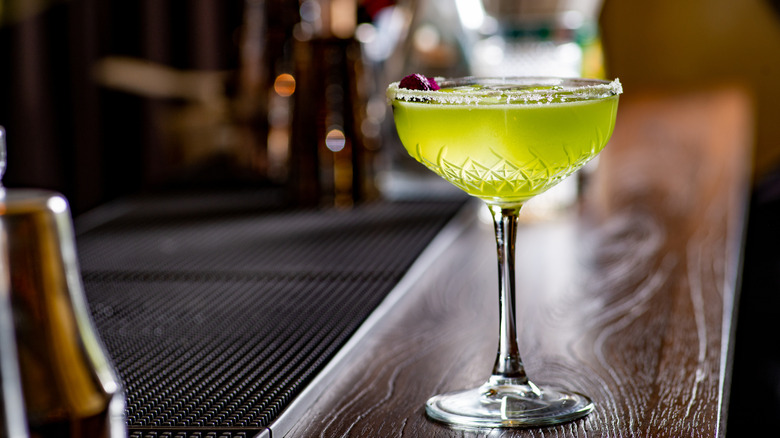
Today, we know that there's no real cure for a hangover, but historically speaking, there have been all kinds of foods and drinks touted as having the power to banish morning-after regrets. That includes cocktails known as Corpse Revivers, which were so-named because they were supposed to provide some relief to anyone who was feeling a bit like death warmed over after a night out. Interestingly, the term "corpse reviver" has referred to a hangover cure since the mid-1800s, and it was a sort of catch-all term with everyone having their own take on it.
The earliest actual cocktails called Corpse Revivers were created in the 1930s at the Savoy, and recipes were published in "The Savoy Cocktail Book." (It's still a great addition to any home bar, and has not only some brilliant and unique cocktail recipes, but some brilliantly snarky footnotes, too.)
There are a few official versions of a Corpse Reviver cocktail, but it's the Number Two that's arguably the most popular. That's a mix of equal part dry gin, triple sec, wine, and lemon juice, with a dash of sugar syrup and absinthe. Some versions replace the triple sec with Yellow Chartreuse and the wine with white vermouth, some drop the simple syrup in favor of water, and the lesson here is that it's a great format for experimentation. Corpse Reviver Number One is completely different, combining equal parts apple brandy and vermouth with Cognac and orange bitters.
Whiskey Mac
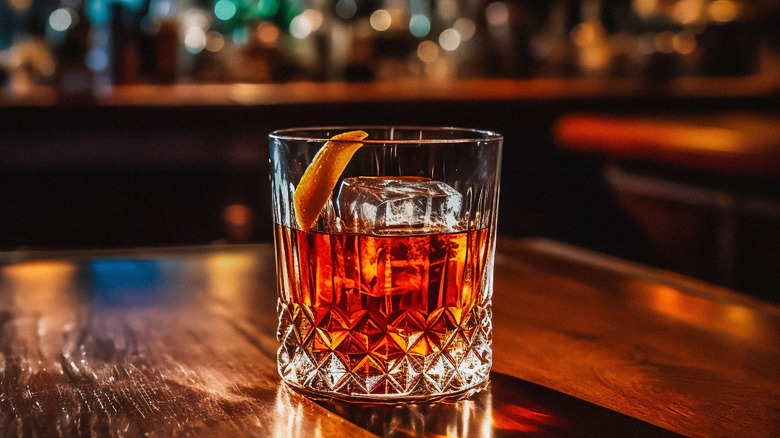
Making the Whiskey Mac is incredibly easy, as it's just two ingredients combined and served over ice. The first is an easy-to-source staple of most home bars, and that's a blended scotch. Next, you might need to do a little searching for this one, but it's worth it. Stone's Ginger Wine is widely available for around $10 a bottle, and it's entirely possible you've seen it and overlooked it. (There are other brands of ginger wine available, but if you'd like to go original, get Stone's.)
This cocktail is one in a line of drinks touted as having medicinal properties, and is believed to have first been created by a British military officer stationed in India at the turn of the 20th century. The name Whiskey Mac — short for Whiskey MacDonald — is a nod to creator Colonel Hector "Fighting Mac" MacDonald, and the medicinal part of this comes in with the ginger. Ginger does have scientifically proven benefits, long been used to relieve stomach issues, nausea, and bloating. This cocktail was designed to do precisely that.
Although it only has two ingredients, there are versions that treat that simplicity more as a blank canvas to improve on. Serve over ice to beat the heat or add hot water during the cold months, or add dashes of cinnamon, white pepper, fresh ginger, or orange bitters for a more complicated cocktail that's still easy.
Pink Gin
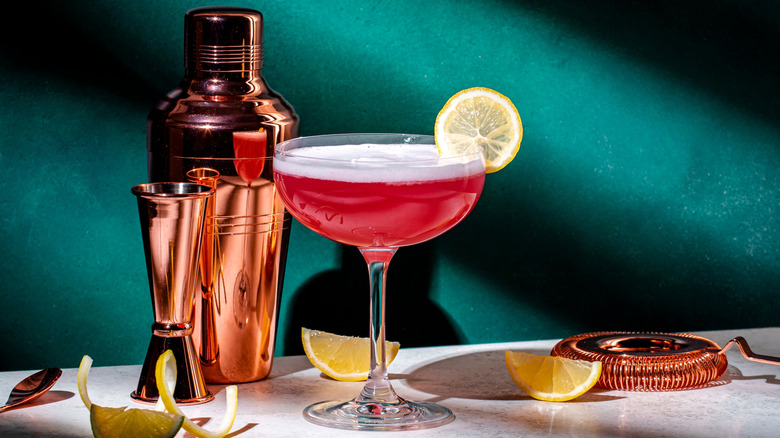
If you're stocking your home bar, trust us when we say that Angostura Aromatic Bitters are a must-have. They're an invaluable ingredient that adds a delightful depth of flavor to classic drinks like the Old Fashioned, and it's also what gives the Pink Gin cocktail the color that it's named for. The rest of the ingredients are pretty straightforward, with just gin, water, and sugar syrup combining with the bitters for a refreshing cocktail that's usually served over ice and with a lemon garnish.
It's also the bitters that can make or break this drink. Because there are so few ingredients, adding an extra dash or two of bitters is going to be very noticeable and turn it into something you're probably never going to want to try again. Remember that you can always add more, and use them sparingly to see why this has been a British favorite for a long time.
Like many other cocktails, this also goes back to the 18th and 19th-century heyday of British maritime history. Bitters were used to cure stomach problems and ward off seasickness, but alone, they're not something you're going to want to drink. Mix them with gin, though, and it made a cocktail that was so good it quickly spread to the mainland and even into the upper classes. It's the kind of cocktail you would have seen being served at parties with only the finest of finest china and the daintiest of finger sandwiches.
Gimlet
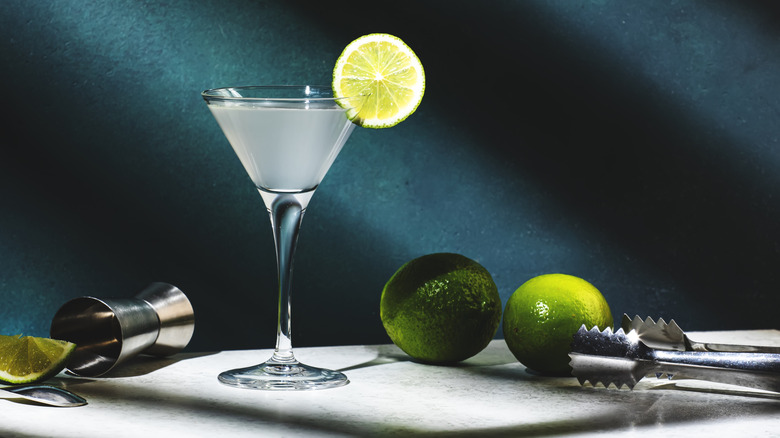
If you think that you're noticing a theme with some of these classic British cocktails, you'd be correct: The Gimlet is another that goes back to Britain's history of exploration and trade on the high seas. The seafaring life wasn't for the faint of heart, and for a long time, crewmen on ships were susceptible to a nightmarish ailment with symptoms that included rotting flesh, bleeding and spongy-feeling gums, wounds that refused to heal, and the unsettling combination of lethargy and terrors.
The disease was scurvy, and in the mid-18th century, it was discovered that the main cause was a nutrient-deficient diet. The solution? Well, you could always opt for eating vitamin C-rich rats, but citrus was probably the more palatable idea. That discovery came thanks to James Lind, and long sea voyages meant carrying a stock of life-saving lemon and lime juices.
Drinking a slug of lemon or lime juice every day might be a hard sell, but when lime is mixed with gin, it's downright delightful. The for the cocktail that became the gimlet is usually attributed to Rear-Admiral Sir Thomas Desmond Gimlette, and it's another one of those once-medicinal and absolutely life-saving drinks that ended up being so good that people wanted to drink it. A traditional gimlet calls for simple syrup, gin, and lime juice, shaken with ice, then poured into a glass. Simple, classic, and great on a hot day.
Vesper martini
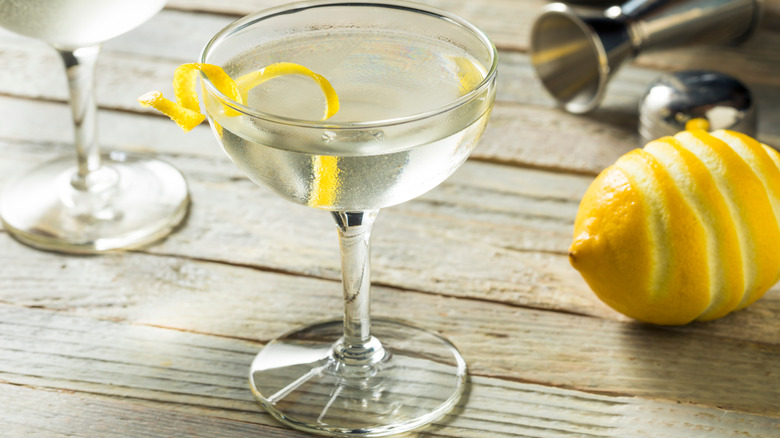
It doesn't get much more British than the Vesper martini, but this classic drink popularized by James Bond didn't originate in a bar. The Vesper in question is a reference to another one of Ian Fleming's creations, the character Vesper Lynd. Yes, the Vesper martini was first created when James Bond first placed his order in "Casino Royale," but it's believed that Fleming may have been inspired by the martinis being served at a London bar called Dukes.
In case you're not familiar with your Bond trivia, 007 requested it be made in a very specific way: Use gin, vodka, and Lillet blanc, and — of course — it should be shaken. Add lemon for garnish, and you have your Vesper martini.
Oddly enough, cocktail scholars debate this one with a surprising amount of passion. Gin and vodka rarely appear together in the same cocktail, and martinis are usually made with one or the other. It's a surprisingly polarizing drink: There are some who say that Fleming was no mixologist, while the other end of the spectrum has those arguing that the Vesper martini is a stroke of genius. Which is it? Hilariously, Fleming himself explained the drink in a letter written for a newspaper in 1958 (five years after Bond first ordered it). Fleming wrote (via Punch), "I proceeded to invent a cocktail for Bond, which I sampled several months later and found unpalatable."
Bramble
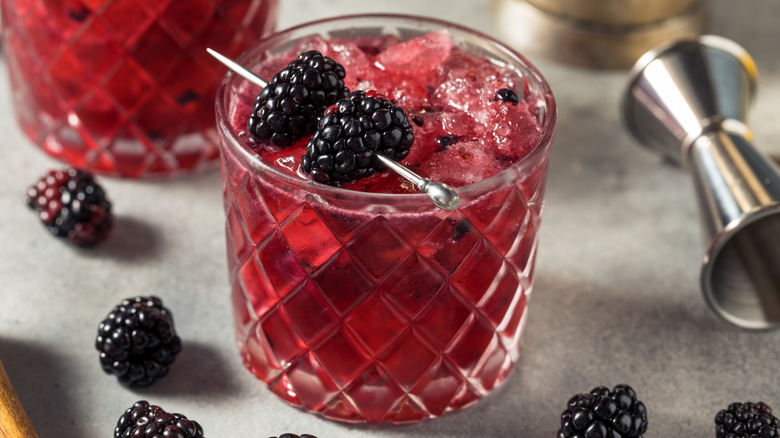
For anyone who eagerly awaits blackberry season and keeps recipes like their favorite buttermilk blackberry scones on standby, here's a drink for you. It's called the Bramble, and it's a 1980s-era classic that came about when one Soho bartender decided to create a cocktail that was quintessentially British. Dick Bradsell did precisely that, with a deliciously simple, straightforward mix of gin, lemon juice, simple syrup, and creme de mûre, which is a blackberry liqueur.
While many cocktails are something of a versatile canvas for experimentation, that's not the case here. The Bramble's creator wrote a piece for Difford's Guide, in which he noted, "Those of you that insist on making this drink wrong with vodka should think up your own bloody name for it." That ... certainly answers that question, and Bradsell has also said that without the herbal, floral nature of gin, it's an entirely different drink than the one he envisioned.
Finally, it's no wonder that the Bramble became so popular. Bradsell was working in Soho's Fred's Club when he debuted his drink, and at the time, it was the place to be seen. It was the place where anyone fortunate enough to get in might find themselves drinking with Boy George or Naomi Campbell, and Bradsell himself. He's credited with overhauling the way the world thinks about — and mixes — cocktails, with his emphasis on fresh ingredients and consistency.
Buck's Fizz
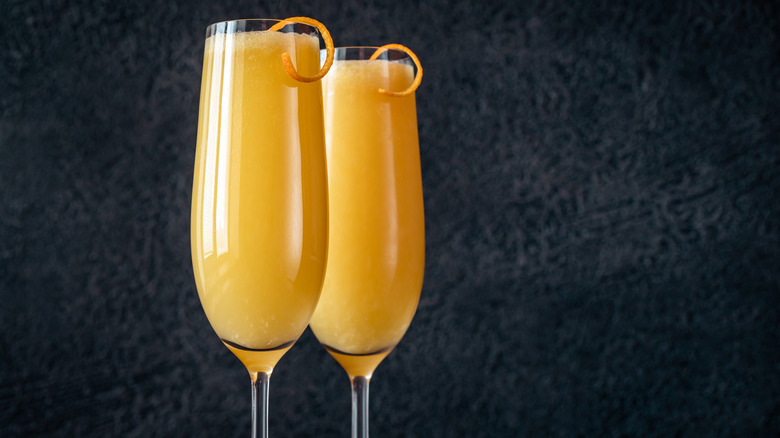
If you love hosting a weekend brunch just for an excuse to mix up mimosas for a crowd, you can mix things up a little bit and serve the classic British Buck's Fizz. The ingredients are the same — just orange juice and Champagne (or sparkling wine) — but a true Buck's Fizz has no ice and is two-thirds Champagne. Some early recipes even cut that back to a glass with just 1 tablespoons of orange juice and the rest Champagne, while some others allow for a single ice cube.
It also predates the mimosa, and the importance of the "buck" is twofold: It was World War I veteran Herbert John Buckmaster who opened the Buck's Club, and the Buck's Fizz made its debut there in 1921. There's a footnote to this, though. Although the mimosa-adjacent cocktail has been wildly popular at large-scale gatherings for decades, cocktail historians say that the two-ingredient drink isn't what bartender Malachi "Pat" McGarry served.
McGarry was reportedly inspired by the Bellini, and his original recipe had a few secret ingredients that have apparently been lost to time. There are, however, some similar cocktails built on the same idea. If you're looking to mix things up, apple brandy, cherry brandy, and even gin have been added to the Champagne-and-orange-juice beverage, and we'd argue that sometimes, even the classics can benefit from a little creativity.
Rusty Nail
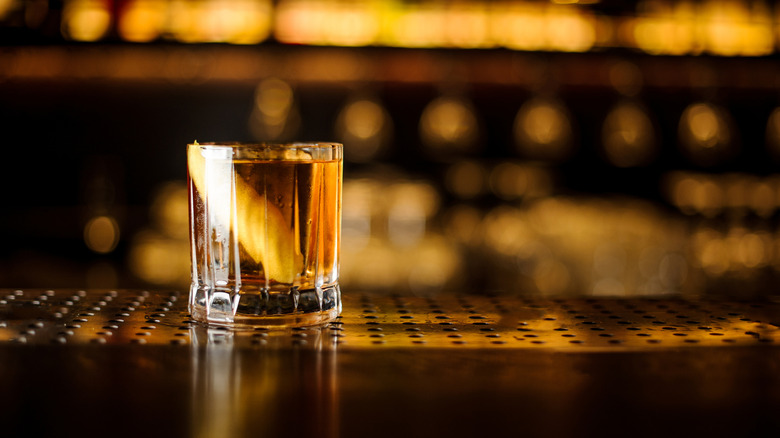
Scotch might not be the first liquor that comes to mind when you're thinking about cocktails, but it's key to the Rusty Nail. In fact, it's one of just two ingredients that are mixed and served over ice. Drambuie is a sweet and spicy scotch liqueur, and exactly where and when this Edinburgh favorite was mixed with scotch, no one really knows. We do know that the combo was served in 1937 at the British Industries Fair, an event that hosted hundreds of exhibitions showcasing all kinds of trade goods from textiles to fashion.
It was the kind of event that members of the royal family attended, so it makes sense that the drink became a favorite of a different kind of royalty stateside. Entertainment royalty that included Frank Sinatra and the other members of the Rat Pack raised the profile of this particular cocktail, and although the drink's popularity has tapered off since then, it's still a perfectly respectable sort of beverage.
One of the great things about this is that versatility is written right into the drink's long-standing history. Both scotch and Drambuie bring some seriously strong flavors, and the idea is to add more or less Drambuie, depending on whether you like a cocktail that's more or less sweet. Serve over ice, and add a dash of bitters or a twist of lemon.
Espresso martini
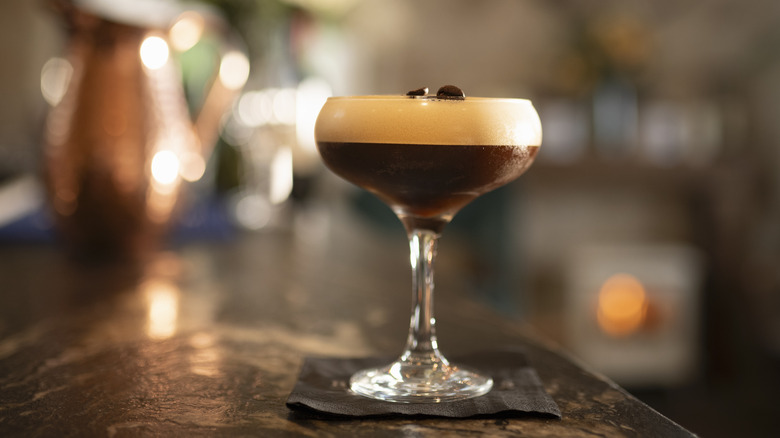
The espresso martini has enjoyed periods of wild popularity since it was first served back in the 1980s, and it was the creation of the same bartender who created the Bramble. That's Dick Bradsell, and according to the oft-told story, he was working at the popular Soho Brasserie when he was inspired to create the perfect dessert drink. The catalyst was a model who wanted something boozy but caffeinated, leading Bradsell to start experimenting with the bar's recently-installed coffee machine.
What he came up with is the now-popular mix of espresso, coffee liqueur, vodka, and simple syrup. While many recipes will lay out proportions fairly specifically, that's actually a little different than what Bradsell had in mind. Just like everyone has their own unique preference for coffee, it's the same for an espresso martini: sugar and simple syrup should be added to taste.
The popularity of the espresso martini has been a sort of up-and-down thing, but even when it's fallen out of favor, it's never entirely gone away. Today, you can buy any number of canned espresso martinis, with the best of the best managing to come with all of the smooth subtlety, creaminess, and gentle kick that comes with a perfectly balanced cocktail made from fresh espresso ... no machine required.