

Can't Decide Between Modern And Traditional? This Kitchen Style Splits The Difference
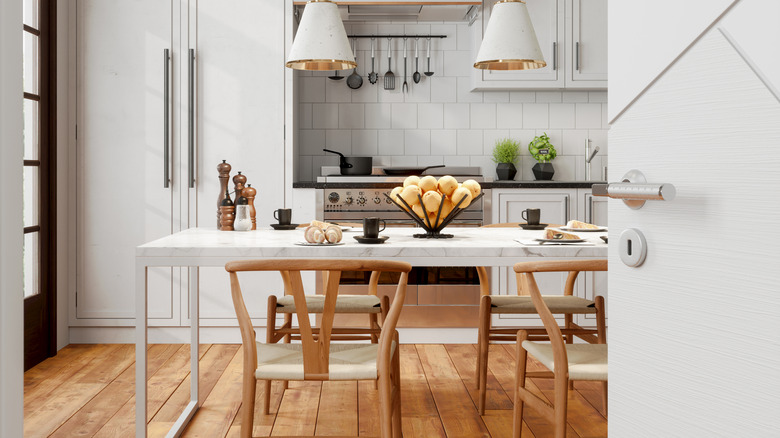
Picking out your signature kitchen style doesn't always come with pure creative motivation — sometimes it also comes with a hint of anxiety. What if you commit to one particular aesthetic and grow tired of it? What if you desire to draw inspiration from various decor concepts and time periods? To assuage those jitters, here's a special interior style that makes room for opposing design concepts — the transitional kitchen style.
Transitional kitchens blend together elements of modern and traditional aesthetics, creating a look that transcends any one single trend. Ultimately, trends come and go; a huge perk of a transitional kitchen is that its interior is more enduring while still allowing you the freedom to play around and change your kitchen according to seasonal styles, if you so choose. For this reason, transitional kitchens often start with a neutral color palette, as bold colors can be seen as overcommitting — black cabinets are quickly dating themselves, but a neutral gray or beige is timeless.
Along the same principle, transitional kitchens usually have modern, stainless steel appliances. Now, before you come with pitchforks against the "millennial greige," the neutrals serve as a blank canvas that you can spruce up with more traditional, even rustic, details. A huge benefit of going for a transitional style is its adaptability — say you're not able to fully renovate and are "stuck" with certain features that you can't change. Embracing those set characteristics and then intentionally bringing in contrasting elements creates a beautiful transitional space.
How to find the perfect balance in your transitional kitchen
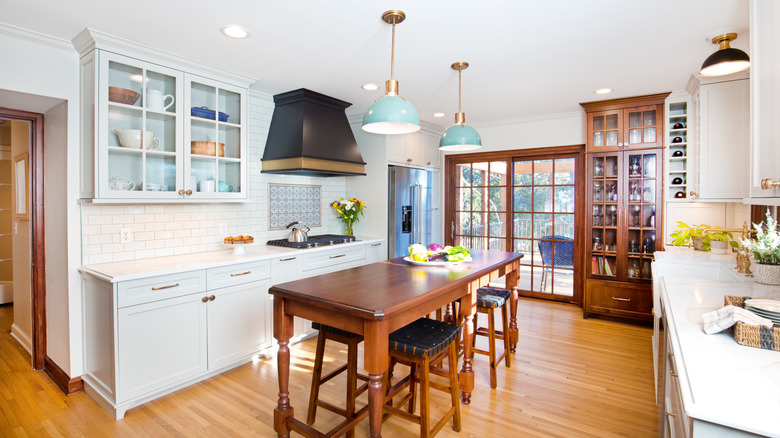
In a transitional kitchen, you're looking for a balance between classic and contemporary. Modern marble counters pair wonderfully with traditional wooden cabinets. On the flip side, you could go for the sleek, clean-lined cabinets and balance them out with paneled floors or a kitchen island in darker wood. Transitional kitchens are not loyal to one particular material or texture — they benefit from mixing them together, so don't be afraid to think outside the box.
Smaller decor elements can be decisive statement pieces of a transitional style, too. Fitting vintage hardware onto modern cabinets, and vice versa, is a playful way to keep things dynamic without necessarily making a permanent choice. Chairs are another great piece that can pose a contrast to the rest of the space; an elegant modern kitchen would strongly benefit from traditional chairs that have some character. The same goes for light fixtures; contemporary lighting can breathe freshness into a kitchen that's otherwise leaning towards a more antique aesthetic.
Balance chic, floating open shelves with beloved mid-century cookware. Put an ornate rug on the shiny modern floors. Allow the backsplash to contrast the counters — go with patterns to channel an old-fashioned vibe, or settle for a neutral tone to make it look minimalistic. And don't forget that the whole point of a transitional kitchen is to bring together your favorite elements from diverse decor styles, so do what makes you happy!