

The Property Brothers Say This Outdated Kitchen Design Rule Is Worth Breaking

For anyone planning to freshen up their kitchen or wondering whether it's time for a full remodel, we've got news: The property brothers have spoken. We can now mix metals as part of kitchen design. In fact, mixing metals is in, and the idea that mixed metals are gauche is a thing of the past. On their HGTV show, "Property Brothers: Forever Home," the brothers turn houses into homes, remodeling properties people own but may not love into their dream spaces. Although it's a show about complete remodels, Drew and Jonathan Scott often prioritize kitchen design. Many of their refurbs include large family kitchens built for hanging out and enjoying meals together, not just for cooking.
These multi-use spaces are very different to traditional kitchens, which were built for cooking, washing up, and maybe quick breakfasts. Of course, this means the design has to be different too. Jonathan and Drew masterfully mix tradition and modernity across the 8 seasons of their show, adding small twists to avoid outdated kitchen designs. One of these twists is mixed metals. This bold approach once implied a lack of intentionality or investment in a space, but, when handled carefully, mixing metals that complement one another can add visual interest to a kitchen.
Mixing metals works with many styles, here's how.
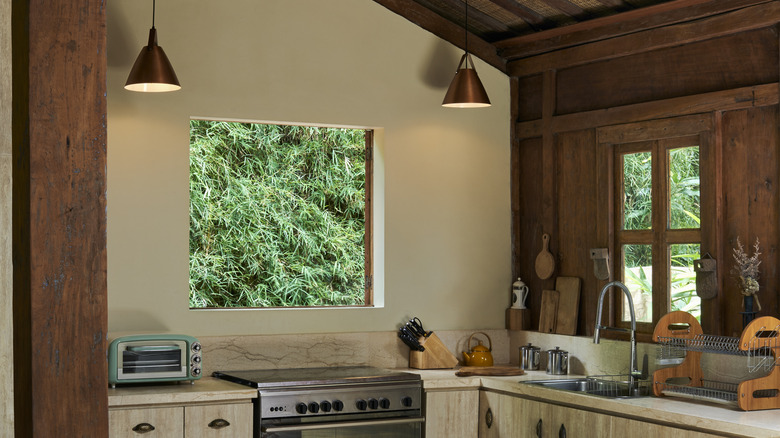
Mixing materials, including metals, is a really versatile style choice that can be applied to any home. Mixed metals could be a core design element in a dream maximalist kitchen design or an ultra-modern space. Adding touches of two or three metals can even bring an all-white kitchen to life, injecting a little excitement and personality into a design that might otherwise be seen as clinical.
Determining the overall style you want for a space is always the first step toward a strong design. Decisive decision making at this stage is particularly important if you're going to be mixing metals, as metal finishes can say very different things. In a modern kitchen where the dominant color is white, for example, brushed chrome and black hint at efficiency and freshness. Warmer metals such as nickel and brass bring comfort and tradition to mind and work well with the wood and stone that's often part of rustic remodels.
When the Property Brothers mix metals in kitchen design, it's clear that they consider accessories as well as kitchen essentials. It's always small details that make good design great, so if you think beyond countertops, paint color, and the type of faucet you want, you're on the right track. Every cabinet knob, drawer pull, lamp shade, and chair leg can bring something to a room, so they all offer an opportunity to add interest and reinforce a design theme.
The simple rules for mixing metals in any kitchen design
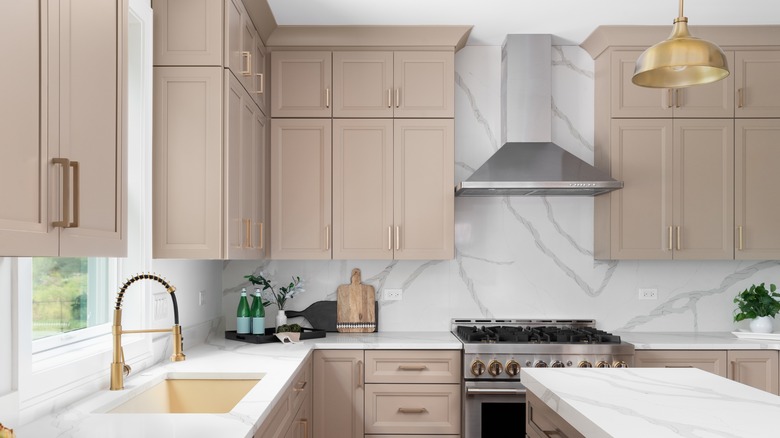
If you're about to embark on a kitchen design journey that includes mixed metals, there are a few easy rules to follow. Experts suggest starting with a primary metal finish and choosing one or two additional finishes that complement it. Good neutral options include matte black and gray iron, which go well with almost anything as they can be made cool or warm depending on what they're paired with.
Having primary and secondary metals in mind should make other design decisions simple, even when you have to make a lot of them quickly. This is because, armed with your materials of choice, you can use the 60-30-10 rule; it's easier than it sounds. Basically, 60% of the metals used in the room should be in your primary finish, with 30% in your secondary finish, and 10% in your accent finish. If you're only using two metals, this rule also gives you space to choose an accent color that isn't metallic.
Other tips include choosing a unifying element that isn't a metal, such as wood, stone, or a paint color. This is another chance to express your personal style, and the rule can be interpreted broadly. You can use the unifying element in flooring, countertops, and more (just don't pick laminate countertops, the Property Brothers hate those).