

How To Structure Your Vegetable Garden Like Ina Garten For Maximum Efficiency

Perhaps surprising no one, when the Barefoot Contessa is at her East Hampton home, "Ina Garten" is often "In A Garden." To her 4.8 million Instagram fans, the expertly-planned garden on Garten's sprawling New York estate is the stuff of legend. Photos of her vegetable and flower beds inspire and excite, framed by Annabelle hydrangeas, dahlias, verbenas, Russian sage, and an orchard of more than 20 crab apple trees. Planning and structure are the key to Garten's famous edible garden — and it's all about the grid pattern and dense companion planting.
Garten's vegetable plot is designed in a grid pattern with four square plots divided by a gravel walkway. Not only does the gravel act as a practical and visual divider for the plants, but it also means that gardeners won't accidentally step on that fertile, aerated soil while harvesting or pulling weeds. Plus, gravel over soil means less room for weeds to grow in the first place. Simultaneously, the square shape of those beds facilitates maximum ease for harvesting. Gardeners can reach their produce from all angles, which can be especially helpful for tinier, harder to reach jewels like cherry tomatoes and strawberries. Produce and herbs from tomatoes to kale, carrots, cabbage, cucumbers, radishes, rhubarb, bok choy, arugula, cabbage, flowering chives, rosemary, and more have been pictured in Garten's photos of her garden. After a harvest, foodies can showcase their fresh, home-grown haul with a garden art vegetable focaccia.
A grid pattern and densely-packed companion planting make for an edible oasis, Barefoot Contessa style
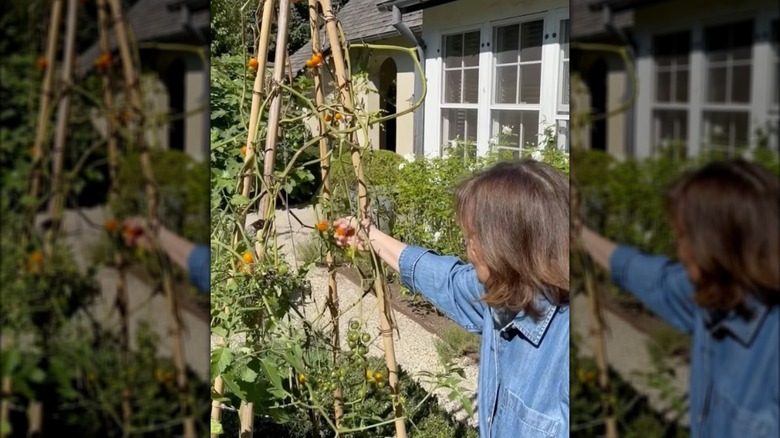
Not only are Garten's vegetable garden beds square-shaped and gravel-surrounded, they're also densely packed with multiple different veggies at once. With a little foresight, companion planting can be a natural way to enrich soil health and maximize bed space. Peppering in a few flowers transforms practical vegetable plots into a beautiful, colorful masterpiece. Aromatic herbs naturally repel harmful pests, and can form an effective barrier if planted around the perimeter of those beds. To companion plant successfully, be sure to opt for plants that thrive in the same soil and sunlight conditions. For instance, basil and marigolds make terrific companion plants for tomatoes. But, gardeners should avoid planting basil and rosemary together at all costs.
Pro tip: A 30-inch-wide bed can accommodate up to 12 rows of plants roughly two to three inches apart. Just be sure to keep the physical size of your veggies in mind. Salad vegetables like leafy arugula and kale, for instance, fare well in close quarters, while larger eggplants and zucchini are going to need a little more space. With a penchant for practicality on the forefront, foodies can build an edible garden that's as enjoyable as it is useful. As Garten recently shared in an Instagram post, below a series of photos of her home garden, "Most of the herbs and vegetables are just getting started, but the spring flowers are going crazy. Enjoying them while they last!"