

Pepsi Announces Debut Of New Soda Sweetened With Cane Sugar And Packed With Prebiotics
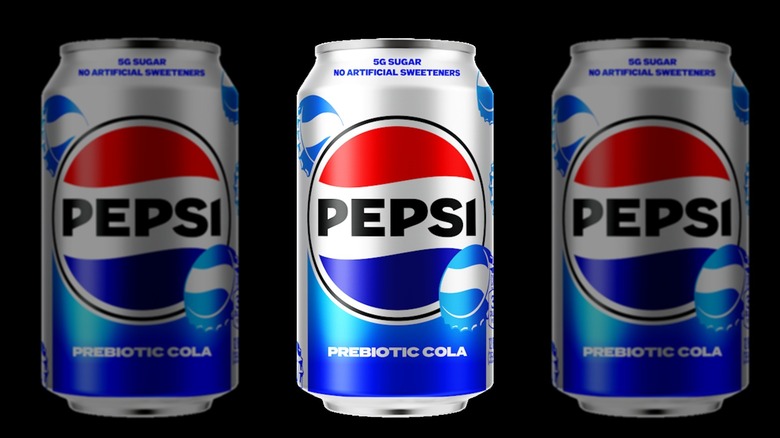
Just months following its $1.95 billion acquisition of the prebiotic soda brand, Poppi Soda, PepsiCo is announcing the debut of its own prebiotic cola sweetened with cane sugar: Pepsi Prebiotic Cola. In an email to Tasting Table, a brand representative from PepsiCo shared that the cola contains just 5 grams of cane sugar, 3 grams of prebiotic fiber, 30 total calories, and no artificial sweeteners — all while "delivering the same bold, iconic Pepsi flavor you know and love." Debuting in both the Original Cola Pepsi flavor and the Cherry Vanilla Pepsi flavor, and available in 12-ounce single cans and 8-packs of 12-ounce cans, the new Pepsi Prebiotic Cola will be found alongside the rest of the Pepsi portfolio in the drink aisle, which has become the best spot of the grocery store, in early 2026.
But it will be available for purchase online as early as this fall. From PepsiCo's beginnings in 1898 to introducing Diet Pepsi in 1964 and Pepsi Zero Sugar (formerly Pepsi Max) in 2007, Pepsi Prebiotic Cola marks the brand's first major innovation in the iconic cola category in decades. Ram Krishnan, the CEO of PepsiCo Beverages U.S., said in a press release, "From the iconic blue can, to the consumer-preferred Pepsi Zero Sugar, our portfolio has always adapted to the needs and flavor preferences of the consumer." He went on to say that, "Pepsi Prebiotic Cola represents the next leap forward in giving consumers choice, optionality, and functional ingredients in their cola experience, without sacrificing the iconic Pepsi taste we're known for delivering."
The trend toward functional sodas
Functional beverages — and prebiotic sodas, specifically — have been on the rise in North America for quite some time, beginning with GT's Kombucha, the first kombucha to hit store shelves in 1995, and slowly evolving into the soda alternatives ever present in stores today. Brands like Olipop and Poppi already come in flavors intended to mimic those of traditional sodas. But PepsiCo's announcement of its own prebiotic cola is the first such example of a major soda brand doing so itself. As Krishnan explained in his statement, its Pepsi Prebiotic Cola reflects a wider shift in consumer preferences. For example, The National Herald recently reported that soft drink consumption among American teenagers has dropped 60% in the last 15 years.
One of the top reasons for the decline is the high cost associated with the drinks, with an average price inflation of 45% over the last five years. However, the health consequences associated with the sugary drinks — and the increased awareness of those health consequences — is also an undeniable factor pushing young Americans away from soda and toward other more advantageous alternatives. But while water, tea, and juice were once the only perceived options, people today have the luxury of enjoying sodas made with functional ingredients like prebiotics and a fraction of the sugar. And they get to do so all without sacrificing the flavors they love. PepsiCo's upcoming Pepsi Prebiotic Colas are just the latest adaptation, only it goes to show just how mainstream they've become.