

The Kitchen Remodel Aspect You Can't Overlook For Safety
We may receive a commission on purchases made from links.
When remodeling your kitchen, aesthetics are often the primary focus, but the room needs to be serviceable and safe in addition to stylish. One of the biggest things to avoid when renovating your kitchen is neglecting to install proper ventilation. An exhaust system like a range hood keeps your kitchen clean and members of your household healthy by removing pollutants from the air. You might think vents are only a requirement if you often cook smoky or smelly food.
While they definitely help to mitigate odors and stop smoke detectors from beeping like mad, removing smoke and grease particles also prevents build-up of gross residue on your carefully-chosen walls and counters. Additionally, household air pollution can irritate your eyes and respiratory system, triggering asthma and even leading to lung cancer over time. Secondly, every time you perform tasks like boiling water or opening the dishwasher, steam fills your kitchen.
If it's not vented out, this moisture can collect under the sink, inside your cabinets, and on wallpaper, leading to mold and mildew growth. Using good ventilation is also one of the crucial tips for cooking with a gas stove. You must get rid of residual gasses such as carbon monoxide and nitrogen dioxide every time you cook, or you could suffer dangerous symptoms including headaches, nausea, dizziness, and fainting. The good news is that ventilation systems come in a variety of styles, so you can avoid these consequences without ruining your kitchen's look.
Tips for choosing a range hood for your kitchen
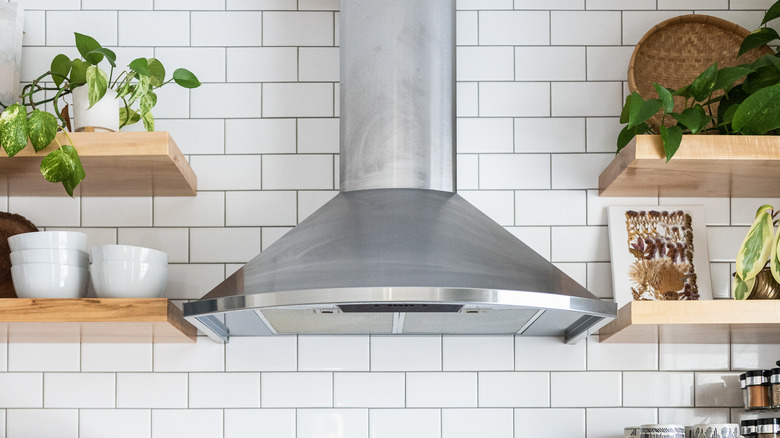
The most common appliance for kitchen ventilation is a range hood above the stove that uses fans to draw in air. The power of a hood depends on its type, size, and strength in cubic feet per minute (CFM). Ducted hoods connect to a duct in your home and vent contaminants to the outside, while ductless/recirculating hoods filter polluted air and circulate it back into your home. The former is far more effective, but the latter does not require ductwork and can be placed almost anywhere.
And the higher a hood's CFM rating, the more cubic feet of air it absorbs per minute. As for physical dimensions, a hood should be at least as wide as the stove below or even larger for more efficacy. If you have a big kitchen, a gas stove, and/or cook using high temperatures, get a powerful range. For a tiny kitchen with an electric stovetop, you might be able to get away with a smaller model.
To name a few styles of range hoods, wall-mounted ones come out of the wall above your stove; under cabinet hoods connect to existing cabinetry and often have slim, discreet designs; and island hoods are meant for cooktops located on central counters. Hoods also come in materials from sleek steel to cozy wood, which can make your oven the most fashionable part of your house. You can even try Rachael Ray's genius way of making a stylish range hood and spray paint it.
Other kitchen ventilation systems besides range hoods
Are conventional range hoods too big and clunky for your liking? While other ventilation options are not as effective, they can be worth considering for small kitchens. For starters, a microwave and range hood combination consists of a microwave oven above your stove that has fans built in underneath. These are easy to install and don't take up any more space than a regular old microwave, but are almost always recirculating models with lower CFM ratings and heat tolerance levels, so they're not ideal to pair with high-octane stoves. You could also try downdraft ventilation systems.
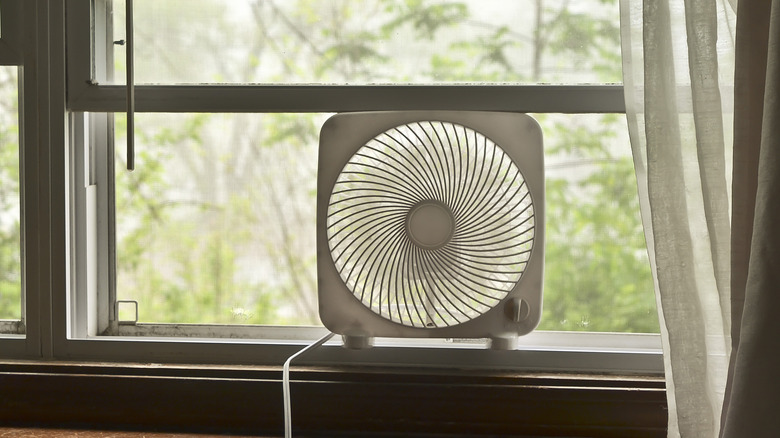
These slim panels full of vents are installed directly into your cooktop behind the burners and suck polluted air downward. If you love clever hidden design features for your kitchen, you can even choose models that retract into the counter. However, having ventilation that close to your stovetop can interfere with cooking, and while downdraft appliances can have higher CFM stats than microwave ranges, they're still not as powerful as classic hoods. Finally, a window fan can be a valid choice if you're renovating your kitchen on a tight budget. These simple, affordable appliances blow smoke, fumes, and odors out of your window every time you cook, but don't really control grease. You'll have to clean your kitchen more often to make up for it.