

The Right Way To Use A Steel Sponge (And Why You Should)
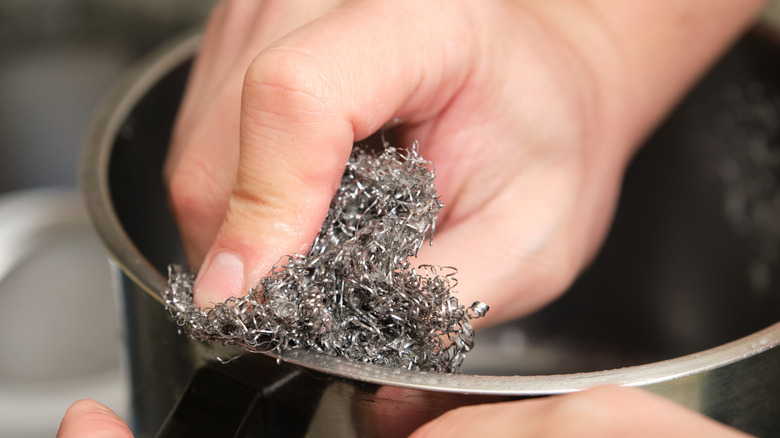
It's probably fair to say that no one really likes cleaning dishes. There are tools to make it easier, of course, but it's never very fun. This is especially the case when you're dealing with some really tough grime, like when you've scorched a pan of burnt rice or made a classic casserole recipe. A steel sponge can come in handy in these situations, and it has many other functions, too.
Steel sponges, also known as pot scourers or steel wool, are rough, metal cleaning tools usually sold in the shape of a ball. They're typically made from, you guessed it, steel, which is cut into fine strips before being packed together into a holdable shape. Steel has a special ability to lift grease and dirt, and the way steel sponges are created ensures that they can tackle set-in stains while remaining gentle enough to avoid scratching your pans.
Steel sponges have actually been around for centuries, and when aluminum took off as a popular material for pots and pans, they really proved how much they can shine –- so to speak. Not only do they work great on certain types of metal, but they're also amazing for glass, porcelain, and you can even use them to clean the grill.
Which materials to avoid using a steel sponge on
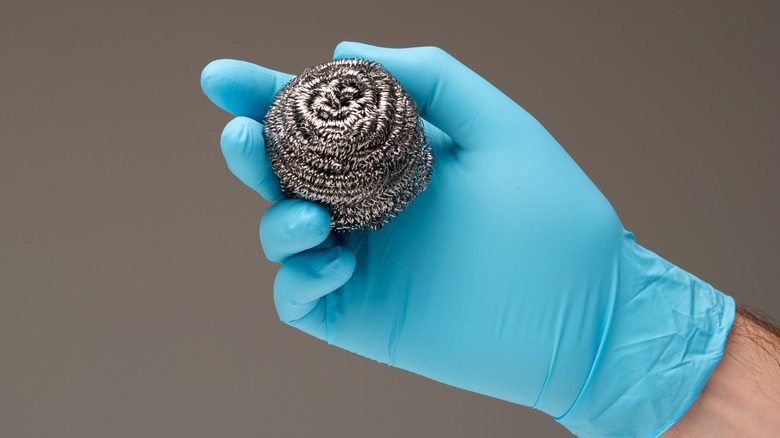
Before you start scrubbing, you need to be mindful of what materials you should and shouldn't use a steel sponge on. Funnily enough, you might want to avoid using them on stainless steel to prevent scratches. This includes any stainless steel appliances you have, like the sink. Nonstick cookware is also out of the question as you don't want to remove the nonstick coating. The same goes for dutch ovens and similar ceramic pans.
However, steel sponges work great on rusted cast iron or a damaged carbon steel pan. Just make sure to season both materials again if you do go this route to give them a fresh clean. Steel sponges can also help remove rust from knives and polish brass. You can even use them to clean your windshield, oven, or shower door.
You can use steel wool without dampening it first if you like, but some water can be helpful. And if you're dealing with really bad stains, try soaking the item in soap and water first. Just be sure to only apply light pressure when using a steel sponge on a surface that seems delicate, like your favorite pan. As for that gross grill plate, get that elbow grease going to your heart's content.