

This Rarely Washed Kitchen Tool Might Be The Cause Of Your Bad-Tasting Food
Is your roasted butternut squash tasting kind of funky? Are your famous chocolate chip cookies just suddenly off? Did that last batch of chicken wings simply not fly with your Sunday football game-watching crew? There very well may be a common thread here, a specific tool that takes the blame — and you might have already guessed it based on the aforementioned dishes. That's right, if your food doesn't taste like it used to, it's probably due to your baking sheets.
Baking sheets just tend to get the short end of the stick when it comes to thorough cleaning. So many things we use them for call for parchment paper or foil, and what busy home cook or baker among us hasn't thought, "Well, nothing actually touched the pan, so surely it doesn't need as much of a scrub as other things?" We give these pans a rinse; they look fine, and back into the cabinet they go until we use them for something else. But here's the problem: the olive oil you used for your Mediterranean sheet pan tofu dinner wasn't properly scrubbed from your baking sheet. It will start to go rancid, and that inevitably impacts your next batch of strawberry cheesecake cookies. Yuck, right?
Not only does the lingering and continually spoiling taste of aroma taint each subsequent recipe, but this is actually unsafe. In the short term, rancid oil can upset your stomach and make you ill. But long-term, spoiled oil produces free radicals that may contribute to the development of diseases like diabetes and Alzheimer's.
How to properly clean your baking sheets
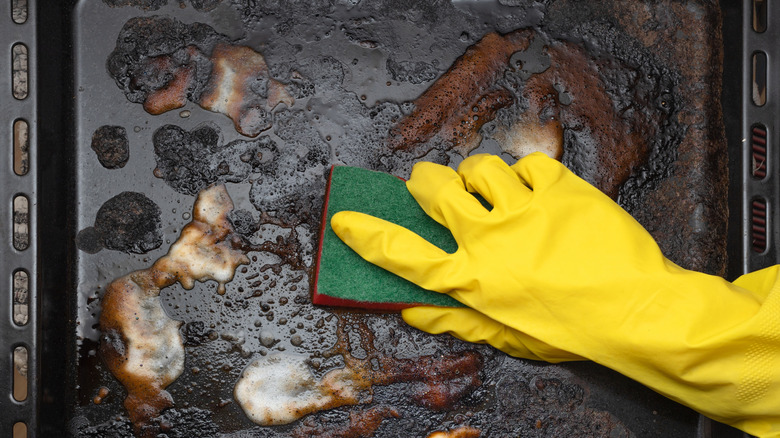
Not only can dirty baking sheets make your food taste bad and even pose real health threats, but they'll begin to sabotage your bakes too. Even if they don't seem that extreme, spots of buildup begin to form from different foods as they get heated and leave behind oil, pieces of vegetables or baked goods, and char. This starts to make your baking sheet look more like a 3D topographical map than the sleek surface you need to ensure even heating. As future foods sit partly on the debris and partly on the pan, they'll bake unevenly.
Essentially, thoroughly cleaned baking sheets are a must. So, what's the best way to do this? Hand-washing is your best bet. Nonstick pans in particular can technically go into the dishwasher, but that will wear away at their coating over time. Begin by rinsing and drying your baking sheet. Then, you can either make a paste from baking soda and a few tablespoons of hydrogen peroxide or sprinkle the baking soda on before spritzing with hydrogen peroxide, vinegar, or dish soap as alternatives.
After the clean, let the sheet sit for anywhere from 20 minutes to two hours, depending on how much buildup there is. Afterward, scrub off the rest with a tough sponge and give the pan another rinse and dry. It should shine like new and feel totally smooth, so you can rest assured it's free of any trace from last night's mustardy sheet pan sausage and apples.