

What Kind Of Fish Is Used To Make Caviar?
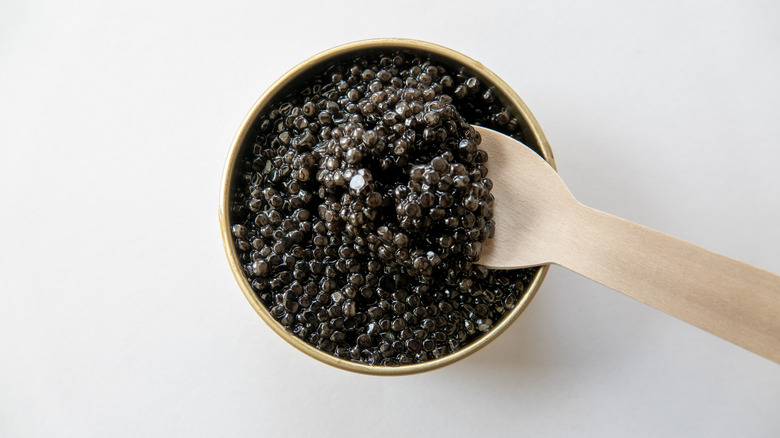
If you have expensive taste, you've probably dabbled in caviar. These luxurious tins range from $50 to an astonishing price tag of more than $100,000 for the highly sought-after Strottarga Bianco Caviar. The unfertilized roe look like colored pearls, neatly slotted into metal containers. These eggs have a rich, umami flavor with individualized tasting notes, like buttery flavors,nuttiness, or even sweetness. Before you dash off to find the must-have accompaniments for caviar, though, you should know where your caviar comes from.
To be officially classed as caviar, the eggs must come from a specific fish: sturgeon.These fish belong to the Acipenseridae family and have existed for approximately 250 million years. Today, multiple species of sturgeon are dotted around the globe, sharing overlapping physical characteristics, like elongated bodies and strong snouts. While they look similar to the untrained eye, they certainly don't produce same-tasting caviar. Before sampling this delicacy, you should always research the different species. The most harvested include beluga and osetra, which is considered the best caviar to try for beginners with a distinctly buttery flavor.
The controversy behind sturgeon
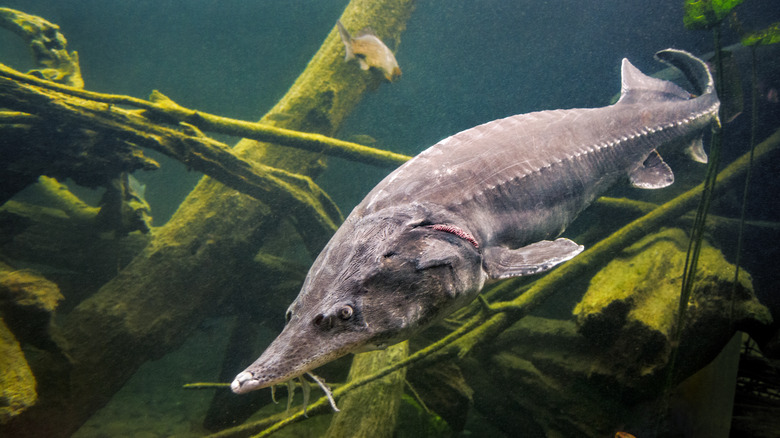
Before lightheartedly learning why you should try eating caviar right off your hand, it's important to dig deeper: This luxurious treat comes with controversy. Sturgeon have been over-harvested for decades; today, almost two-thirds are critically endangered. Conservationists are working hard to preserve these species, leading the World Wildlife Fund to create a dedicated Sturgeon Initiative. Because of these challenges, purchasing caviar demands conscious consumerism and deciding where to shop matters.
Firstly, the majority of caviar is produced in fish farms, as wild-caught caviar is no longer considered sustainable and is banned internationally. These farmed sturgeon are carefully monitored through ultrasounds and then sold for meat once the eggs are harvested. "No-kill caviar" is also available, in which fish are gently massaged to release the eggs or cut open and sewn back up for their roe without being sold for meat. Lastly, there is an increase in caviar alternatives, like roe from less-endangered fish like salmon or trout. These non-sturgeon varieties cannot be classified as caviar (remember that rule about only using sturgeon eggs) but have striking similarities. In fact, you can even enjoy a caviar experience as a vegetarian — umi-budō is the sustainable caviar alternative that happens to be vegan, and these little bubbles of seaweed are nicknamed "sea grapes."
As a consumer, each option caters to a different set of priorities. With so many options, it's important to do your research. It's not quite as simple as just memorizing the fish behind caviar, is it?