

For Fresh Scones Anytime, Freeze The Dough — But Don't Do This First
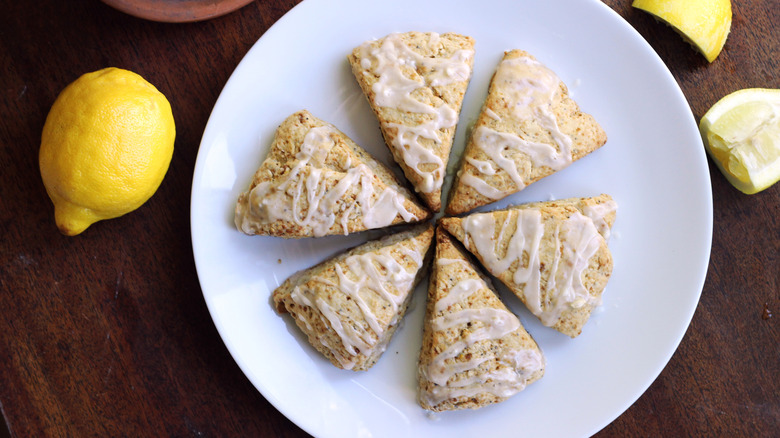
A hot, fresh scone straight out of the oven is an undeniable delight. Whether we are talking about a hearty ham, cheese, and scallion scone eaten with coffee as a full breakfast, or a platter of bite-sized cinnamon almond scones served with tea for an afternoon snack, scones are always a welcome treat. They stale quickly though, so you shouldn't bake scones ahead. But once you discover just how easy it is to freeze scone dough, they will quickly become a go-to part of your repertoire — both for when you're hosting guests for a curated brunch and for when you just want a nice lazy breakfast on the weekend.
As it turns out, scones can be made ahead of time and frozen, no problem. You can even bake the dough straight from the freezer. But there is one important step to skip in this procedure: you don't want to top your scones before freezing them. If you are working from a recipe that calls for a sprinkle of sugar or a smattering of shredded cheese on top of your dough, wait on that step. Toppings like cheese may not stick to the scone or simply may not freeze as well as the dough. As for sugar, the crystals may actually draw water out of the dough, altering the texture and making a mess. Instead, if you wait until the scones are headed to the oven before adding these last toppings, you can ensure the same final product that the original recipe intended.
Best practices for freeze-and-bake scones

As with most cooking practices that have existed for a while, the internet is filled with tips for making the best scones, but the advent of baking scones straight from the freezer is relatively new by comparison. Fortunately, it is a pretty foolproof process. Aside from waiting to add toppings, little else is different when baking scones from the freezer. You make the dough exactly as you would otherwise, going so far as to cut the dough into your preferred shapes. Once your dough is shaped, you are ready to freeze it.
If you plan on using the dough in just a week or two, you can store it in a freezer bag or any other airtight container. Stick the shaped dough in the freezer on a baking tray for around an hour to solidify it and keep the scones from sticking together, then transfer all of the pieces to your container, seal, and store. For a longer stay in the freezer — up to two months — you should use two layers of wrapping on the dough. A first layer of plastic wrap seals in moisture, and an outer layer of aluminum foil helps prevent freezer burn and keep out freezer odors.
When it comes to baking, you can pretty much just stick to the recipe. The low moisture content in scones means that they can go straight from the freezer to the oven with minimal changes in the result. Given how cold the dough is, you may need to bake them an extra minute or two, but that's a small price to pay for such convenience.