

Speck Vs Prosciutto: How Do The 2 Cured Meats Differ?
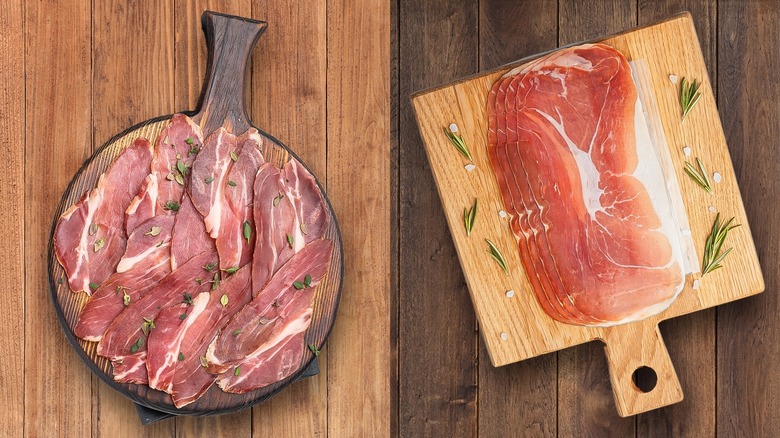
Building a charcuterie board can be a beautiful, colorful, and confusing task. All of those perfectly sliced wedges of cheese, the bowls of various nuts and olives, and stacks of bread and cured meats. Smoked and unsmoked; cheek versus shoulder; spreadable and foldable. It's not always easy to decipher what's what, especially when it comes to some of the hams, like speck and prosciutto. They're both types of cured Italian pork, they're both sliced thinly, and, honestly, they both taste delicious. But they do have some differences.
Prosciutto is the more popular of the two in the U.S. Hailing from the Parma and San Daniele regions, prosciutto is typically made with meat taken from the hind leg of the pig. It's aged for at least 18 months and up to 36 months, during which time it's salted and cured. Other seasonings are usually added too, like ground pepper, and it has a slightly sweet flavor.
Speck, meanwhile, is cured and smoked. It comes from the South Tyrol region, located amid the Dolomites in Northern Italy, where it is cold-smoked in the mountain air. Speck is also made using the hind leg of the pig, but it can come from the rump or loin too. And the meat is boned before being cured, while prosciutto is always left on the bone. It has a darker color, a firmer texture, and a much more intense flavor. It also has more marbling.
Authentic speck goes through a rigorous process
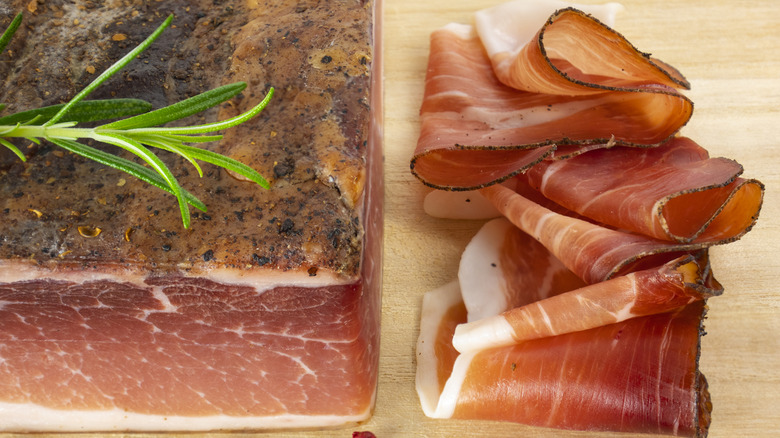
What really sets speck apart is its smoky flavor and strong aroma. Like prosciutto, it's salted when it's cured and seasonings like pepper and juniper berries are added, but speck is more savory. It also goes through a very rigorous process. Authentic speck is known as Speck Alto Adige IGP. If you see this label, it means the meat has been inspected by the Speck Alto Adige Protection Consortium, which ensures it's of the highest quality.
There are only 29 producers that can make Speck Alto Adige IGP, and not only does the meat need to come from pigs that are fed a particular grass, hay, and grain diet, but it also can't contain more than 5% salt. Another key difference between speck and prosciutto is the length of aging — speck is only aged for 22 weeks.
It pairs well with light, fruity cheeses and things like eggs and pasta. Traditionally, it's enjoyed with a glass of wine and schuttelbrot, a local rye bread, and it's used in dumplings too. The rind should always be removed and it should be cut against the grain, but it can be sliced any way. It's a little like bacon, but there is a real difference between bacon and speck.
Prosciutto is a more universal cured ham
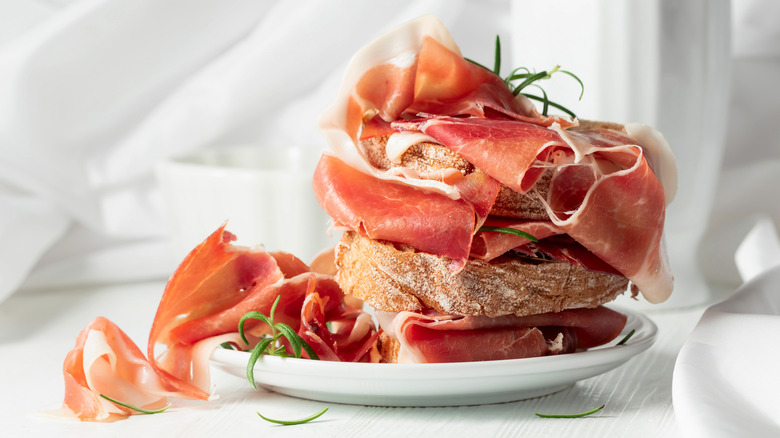
Prosciutto translates to ham in English, which really shows its simplicity. There are two common types: Cotto, which is cooked, and crudo, which is cured raw. There are consortiums for prosciutto too, but there are a few official varieties such as Prosciutto di Parma DOP and Prosciutto di San Daniele DOP. Prosciutto is also made in many different places, including the U.S., although it won't have the DOP (Denominazione d'Origine Protetta) status.
Like speck, prosciutto is great with pasta and cheese, but there are a lot of creative ways to serve prosciutto. It can be used as a pizza topping, a sandwich filling, or in salads. It's always served thinly sliced, and it's better with creamier cheeses, like mozzarella, rather than fruity ones. It's often paired with cantaloupe melon too.
Prosciutto is probably the better option for younger eaters or those who are new to cured meat, but speck is an underrated food to include on your next charcuterie board. Just make sure you're getting the real thing — you'll be able to spot the differences right away.