

Is There A Difference Between Rice Bowls And Poke Bowls?
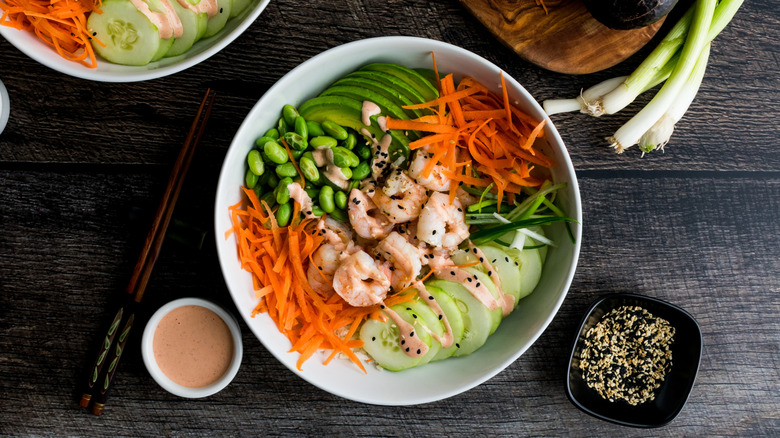
A large bowl of rice topped with raw fish, crisp vegetables, and tasty sauces — what is there not to like? Poke bowls have become immensely popular in the U.S. While the dish itself has been around for quite a while, the bowl form is newer, and its popularity in mainland USA is newer still. A few years back, poke bowls were the most popular delivery food. But what exactly is it that separates a poke bowl from a rice bowl? Can't those also come with raw fish and fresh toppings, typically with a certain Asian flair? The simplest answer is that it comes down to the fish and the rice.
Rice bowls — sometimes known as chirashi, sushi bowls, or sashimi donburi — can have many different types of toppings. You can think of them as sort of like a deconstructed sushi roll, made with seasoned rice, raw fish, and various vegetables and other toppings. Poke bowls, on the other hand, must be topped with poke and are generally made with plain rice. While they may not seem too dissimilar at first, poke is actually quite different from sashimi. While sashimi is a part of Japanese cuisine, poke hails from Hawaii. Sashimi is typically thin slabs of raw fish, while poke is raw fish that has been cubed and marinated. Those are the top differences between a poke bowl and a rice bowl, but we'll explain each in a bit more detail to further elucidate their unique qualities.
What defines a poke bowl?
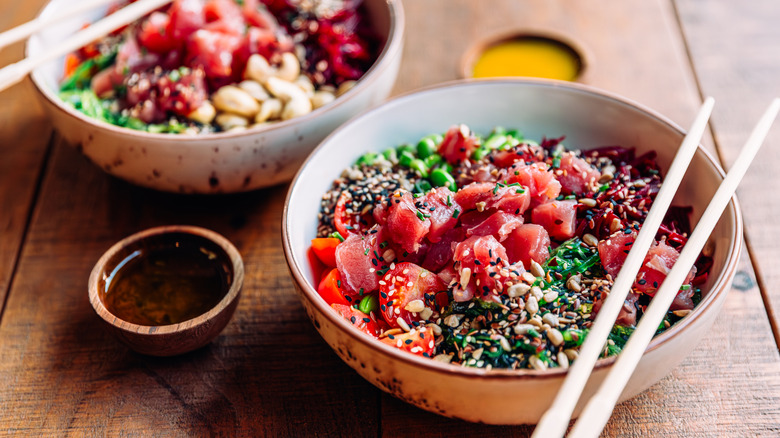
As mentioned, a poke bowl is defined by its signature ingredient: poke. Poke is a traditional Hawaiian dish that dates back all the way to the ancient people of the islands, where it was a simple way to quickly prepare and eat fresh fish. The word itself means "to slice into pieces crosswise," referring to the cubed shape that the meat would be cut into. The original poke recipe was a bit different than modern takes, adding just salt, seaweed, and crushed kukui nuts (also known as candlenuts) to the cubed fish.
These days, the "standard" poke flavor has changed. Ahi tuna is the most popular protein, and it is typically marinated with shoyu (Japanese soy sauce), sesame oil, and rice vinegar. Other adjuncts, like sugar, may sometimes be added. This marination is perhaps the most important step to flavorful ahi tuna poke and also the most important difference between poke and chirashi sushi or rice bowls. Another big difference is the rice at the bottom of the bowl.
For poke bowls, it is traditional for the rice to be unseasoned. The cubes of marinated fish add lots of flavor, as do all of the vegetables, sauces, and elevated poke bowl add-ins. Once you taste this ahi tuna poke bowl recipe, you will see that there are plenty of delicious ingredients bringing flavor to the otherwise plain rice. But if plain rice isn't your thing, you can also try out these tuna-poke-stuffed avocados or try a chirashi sushi rice bowl.
What defines a rice bowl or donburi?
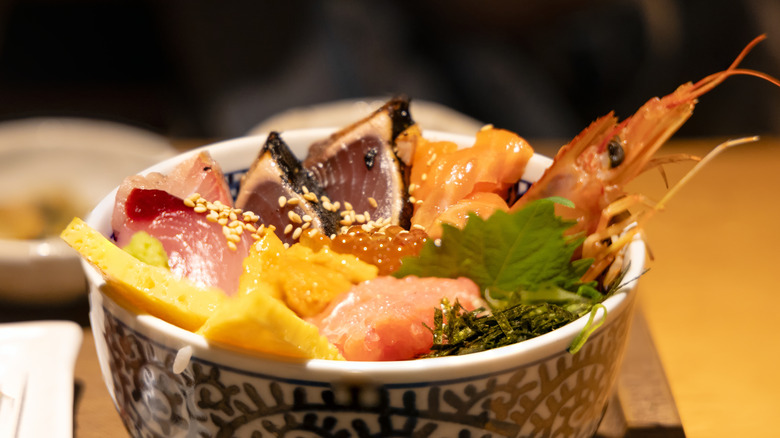
The term donburi technically refers to a ceramic dish that can be a serving vessel for a variety of dishes but is most closely associated with rice dishes. Donburi are often served hot and can include many different proteins and vegetables, but sushi or sashimi donburi refers to a cold preparation, which may also be called chirashi sushi or chirashi donburi. Chirashi directly translates to "scattered," making chirashi sushi an apt description for the bowl of sushi rice, raw fish, and vegetables that might otherwise be found in a sushi roll.
Again, the fish used for chirashi sushi is typically sliced sashimi-style and piled onto the dish plain, unlike the heavily marinated poke. Many of the same toppings used in poke bowls can also be used in sushi rice bowls, but the rice will be different. Sushi rice does not refer only to short-grain rice but also to the salt, sugar, and vinegar added to flavor the rice — see this simple seasoned sushi rice recipe for specifics. With the simpler preparation of the fish, the seasoned rice is important to ensure a well-rounded dish. Try out this California roll bowl recipe to see what we mean.
In the end, the differences are relatively small and vary from recipe to recipe. Modern poke is heavily influenced by Japanese flavors, and the choice of seasoned or plain rice often comes down to the cook's preference. Now, however, you understand the origins well enough to decide for yourself, though recipes like this tuna donburi rice bowl will certainly blend the edges for you.