

The Crucial Step To Take Before Welcoming New Appliances Into Your Kitchen
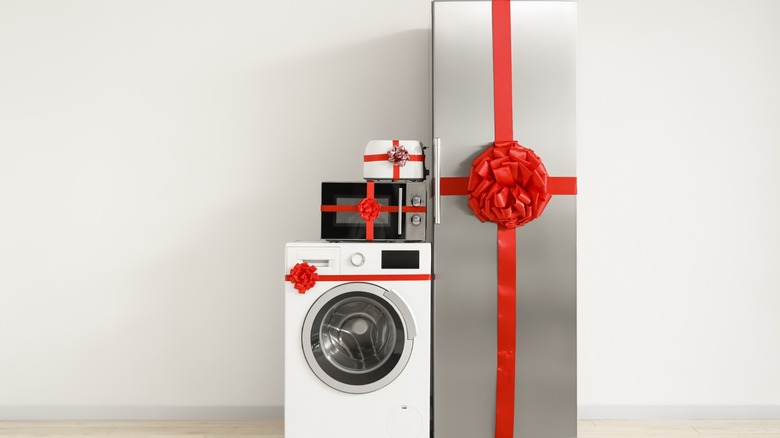
Buying new appliances for your kitchen can be exciting. Whether you're upgrading or replacing something broken, new appliances liven up a kitchen. But before you welcome these devices into your space, you need to precisely measure the area in which they will be situated before committing. Failing to do so is one of the worst mistakes you can make when getting new appliances.
Measuring isn't usually a concern for small appliances, like blenders, toasters, and air fryers. It begins to matter with countertop microwaves, depending on where and how they're placed. With major appliances like a dishwasher, stove, and refrigerator, your measurements need to be precise. Appliance sizes can vary greatly, but they can also be off by only a few centimeters. Even a small difference can mean your new fridge won't fit in the same spot as your old one.
This may seem obvious, but sometimes an unexpected detail throws you off. The new fridge might be the right height and width, but if the depth is off, it could stick out a few extra inches. A dishwasher, even a centimeter or two off, might no longer fit under the countertop.
You also need to consider if there's space for doors to open properly. If you went from a single door refrigerator to a French door refrigerator, is there room for that other door to open? Dishwashers and ovens have doors that open out. Make sure you account for that space as well. If the door opens right into your kitchen island or cabinetry and you have no space to work around it, that could be very inconvenient.
Measure twice, install once
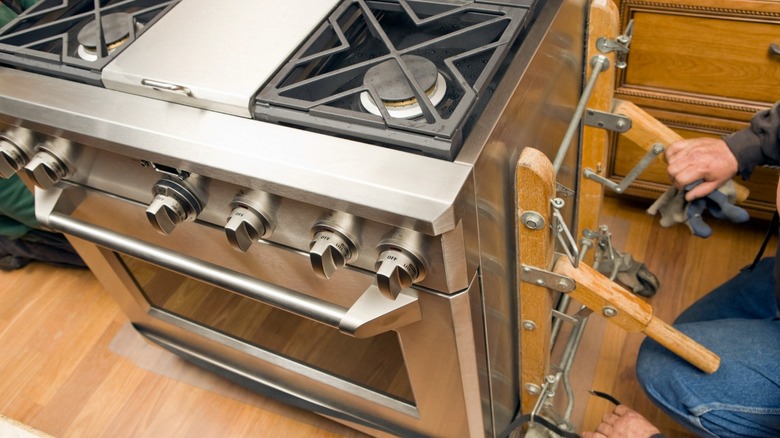
There are other measurements to consider that may also be overlooked. It's not enough that the appliance fits in the spot where you want it. You need to think about ventilation, plumbing, and power supply. Make sure all hoses, pipes, and cables can be connected and have enough room to operate safely.
Another crucial measurement is the doorway you plan to use. That includes the front door, kitchen door, or any other entryway the appliance must pass through. You may have room in the kitchen for it, but you need to have the space to get it there, too. Older homes and apartments, especially, may have narrower door frames that larger appliances won't fit through.
Pay close attention to countertop lips or edges when installing appliances like microwaves or dishwashers in alcoves. The space might technically be the right size, but an overhang could prevent proper operation.
Ensure surfaces are level, including floors and walls where appliances will be installed. Anything slightly warped or uneven could mean even precisely measured appliances won't fit properly. Measure at multiple points, like top, middle, and bottom, to ensure the space is even and will fit your new appliance. Double-check your measurements before bringing in new appliances, and you'll avoid most issues.