

9 Tips And Tricks For Collecting Vintage Cookbooks
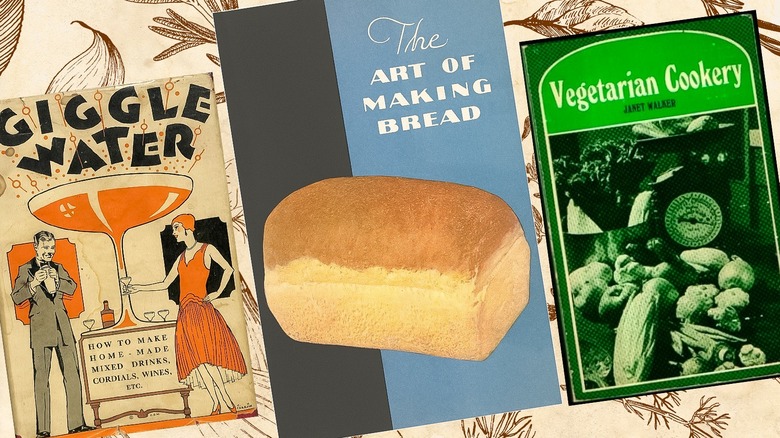
Ah, that old book smell, the fusted vanilla scent that evokes nostalgic memories of bedtime stories, baked cakes, and childhood dreams. Vintage books are time capsules, a journey into a forgotten past — from the care that went into the binding, the artistry of hand-drawn illustrations, and the dated terminology. Vintage cookbooks, perhaps more than any other book, have the ability to transport you to a more innocent time.
Collecting vintage cookbooks can be a rewarding and lucrative hobby for those in the know. During the 18th and 19th centuries, the tail end of the early modern cuisine era, cookbooks became increasingly more popular due to a rise in accessibility and affordability — but books from this time can sell for thousands of dollars nowadays. However, you don't need to seek out rare early editions of your favorite rustic kitchen cookbook to make money. The key to collecting vintage cookbooks is knowing what to collect. Savvy collectors have their eye on American and global classic cookbooks, first editions, and signed copies, but there is money to be made in large, complete collections of fairly standard cookbooks, magazines, or even pamphlets that would have once been readily available to your average household.
Starting a collection is often about more than just money; it's about preserving a piece of history, delving deeply into subjects that interest us, and owning a piece of art. Whatever the reasons you have for starting a collection, read on to find out the best tips and tricks for finding and collecting vintage cookbooks.
Why collect vintage cookbooks?
There is an emotive reason to collect vintage cookbooks that drives many collectors — the ability for these tomes of information to transport us to a more rustic time. Vintage cookbooks are a treasure trove of information, historical insights, and long-forgotten ingredients. In a world of fast food and modern technology, many of us yearn for a simpler time — and what's more comforting than diving into the pages of a 1970s cookbook to rediscover the cakes you baked with your grandparents?
Vintage cookbooks hold huge interest for history buffs, as many recipes were shaped by current events. Nowhere does this come into focus more than in this list of bizarre vintage cakes. For example, The Depression cake was made without milk, butter, or eggs, as they were too costly throughout World War I and II, while the brand 7-Up created the 7-Up cake in the 1950s as part of a marketing effort to boost drink sales. Today, vintage cookbooks can also have a large resale and investment value — Irma S. Rombauer would be very surprised to learn that her book "The Joy of Cooking" (1931) now sells for upwards of $2,000. A first edition of the infamous Victorian cooking tome "Mrs. Beeton's Book of Household Management" (1861) can sell for $4,000.
There's also a practical reason to collect vintage cookbooks. In our grandparents' era, cooking methods were passed down; but today, many of us lack basic cooking skills. Vintage cookbooks are excellent sources of information — consider the classic, how to boil an egg — but they can also teach us how to cook from scratch using meager supplies and offer tips for replacing out-of-stock ingredients. In short, there are many reasons to collect vintage cookbooks, of which money, nostalgia, history, and self-education are just a few.
Focus your collection on one area
The earliest cookbook ever found dates back to 1700 B.C., and these days, thousands of new cookbooks are put out each year. So, it's a wise idea to focus your cookbook collection on a specific area rather than aiming for a generic cookbook collection that could span tens of thousands of books.
Focusing your cookbook collection has many advantages: You can "complete" a collection, you are able to become an authority on your particular topic, and your collection may be regarded as more valuable by collectors. If value is of interest to you, then think carefully about what type of niche collection you wish to curate. In general, rare, antique books of historical importance are highly sought after. According to a blog post by Peter Harrington, a London-based antiquarian books collector and dealer company, "Collectors of rare cookery books often gravitate towards authors who were instrumental in reinventing the genre or specific titles that enjoyed immense popularity on publication." The company cites the likes of Anthony Bourdain, Julia Child, Elizabeth David, and Buwei Yang Chao as those who have become known as "cornerstones of gastronomic literature."
Monetary value aside, every collection should start with the question: What interests you? Most collections are a hobby rather than an investment, so consider what excites you or brings you joy. Start a collection on a specific genre, such as vegetarian or vegan cookbooks; a certain era, like cookbooks from the 1980s; or from times of historical interest, such as wartime recipes or early pioneers. You can collect by author, date, genre, region, publisher, food type, or simply for nostalgia.
What to look out for when collecting vintage cookbooks
The condition is a key factor when collecting books. But this is particularly challenging when it comes to cookbooks, which may have endured years of cooking-related splatters and oil spills. A general rule of thumb is that the older the book, the more valuable the title. Hence, books from the 1800s and 1900s sell for large sums, including those from the 1950s cooking boom –– but sadly, this high value means that many of these cookbooks are out of print or in poor condition, so a mint-condition cookbook is a rare find.
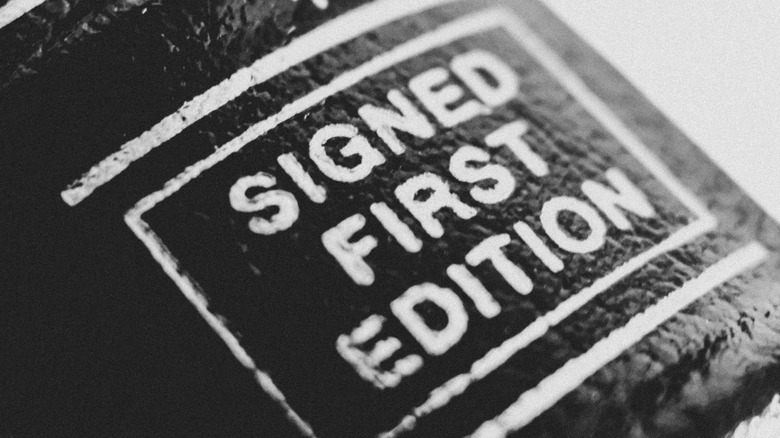
When you find a book, take a close look at its condition. Look for missing pages, stains, loose binding, or an absent dust jacket –– these factors will all be taken into consideration if you try to sell it, so consider any damage when buying. Take a peek at the first few pages; first editions and signed copies are enormously collectible, so if you spot a signature, you are in luck.
Another point to consider when perusing those used book aisles is collectible items that may be outside of your focus. Certain collections are always highly desirable. Keep an eye out for some of the bestselling cookbooks of all time, like those from Julia Child or Betty Crocker; older collections like Fannie Farmer's 1896 cookbook, "The Good Housekeeping Cook Book" (1933), the "Better Homes & Gardens New Cook Book" (1930), or "The Culinary Arts Institute Cookbook"; or those harder-to-find diamonds like "The Joy of Cooking" or "The American Woman's Cook Book" (1947).
Consider collecting niche and overlooked items
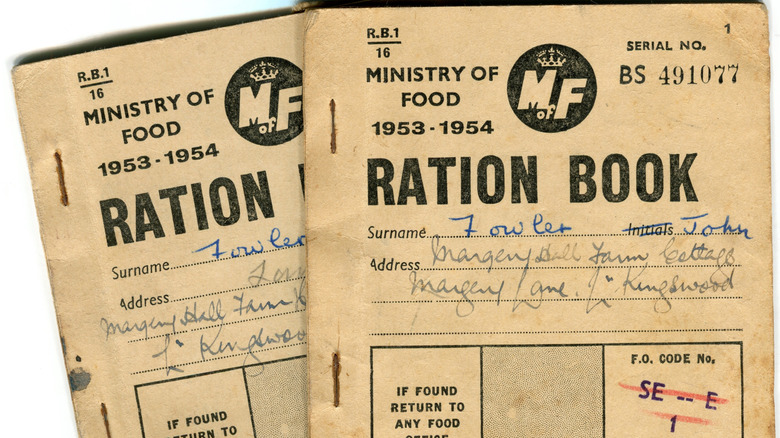
While certain cookbooks are at the top of every collector's list, there is a lot to be said for collecting niche items — those time capsule gems that speak to us from a forgotten age or, by their physical structure, are considered less desirable than traditional cookbooks. Cooking pamphlets and booklets offer a huge insight into cooking trends from previous eras. In 2017, a donation of cooking pamphlets from the 1930s to the 1960s was given to Leeds University in the UK, which reports items of pure delight: a John West Foods recipe for crab with banana, a Spa gelatine recipe for bone marrow flavored with pineapple and set in Jello, and an innovative tip from "Simple Slimming" to smoke a cigarette to get rid of hunger pangs.
World War II ration books have a decent resale value, but a price can't be put on owning such an important piece of history. It gives us, and future generations, an understanding of the hardship of war and makes us think about how people had to be creative with recipes at a time when basic foodstuffs were unavailable. In a similar vein, collecting Southern church potluck cookbooks gives us a glimpse into the past that may otherwise be forgotten. Not only do these potluck books contain family recipes that would have been passed down through generations, but they also contain stories and anecdotes that are a great source of knowledge and interest for history buffs.
Other niche items to consider collecting include 1970s vegetarian cookbooks, foraging guides, and vintage cocktail recipe books. Collections like these offer insight into changing trends and make us aware of how our knowledge has developed over the years.
Ways to catalogue your vintage cookbook collection

One of the joys of collecting is cataloging and ordering your finds; not only can it deepen your appreciation for your collection, but it also prevents mishaps like duplicate purchases or losing track of lent copies. There are many effective ways to catalog your vintage cookbook collection with varying degrees of complication and cost.
The simplest method is to record each of your books on a sheet of paper, in a notebook, or on a spreadsheet like Google Sheets or Excel. Make sure to take note of the title, author, date published, edition number, and genre, and perhaps include a column for your thoughts on the book. If you would like to include a picture, you can add one to a spreadsheet, but if you are a visually focused person, you could create a photographed catalog by simply taking a photo of each book and using the Google tagging system to categorize and file it.
You can use an online platform like LibraryThing, which allows you to upload books to your collection using a barcode scanner (though this is less relevant for older and niche collections) or manually import them. LibraryThing will also enable you to browse other users' libraries and connect with other members who have similar collections, which is excellent for exchanging titles. Several apps are also used for cataloging books: Libib and CLZ both work in similar ways to LibraryThing, but you will have to pay to use them.
How you present your collection depends on organizational and aesthetic preferences
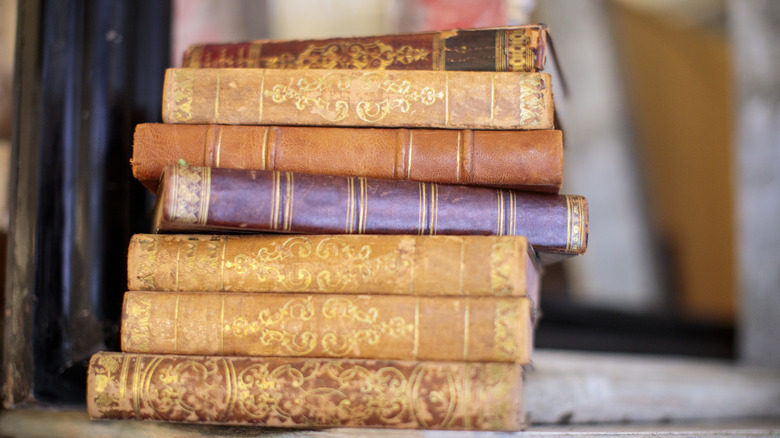
Cookbooks are designed to be attractive, from the silky modern dust jackets displaying fine dining dishes at their best to the 100-year-old dusty tomes. Cookbooks, both vintage and modern, are made to be displayed. But how you display them is another question entirely. If you have a relatively inexpensive collection of books that you plan to cook from, then placing them in or near the kitchen where they are close at hand is ideal. But if you have a priceless collection of 1900s classics, then you need to take precautions to make sure they are stored where they won't be damaged.
It seems a crime to store books away from where we can enjoy them. Still, if your books are very rare or expensive, you need to make sure you place them away from heat and moisture –– this doesn't mean locking them away in a glass cabinet but rather making sure they are out of direct sunlight, not near a fire, and kept away from damp areas like bathrooms or kitchens. The best way to store books is upright on a shelf with bookends to prevent warping; if you are stacking them sideways, keep the pile small so the bottom books aren't squashed. Dust regularly and consider using transparent polythene to protect covers — never place them in plastic, as this can lock in moisture.
How to display your vintage cookbooks is entirely a matter of personal preference — a decision between aesthetics and order. Some people like to separate hardbacks and paperbacks, while others file by color, height, or size. Others prefer to display their books by theme, author, or date.
Where to find vintage cookbooks: second-hand stores
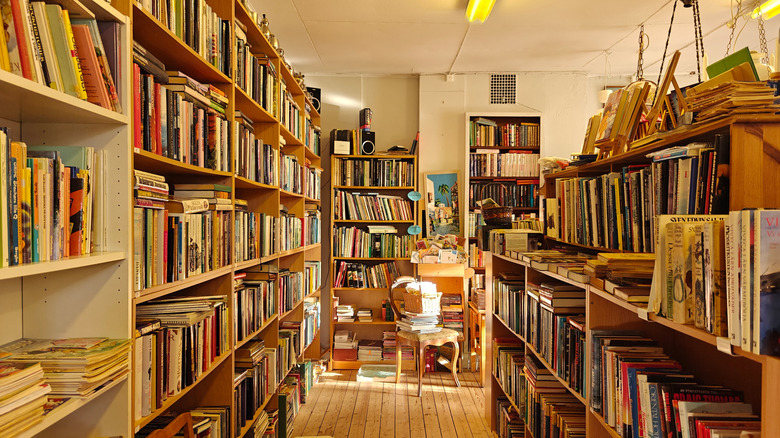
It will come as no surprise that one of the best places to find vintage cookbooks is in your local bookstore. In the U.S., second-hand bookstores are on the rise — a positive change attributed to sustainability concerns and a growing eco-consciousness. There's also been a pushback against digital reading, with a decline seen in the sales of digital e-readers. In a world where information is so readily available, there's something delightfully old-fashioned about holding a book in your hands — and then, of course, there's the thrill of collecting and displaying them.
The best places for rare and valuable books are antique bookstores. You can find antique bookstores in every city, but they also pop up in the most unlikely of places — who knows what hidden gems could be waiting for you in the next small town. The Antiquarian Booksellers' Association of America and AbeBooks websites both have directories that list antique booksellers, which should help you track down your nearest dealer. Make sure to ask shop owners if they have any items not on display. Often, a used bookstore will have vintage or rustic kitchen cookbooks, so it's also worth popping into your local bookstore. Biblio can help you locate bookstores that are selling vintage cookbooks in your state.
Finally, thrift stores like Goodwill, Salvation Army, and Habitat ReStores are a goldmine for vintage cookbooks, and even better, many of these books can be acquired cheaply as the sellers often don't understand their value. Check out the homeware, books, and children's sections, as they may be tucked away in a different area. Thrift stores are a great way to find valuable and collectible books at bargain prices, so it's always worth checking out the shelves of your local store.
Where to find vintage cookbooks: second-hand sales and markets
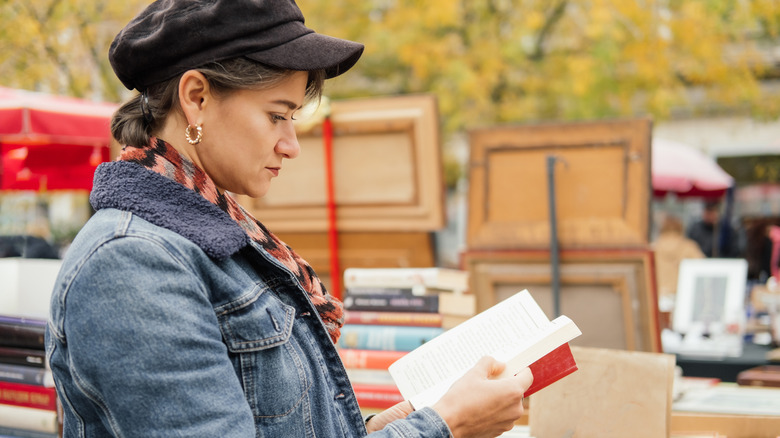
Other people's old can be your gold; you just need to know where to look. Second-hand markets, estate sales, garage sales, and flea markets are great places to start.
Head over to EstateSales.net and search by zip code for details of estate sales in your area. Estate sales take place when a person needs to liquidate the assets of an estate quickly — they can range from a small home to a grand mansion and can be an excellent source of fascinating finds. Garage and yard sales are similar but on a smaller scale. At these events, people tend to sell their unwanted items rather than the whole estate; regardless, they are a great place to find vintage cookbooks, particularly if you are looking for books from the local area. A few key tips for success include looking out for yard sales in older areas with more historic houses, arriving early as competitive vintage cookbook bargain hunters tend to arrive as soon as they open, and not being afraid to haggle.
Try also looking out for flea markets. There are over 1,100 flea markets across the U.S., so there is bound to be one near you. Head over to the National Flea Market Association's website to find details about your nearest event. Stall holders at flea markets may be a little savvier than your average person at a garage sale, so you may end up paying a little more. Do make sure to look out for fakes, however, as many traders are aware that vintage and rustic kitchen cookbooks are a lucrative market.
Where to find vintage cookbooks: online resources

Online resources are a treasure trove of vintage cookbooks waiting to be discovered. The largest sites are eBay and Facebook Marketplace –– here, you will find books being sold by dealers or collectors. As always, you are less likely to get an undervalued bargain when dealing with collectors, but you may find that elusive copy that's needed to complete your collection. A good tip to gauge price is to look at books under the "sold listings" filter to see how much similar books have sold for before.
Facebook groups are a less commercial but equally valuable online resource –– type in the sort of group you are looking for into the search bar and see what comes up. Some examples of active groups include Vintage Cookbooks, Cookbook Collectors and Lovers, The Cookbook Junkies, and Cookbooks & Recipes for Sale, Buy, or Trade. It's also important to search by area, such as New Jersey cookbooks, to see what groups are in your area. Other social media platforms are another online avenue that's worth exploring. Head over to Instagram or X, formerly known as Twitter, and search for relevant hashtags, such as #antiquebooks, #rarebooks, #vintagebooks, and #bookstagram.
Meanwhile, more conventional online routes include AbeBooks and ThriftBooks, which are online book resellers that sell second-hand books and have a section for collectibles, which may be of interest to you. You won't find your cookbooks at a competitive price here, but you do have access to quite literally thousands of books across the states.