

Say Goodbye To Dull Granite Countertops With One Maintenance Step (But There's A Catch)
We may receive a commission on purchases made from links.
David Letterman reportedly once said, "My greatest fear in life is being dull." Many homeowners share that fear when it comes to their granite countertops. But dullness doesn't have to be on the agenda with one maintenance step: Polishing powder. Before scrubbing, Craig Gritzen — founder and designer at Curated Style Collective — exclusively shared his insights on what to look for in a polishing powder, how to use it properly to prolong the life and look of your counters, and how to avoid cleaning mistakes that wear down granite countertops.
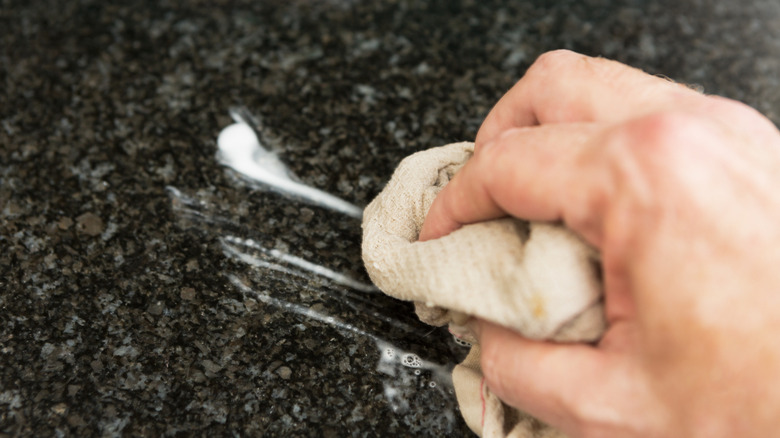
Gritzen explained that polishing powders use abrasives to scuff out imperfections. This creates a flatter, more uniform appearance that reflects light for that glossy appearance. It's best to address these issues before they get worse. "To keep granite looking new ... clean up spills and water spots when they happen to keep the surface shiny instead of cloudy," he said. Powder polishing frequency is up to the individual, but doing it seasonally is one suggestion for staying on top of the task without it feeling overly burdensome.
When it comes to products, Gritzen said, "I recommend using a polish that's suitable for granite," and not one for marble. Marble polishes contain abrasives that are too small to be effective, so pick up something like the Tenax Granite Polishing Powder. He also stressed the importance of using a pH-neutral cleaner first, like the Granite Gold Sealer for Natural Stone. Finally, before use, Gritzen suggests a test patch to see how it affects your granite.
Take care when using polishing powder on granite countertops
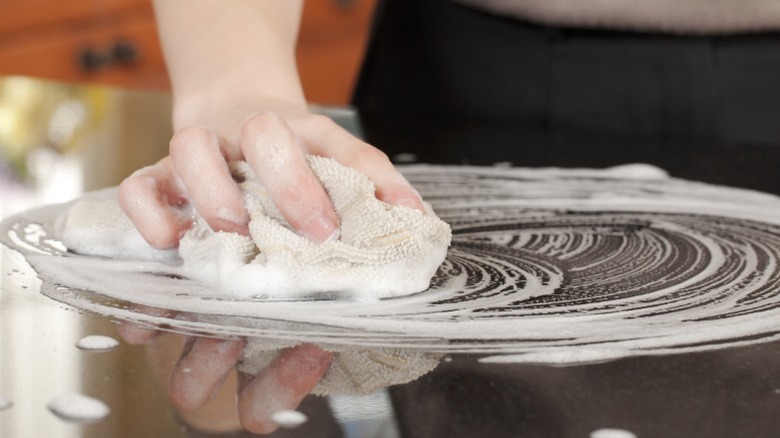
Once the proper product is chosen and a spot test is done, it's time to prep. Craig Gritzen instructed users to clean the granite first so there's no surface debris, remembering to reach for a store-bought or homemade cleaner that's safe for granite. Remove everything from the counters. You may also want to tape off grout, backsplash, and appliances that touch the countertops to avoid any mess that could potentially discolor those areas.
For polishing powder application, follow the product's recommendations, including suggested application tools. "Avoid aggressive polishing and scouring pads," said Gritzen, as these can scratch the surface; instead, use a soft sponge or microfiber cloth. "The biggest mistake is treating polish like a household cleaner ... it's easy to create a more noticeable issue if care is not taken."
If there are any streaks or cloudy areas, it could mean the product wasn't buffed in well enough, so give it another go with more pressure. The whole process usually takes about half an hour for an average kitchen, plus drying time. Gritzen recommended using cutting boards and trivets to prevent other scuffs that need to be polished out. But if they do, you're ready.