

The 13 Most Popular Drinks In The '60s
We may receive a commission on purchases made from links.
If you're reading this while casually sipping on a can of Lipton, or, say, a butter pecan crème brûlée vanilla latte with a dash of caramel syrup and oat milk, you're probably not alone. A classic iced tea and fancy specialty coffees are some of the most popular beverages of the here and now. In the future, when someone asks, what did you drink back then? They're probably the type of drinks most of us would answer with. That and timeless classics like Coca Cola and Pepsi, of course. But if you were around in the 1960s, your answer to that question would likely slightly different.
The way we live has changed dramatically since the 1960s, and naturally, so has the way we drink. Here, we're looking back at some of the most popular drinks of this decade, from fancy cocktails to diet soda to just straight up whole cow's milk.
Tom Collins
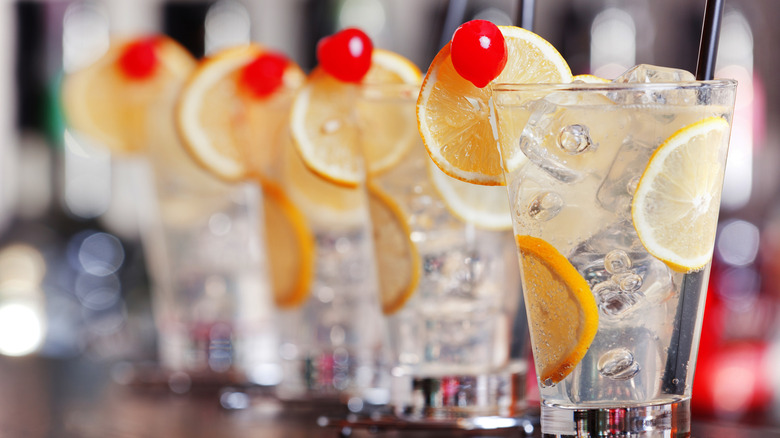
The Tom Collins cocktail was, indeed, invented in the sixties, but not in the 1900s. Nope, this popular alcoholic drink — made with gin, lemon, syrup, and soda —was actually developed in the 1860s, by a man named John. Wait, what? Yep, the famous drink wasn't created by anyone called Tom, but by John Collins, while he was working at a bar in Mayfair, London. The name probably comes from the original brand of gin used in the drink — Old Tom. Well, that's one origin theory anyway. Others credit the drink's invention to 1870s New York. But wherever it came from, the truth is that by the 1960s, in the U.S., everyone was drinking Tom Collins cocktails.
Tom Collins even pops up in "Mad Men," which is set in the 1960s and widely praised for its historical accuracy. In fact, in the second series of the show, Don Draper is seen teaching his young daughter Sally how to make the famous cocktail. Draper's version featured a cherry, and this was pretty accurate to the way many people enjoyed the drink at the time. "My mother didn't drink much, but when she did it was a Pink Tom Collins with a maraschino cherry and some of the sauce for color," recalled one Redditor in r/GenerationJones.
Welch's Grape Juice
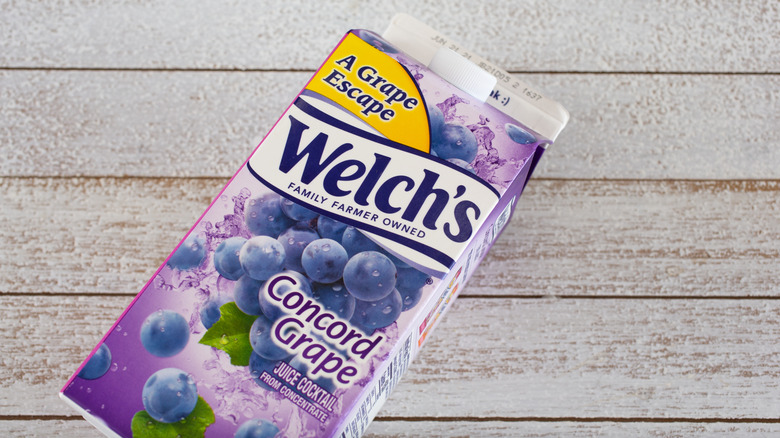
Coincidentally, another drink that came around in the 1860s is Welch's Grape Juice. The original recipe for the shelf-stable juice was created by the dentist Thomas Welch, and it was, needless to say, a big hit. In fact, in the 1950s, the company was acquired by the National Grape Co-Operative Association for $28.6 million. In the 1960s, the drink was everywhere, and many remember drinking it on repeat throughout the decade.
Welch's Grape Juice appealed to kids especially, who, prompted by the brand's own advertisements, liked to pretend they were drinking wine. The brand also courted children with its sponsorship of The Flintstones during this era. The beloved cartoon Stone Age family appeared on Welch's branded glasses, and in many commercials for the brand. "The phrase 'woo who gape juice' was a hit on our school playground for a solid month," commented one YouTube user underneath a clip of a 1960s commercial ("woo woo gape juice" was Pebble Flintstone's catchphrase). "And it worked," they added. "I buy their jelly to this day."
Tang
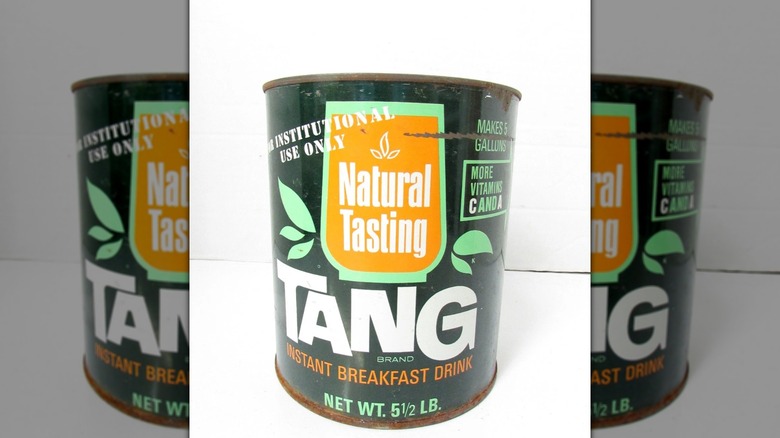
In the 1950s, inventor and chemist William A. Mitchell (the man behind Cool Whip and quick-set Jell-O) had an idea: A fruity, powdered drink that was full of vitamin C and more interesting than water. He called it Tang, and it was an overnight ... flop. The kids of the 1950s and early 1960s just weren't all that interested in the drink, that is, until NASA came along and made it cool in 1962. For the space agency, it was a simple solution to making water taste better for astronauts while they orbited the Earth. But for Tang, it was marketing magic.
"I begged my Mother to let me drink Tang AND Space Sticks! Remember them?," asked one Facebook user in a group for Florida memories. "I wanted to be an Astronaut and made little replicas of Apollo modules!" They're far from alone. Many people who grew up in the 1960s remember drinking Tang for breakfast after NASA put the powdered juice on the map — even if they didn't actually enjoy it that much.
Screwdriver
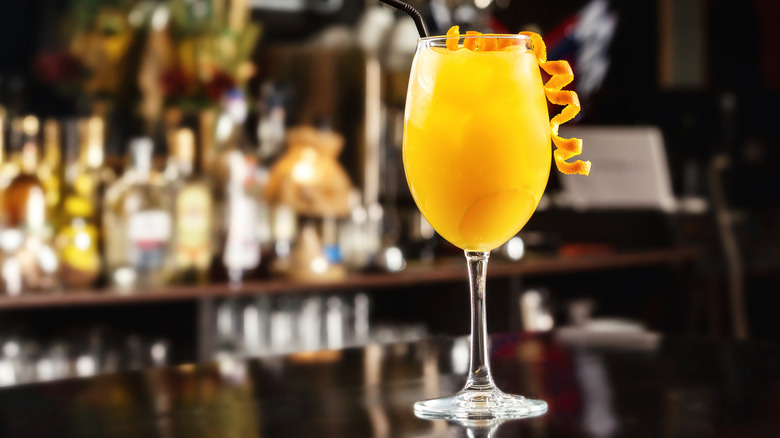
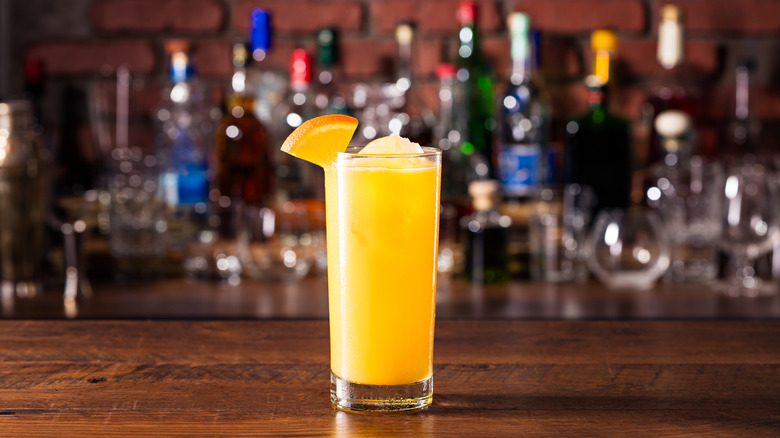
Tang wasn't just for young kids. In fact, some people remember using the powdered juice to make cocktails during their college years — including screwdrivers. According to some, Tang was a quintessential mixer for the collegiate crowd of the swinging sixties, where it was an especially accessible mixer for another popular drink of the 1960s: the Screwdriver.
Screwdrivers were another popular drink of the 1960s, but of course, most people didn't make them with Tang. Nope, this classic cocktail — which might have been invented by American oil workers in the Persian gulf in the mid-1900s, although the origins are debated — is typically made with a more sophisticated mix of fresh orange juice and vodka.
Screwdrivers are still popular today, but it's easy to jazz them up a bit if you like a fancier tipple. Consider making the drink with homemade blood orange syrup, for example, or maybe swap standard vodka for a flavored version. Or, you know, Tang is still on the market. Just a thought.
Harvey Wallbanger
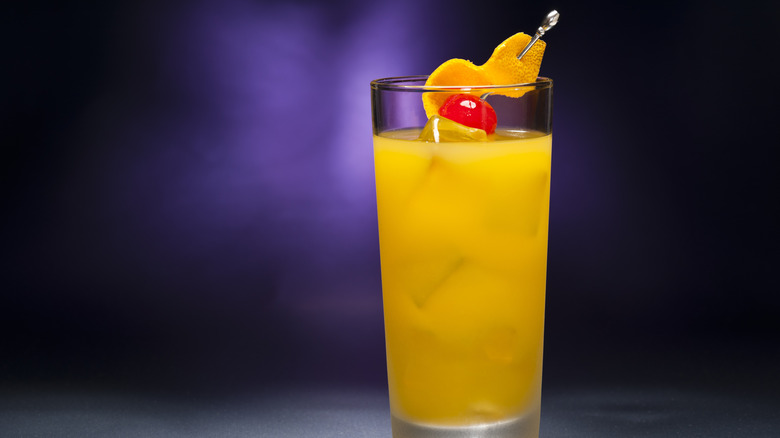
In the 1960s, elaborate, sophisticated cocktails were having a moment, and so a screwdriver might have been seen by some as a little, well, basic. So instead, many turned to Harvey Wallbangers. The drink, created in the 1950s and apparently named after a surfer, was almost identical to a screwdriver — apart from the addition of Galliano, an Italian liqueur known for its herbaceous flavor and tall, skinny bottle.
In fact, many people who were kids in the 1960s remember their parents keeping a bottle of Galliano on hand, just so they could make Harvey Wallbangers. "My [parents'] liquor cabinet had that 3 foot tall Galiano bottle for Harvey Wallbangers," recalled one Redditor in r/GenerationJones. Some say that, decades later, it's still their parent's favorite drink. "My Mom, who graduated in 1965 (wouldn't want to give her age, after all) still makes Harvey Wallbangers on those nights where she wants a "fancy" drink," shared another Redditor.
Singapore Sling
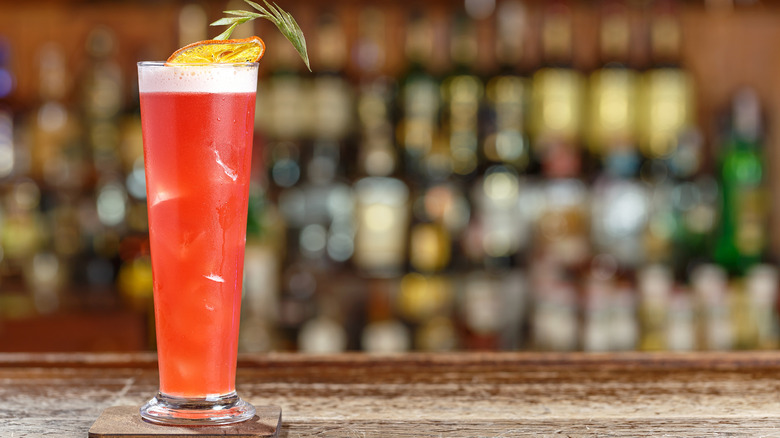
As you might have guessed, the Singapore Sling has its origins in, well, Singapore. A spin on the classic American sling cocktail (which is traditionally made with a spirit, lemon juice, soda, and sugar syrup), it was first created at the Raffles Hotel bar in the early 20th century. The bartenders added several fruity elements, including pineapple and cherry liqueur, and the saccharine mix was a hit. In the 1960s, Americans loved it (this was the tiki era, after all), and it was a go-to for many.
Written proof of the cocktail's popularity in the 1960s comes from an unlikely source: "Fear and Loathing in Las Vegas." Yep, in the first chapter of Hunter S. Thompson's hit novel, published in the very early 1970s and littered with references to the 1960s, narrator Raoul Duke talks about sitting in a bar and drinking Singapore Slings with mezcal and beer. To this day, literary fans copy the iconic order. "Singapore Sling with mezcal on the side is my standard order when I [go] to tiki bars," wrote a Redditor in r/cocktails.
Boones Farm wine
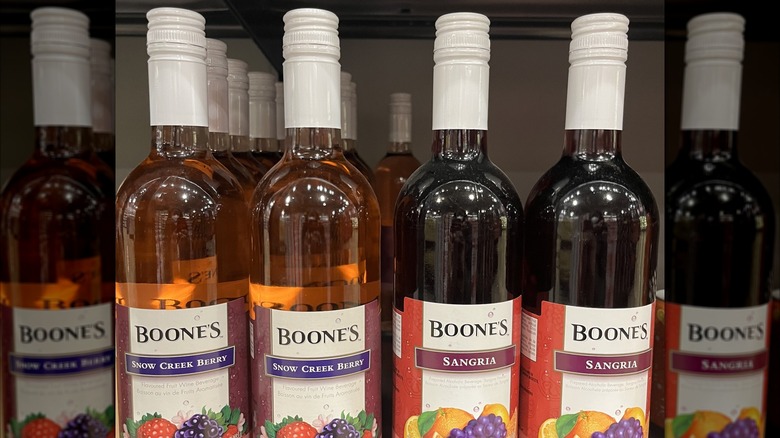
If you wanted cheap, sweet-tasting booze in the 1960s, the chances are you would reach for a bottle of Boones Farm wine. The brand first hit the market in the early 1960s, and it was popular for a few reasons. Firstly, as we mentioned, it was budget-friendly. But because it was made from apples (and also came in strawberry flavor, known as Strawberry Hill), it also didn't have that typical wine taste. In other words, it was a catnip to college kids and underage high schoolers.
"Boones farm was the wine of choice for us boomer high schoolers back in the 60s," according to one Redditor in r/GenX. "I hurled Boones farm more than once on a Friday night. Mostly pink, strawberry hill." In fact, by the early 1970s, the young people of the 1960s had helped propel to the number two pop wine (that's cheap, fruity wine) in the country. And decades later, some still drink it. "Still have a bottle of strawberry, [which] was given to me on my birthday several years ago," said one Facebook user on a post devoted to memories of drinking Boones Farm apple wine. "In the 60s, it was all we could afford (around $3.00 a bottle)."
Chocolate Soldier
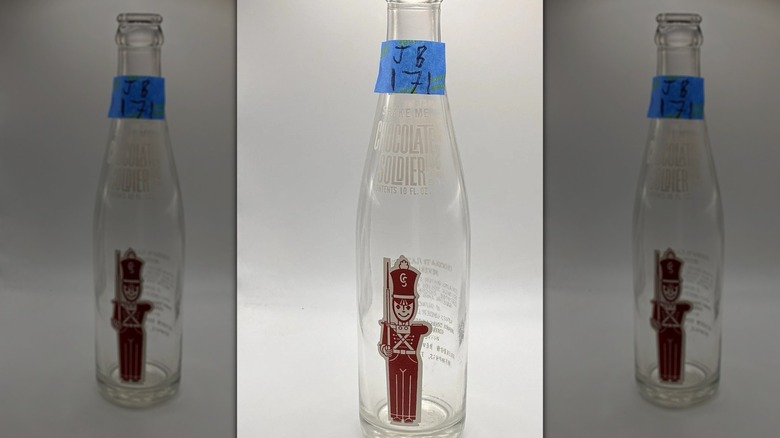
If you love Yoo-hoo, you probably would have a soft spot for Chocolate Soldier. Produced by the Citrus Products Company, the drink, sold in a glass bottle, was a favorite of many in the 1960s – largely thanks to its thick, creamy texture and rich chocolate flavor. "My all time favorite chocolate drink," declared one Facebook user in a group for 1960s memories. "I think these taste better than yoo-hoo. I wish I could find it somewhere" Another added: "A YooHoo knock off but it tasted just as good!"
It seems that Chocolate Soldier has disappeared from the market now, but if you're feeling nostalgic, there is plenty of old merchandise on eBay. At the time of writing, there is even an old Chocolate Soldier glass bottle listed on the site for $10. Or, if you want a similar taste, you can always go for Yoo-hoo. Some might say it's not as good, but it has certainly stood the test of time, as, unlike Chocolate Soldier, you can still find it in grocery stores.
Delaware Punch
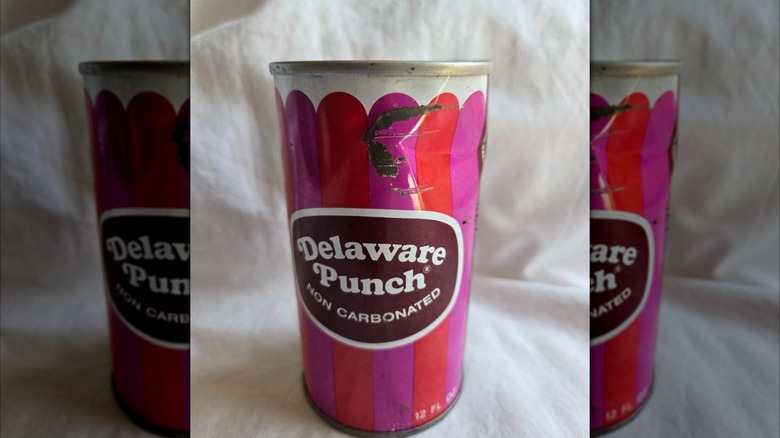
Chocolate Soldier was firmly in the kid category, but Delaware Punch was loved by adults and children alike. The grape-flavored drink, which was non-carbonated, was soft, sweet, a little tart, and generally inoffensive, which helped make it an all-around crowd-pleaser. However, it did have a thicker, syrupy texture, but some claim this arguably made it the perfect choice for sick days. "I had chronic tonsillitis back then and for some reason it soothed my throat like a secret potion," reads one Reddit post in r/Soda.
Delaware Punch wasn't just popular in the U.S., it was also a hit in Mexico, too. In fact, while the drink has disappeared from the shelves in America (other than a revived version sold only at Atlanta's World of Coca-Cola), some say you can still buy it in Mexican stores. "Delaware Punch used to be huge in Mexico in the 60's and 70's," said one Redditor in r/AskOldPeople. "My friends and I used to hang out in a lake town called Valle De Bravo. We'd get wrecked on Dexedrine and drink bottle after bottle of [Delaware Punch]."
Tab
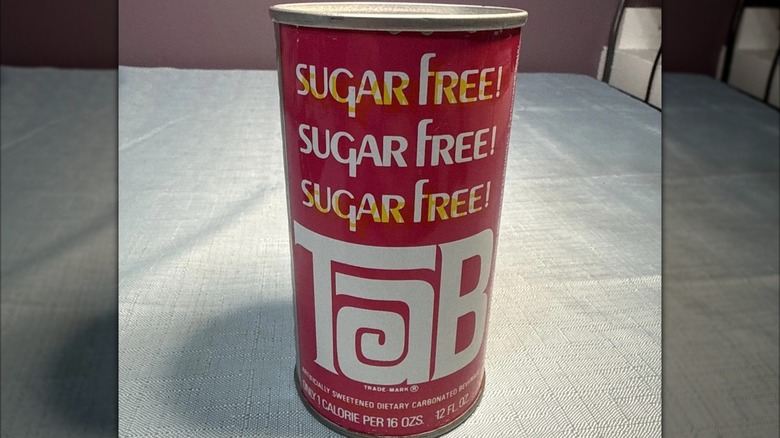
Nowadays, Diet Coke is one of the most popular diet beverages on the market. But, fun fact, it wasn't Coca-Cola's first attempt at diet cola. Nope, that was Tab, which hit the market in 1963. The beverage was discontinued in 2020, but if you want to know exactly what it tasted like, some have compared it to Diet Pepsi mixed with tonic water, while others say it had an artificial citrus taste and some have compared it to Coke Zero.
Many people have fond memories of drinking the diet soda through the 1960s. In fact, some feel so nostalgic about Tab, there is even a campaign to bring it back to store shelves. Others, however, feel it belongs firmly in the past. "Looked like Coca-Cola, tasted awful," reads one Facebook comment in a 1960s memories group. Another added: "My mom drank it [every time] she was on a diet it tasted horrible."
RC Cola
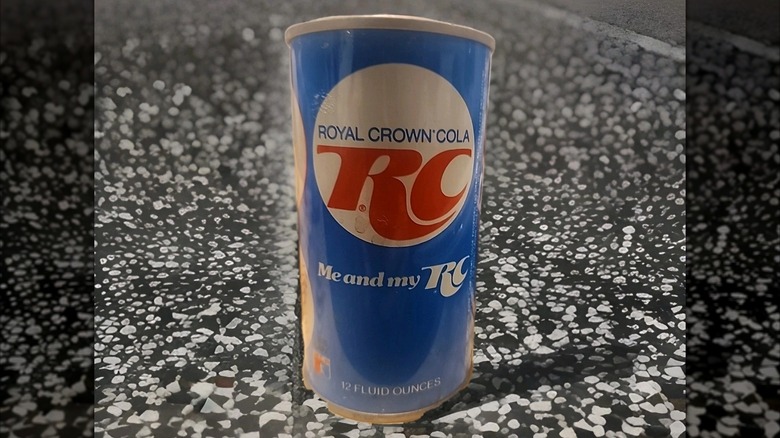
While some were sipping away on Tab in the 1960s, others were loyal to a different cola drink: RC Cola. Produced by the Royal Crown Cola Company, RC Cola first hit the market in the 1930s, and quickly soared in popularity. According to some, the drink, which is still around, tastes like a mix between Pepsi and Coca-Cola. "More bite than [Pepsi]. Smoother than [Coke]," a Redditor commented in r/Soda.
Some maintain that in the 1960s, though, RC Cola used to be better than either of its rivals. "Back [in the 1960s] I actually preferred RC Cola over both Coke and Pepsi," said one Facebook user under a vintage RC Cola advertisement from the 1960s. Another added: "In the day RC was the best, now [it's the worst]."
Whether or not that's accurate, one thing is certainly true: RC Cola has been on the backfoot of the cola wars for decades. But maybe that could change. In 2025, the brand, now owned by Keurig Dr Pepper, announced a comeback campaign. Can RC become relevant again? Watch this space.
Cow's milk
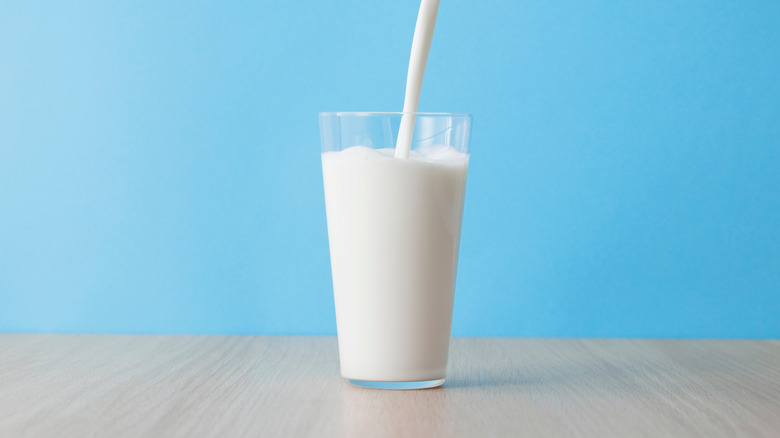
Nowadays, milk doesn't automatically mean cow's milk. People are used to choosing from many different options, including oat, almond, soy, and so on. But back in the 1960s, the main option was dairy milk, and most people who grew up during this time remember drinking it all day long — in the morning, at school, and with dinner. Back then, it was normal for the milkman to deliver glass bottles of creamy cow's milk to the doorstep every morning. In fact, cow's milk was such a big deal, there were even special milk vending machines.
The type of milk people drank depended on the household, but many people who were kids during the 1960s remember drinking whole milk, specifically. "[I] probably didn't know there was any other kind till later," said one Facebook user in a group for 1960s memories. Another added: "I don't think they had anything but whole milk and I remember the milkman bringing it!"
Kool-Aid
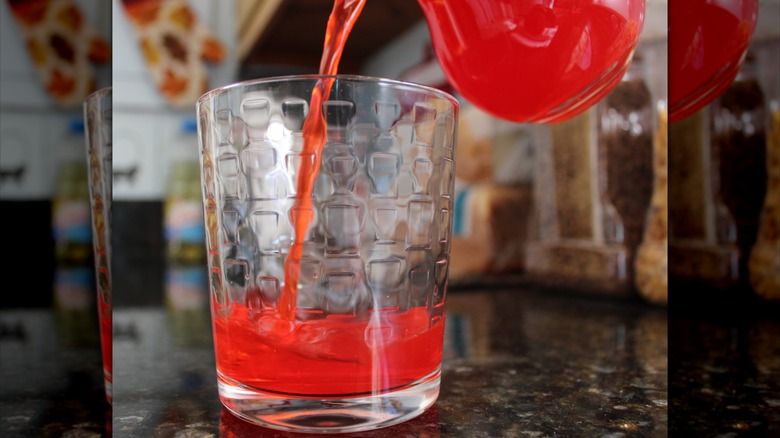
Invented in the 1920s, Kool-Aid is, of course, a similar concept to Tang. It's designed to be mixed with water to make a fun, fruity, bright colored drink, but unlike Tang, which only came in one orange variety, Kool-Aid was (and still is) offered in a plethora of flavors. And another way it differed from Tang? It didn't need NASA to make it a hit. Yep, Kool-Aid was popular straight away, mostly because it was an affordable way of making water more interesting, and by the 1960s, it was a staple. In fact, when they weren't drinking whole milk, many people who grew up during this decade remember drinking Kool-Aid with dinner.
"Drank it by the gallon," recalled one Facebook user in a group for 1960s memories. "My mom even froze it using Tupperware molds and gave it to us kids as summer treats!" Another added: "[Kool Aid] was about all we had to drink back in the 60's! Soda cost [too] much back then!"