

Change Up Beef Stew With One Of These Leaner, Cheaper Cuts Of Meat You're Probably Overlooking
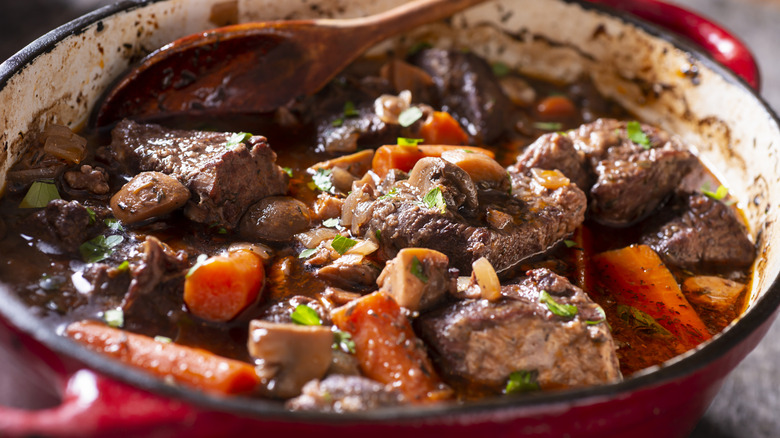
When cold weather rolls around, home cooks want to whip up a hearty stew. What they generally don't want, however, is to break their grocery budget — which is where arm roast and round roast come in. These undersung economical ingredients are the best cuts of beef to use to make your wallet (and belly) happy. Both of these cuts are leaner and more affordable than other options, which is ideal for the low, slow cooking technique it takes to make a heartwarming stew.
Arm roast is a primal shoulder cut, the same region from which the chuck roast is cut. Comparatively, arm roast is naturally more tender than chuck roast, yet it's also quite lean and has a robustly beefy flavor. Further back on the steer, round roast comes from the rump, a tougher cut without much fat that's characterized by regularly-used muscle tissue. With some patient braising, however, it transforms into a wildly flavorful, savory mouthful.
Thanks to their deep richness and friendly price tags, arm roast and round roast are the secrets to a hearty beef stew on a dime. At Midwest Best Beef, for instance, arm roast currently costs $10.50 per pound, and round roast costs $9.50 per pound. Cooking with these lesser-known cuts can even make a terrific excuse to patronize your local butcher shop.
Arm roast and round roast are overlooked stewing cuts
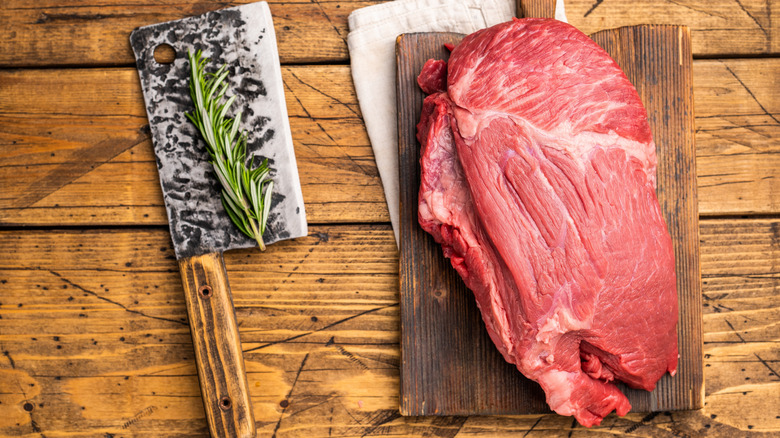
To make arm roast or round roast work for your next pot of beef stew, cut it into chunks for a rustic mouthfeel. Season and flour-dredge the pieces as you normally might, then let 'em simmer in your stew broth for at least a full hour before adding veggies and herbs. Then cook it for about an hour more to become really cohesive and succulent. This low-and-slow cook will break down the tough muscle fibers, while the moisture penetrates deep into the meat for a luscious, tender bite.
One important difference that separates these cuts from other popular stewing meats is that arm and round roast have notably less marbling, aka fat. Chuck roast, for instance, clocks in around a 20% fat to 80% meat ratio. As such, their overall cooking time (or the amount of broth or other liquids you add to your stew pot) may need to be increased. Depending on your recipe or desired flavor profile, those moisture components could include beef broth, red wine, Worcestershire sauce, tomato paste, or plain water. For specific ingredients and measurements, feel free to take cues from our old-fashioned beef stew recipe.
Got leftovers? Arm or round roast beef stew can be frozen in airtight containers or resealable bags for three to four months – that's if you don't want to dive in for a second consecutive night of tender and tasty stew.