

Keep An Eye Out For These Valuable '70s Retro Car Cookie Jars
We may receive a commission on purchases made from links.
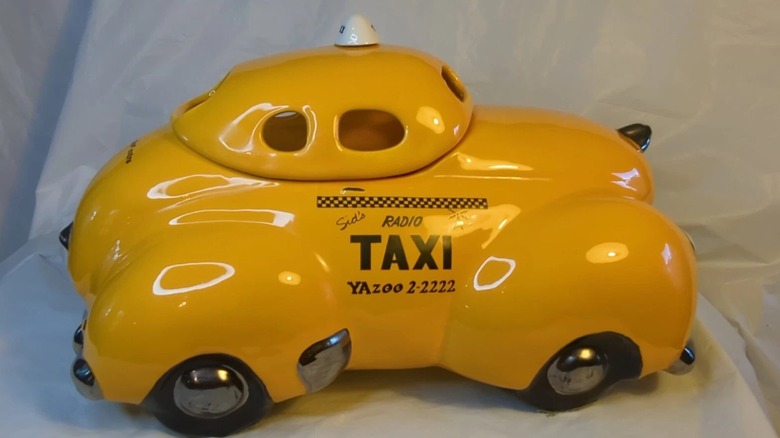
Vintage car enthusiasts and cookie lovers have reason to unite and rejoice thanks to adorable car-shaped cookie jars. These prized antiques were first created by artist Glenn Appleman in the 1970s for his company Appleman Autoworks, and they feature brightly colored antique cars with comically bubbly proportions and removable lids. They're also large — around the size of a toaster oven – so they would make the ideal retro Americana centerpiece for the credenza.
Ceramic cookie jars became a time-honored tradition of American kitchen decor in the heyday following World War II. A wave of consumerism swept American households, and kitchenware shaped like docile geese or merry mushrooms became an everyday expression of joy or whimsy. "I didn't initially make these pieces as cookie jars," Appleman says in an interview with AutoMobilia. "I called them objets d'art. But people thought of them as cookie jars. Who was I to argue?"
Appleman released his first car, a yellow taxicab dubbed the Humperbump in 1977. It initially sold for $75, which was especially expensive at the time. Regardless, the vehicles were a hit, with Appleman claiming that celebrities like Reggie Jackson, Sophia Loren, and Liberace coveted his cars. Today the collectibles vary in price from around $200 to $2,000 for rarer models.
Jaguars and Packards and Buicks—Oh my!
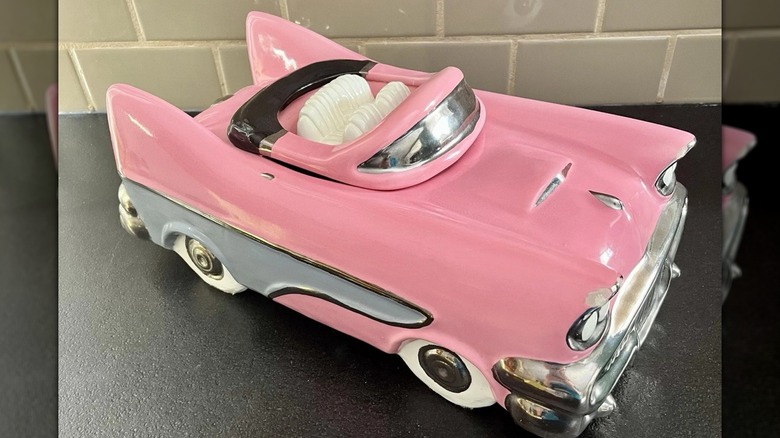
Following the success of the sunshine yellow cab, Appleman created a pudgy Packard in 1979 that became a cop car, followed by a vibrant red Buick. Appleman says that the red glaze on the Buick sometimes had spots, so he covered them with black and white cats. He made less than 30, making the kitty-covered-cars some of the most valuable in his collection. Following that were luxury cars: a bubblegum-pink DeSoto convertible, classy Mercedes Benz convertibles, a creamy white Corvette, and various limited edition Rolls-Royce. Many of the convertibles came with two lids, with the roof open or closed. Among the rarest is a green (or white) Jaguar, for which Appleman only created about 20.
Though Appleman garnered a niche fan base, he ultimately ended his business in 1987 due to rising expenses. Based in New Jersey, the manufacturing process was laborious, with the detailed art pieces requiring chrome and gold luster dust. He reckons he only created around 20,000 of the cars before ending the project and going in to computer programming. It might be worthwhile to see if your family has a jar tucked away in the house somewhere, or to keep an eye out for one on Facebook Marketplace, at an estate sale, or in a thrift store. Otherwise, the car cookie jars can be purchased from auction sites like eBay. Of course, there are replicas out there, but if you want a true Appleman creation, look for an unglazed bottom with the artist's signature.