

How To Grow Potatoes In A Cardboard Box
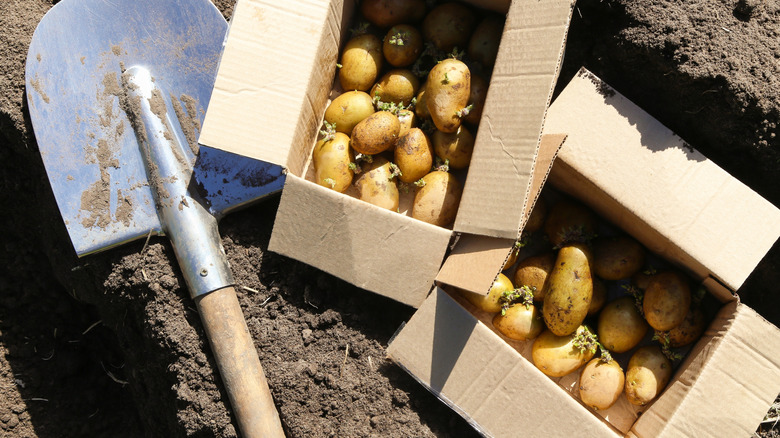
The lack of a backyard doesn't have to mean missing out on gardening. Whether it's just the thrill of bringing something to life, or you want to make a meaningful contribution to your dinner table, you don't need as much space as you think. And we're not just talking about herbs in windowsills — even something as substantial as potatoes can be grown in a cardboard box.
You will need some kind of outdoor space, and one that receives direct sun, but even with a small balcony, rooftop, or a patch of patio, you can get started on growing your own potatoes. It's as simple as folding in the flaps and filling the box halfway with soil, then adding your pieces of sprouting potato. Cover with more soil or mulch and give them a good water to start them off. As long as the plants get enough water and sun, you can expect to have potatoes in 70 to 120 days (depending on the type of potato), at which point you can simply cut open the box for an easy harvest.
If you do have a garden, it's still worth bookmarking this method. Growing potatoes in cardboard boxes is less labor intensive than the traditional way — there's no digging required. The boxes also tend to suffocate any weeds underneath, so setting up your potatoes in the right spot will help clear the way for next season's garden beds.
Tips for growing potatoes in boxes
Potatoes are generally easy to grow vegetables, but a little extra care can go a long way to ensuring a successful harvest. Perhaps the most important factor is the positioning of the cardboard box. The green leafy potato plants need plenty of sunlight to help develop tubers. Ideally, they should have 8-10 hours of direct sunlight per day, but they will grow with 6 hours.
On the other hand, the potatoes themselves develop more flavor if kept in the dark, so you may want to consider what's known as hilling. This involves adding more soil or homemade mulch as the plants grow to ensure that only the leafy parts are above ground.
One of the key benefits of this growing method is that you don't need to spend any money on contains, instead using items that are detained for recycling. But if you have the choice between boxes, some gardeners suggest avoiding those with colored printed images, as the ink can leach into the soil. You'll also want to remove any stickers or tape from the box.
Cardboard is eventually going to deteriorate with watering, which might not be an issue on a truly outside space like a courtyard, but for a balcony you'll probably want to choose a sturdier box that will stay intact throughout the growing season.