

Safeguard Your Vegetables Against Weeds With One Simple Technique
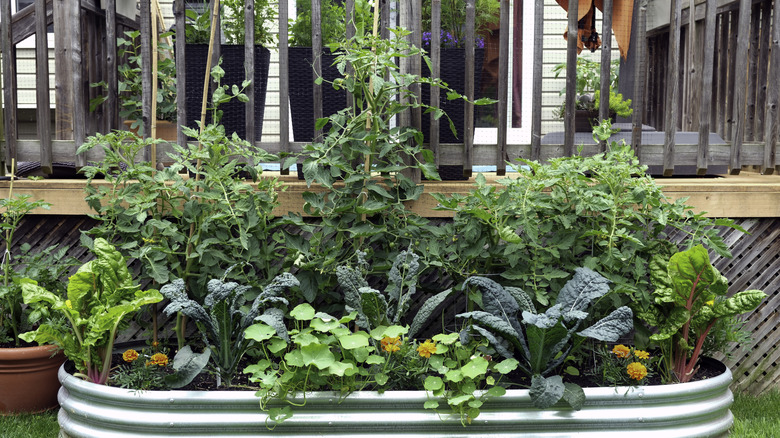
Beyond watering and harvesting, a crucial (and often daily) aspect of home vegetable gardening is weed control. Weeds can choke out new veggie growth by occupying the valuable real-estate space in your garden bed — and, worse, they can swipe the soil's bioavailable nutrients away from the veggies. Luckily, there's one effective preventative measure that many home gardeners might already be using elsewhere in their yard, but overlooking in the vegetable garden: mulch. More specifically, it's time to break out the wood chips.
Landscape fabric isn't always the best fit for edible gardens due to its plastic materials, which can leach into the surrounding soil over time. By contrast, wood chips are a type of organic mulch that bring a natural benefit to the physical barrier strategy, blocking weeds from growing around your veggies. Sprinkling your vegetable garden with a layer of wood chips can help stamp out weed growth before it ever starts. Simply spread a generous layer of wood chips around your plants. However, there is one important caveat to this labor-saving tip: Fresh wood chips must be aged for six to eight months before they ever come near your vegetables.
Fresh woody biomass contains phytotoxins, compounds that occur naturally, but can pull nutrients from shallow-rooted veggie plants and harm their growth. Properly aging wood chips is a simple process, but requires some patience: Just stack fresh wood chips and leave 'em in a pile. As the pile weathers, those phytotoxins will gradually break down.
Sprinkle aged wood chips around your veggie plants to stamp out weed growth
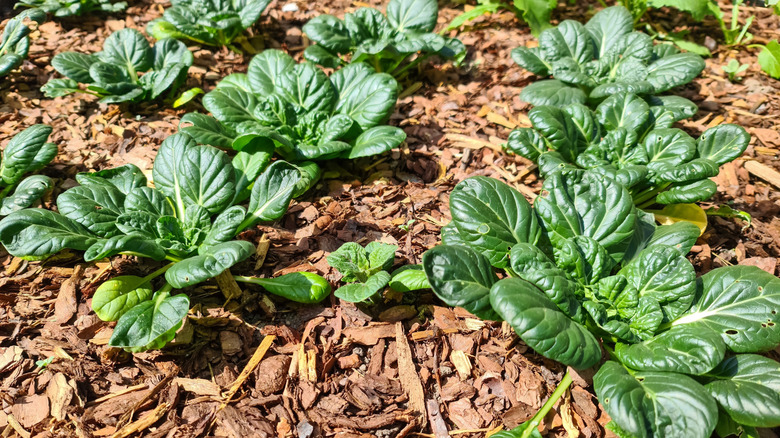
To make that aged mulch work for your veggie garden, apply a 2- to 5-inch layer of wood chips in early spring before any weeds pop up for the season. If possible, try to apply them right after a rainstorm when the soil is still wet, taking care not to cover any small new veggie-plant buds. For the most hassle-free maintenance, opt for mulch made from broadleaf trees (oak, beech) and conifers (pine, yew, larch), which decompose the slowest, subsequently requiring the least frequent reapplication. Organic wood chips can be purchased at your local gardening center; look for mixed hardwood chips and ramial chips (made from small branches) for the least impact to your veggie garden's pH. Steer clear of painted wood chips and anything labelled as having received an artificial or chemical treatment.
According to gardeners, for the best crop yield, the best time to mulch is right after vegetable seedlings begin producing leaves. You may still get a few weeds around the edges of your veg garden or in any gaps, but these will be easy to remove, and you'll certainly get a lot fewer than with no mulch. Other organic biomass, like corn husks and silks, can also be used as a protective ground covering to keep weeds at bay, torn up and added to your mulch for nutrient-enriched garden soil. To get the most successful crop possible, you may also want to check our article on common vegetable growing mistakes other than forgetting to mulch.