

The Average Lifespan Of Plastic Deli Containers
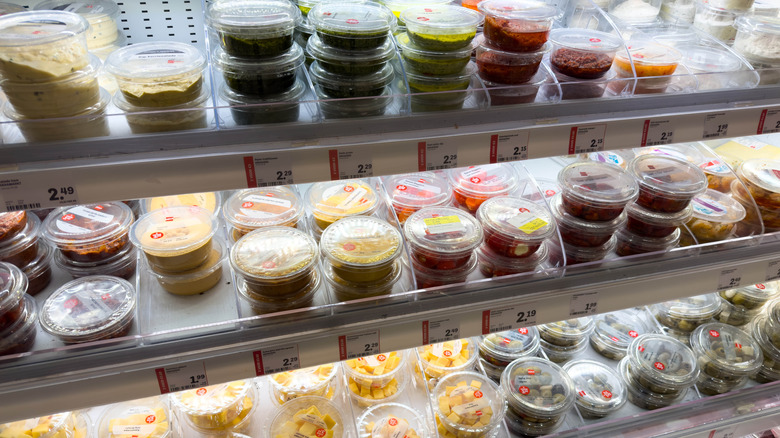
If you've ever ordered takeout or bought lunch from the local deli, you've likely noticed that the containers used to pack the food are simply convenient. They stack easily, allow you to see the food, and are basically free. These deli pots are commonly used for organizing ingredients, refrigerating leftovers, and freezing liquids such as soups, stocks, and sauces. Everyone, from us mere mortals to hosting diva extraordinaire Martha Stewart, reuses those handy plastic containers. Yet their convenience often masks an important reality: Like all plastics, they degrade over time.
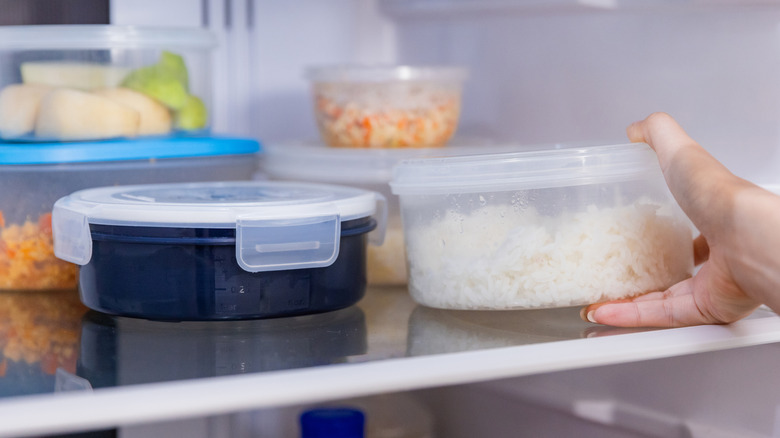
The reality is you can to an extent reuse plastic containers, especially as we all try to reduce single-use plastic waste. However, those plastic tubs are not built for a lifetime of use in the way inherited Pyrex dishes that can last for generations are. Understanding how plastic containers degrade over time is key to knowing when to keep reusing them and when it's time to say goodbye.
Rather than having a set lifespan, stay alert to signs that the plastic is no longer in its prime. This will vary depending on the manufacturer, how the containers have been used, and the care we've taken with them. If they're warped from microwave or dishwasher heat, cracked, scratched, stained by oily or tomato-based sauces and curries, or have an off-putting smell, it's time to let them go. As a general rule, only put plastics labeled microwave or dishwasher safe in those appliances, anyway.
When containers show signs of degradation, there's a greater risk they may be leaching chemicals and microplastics. While researchers are still studying their effects, growing concern over exposure is one reason many people choose to ditch plastic food containers in favor of glass.
Not all plastic containers are created equal
Determining a specific lifespan is tricky because not all plasticware is created equal. Manufacturers may also keep their exact material formulations proprietary, making it difficult to know which chemicals could potentially leach into food. Some of the most widely used chemicals are BPA and phthalates, which have been have been shown to disrupt the endocrine system, affecting hormones that regulate body functions. Some can alter your metabolism, while others can have a lasting impact on reproductive health and fertility.
Most containers have a number on the bottom, surrounded by a triangle, indicating the type of plastic they are made from, known as the Resin Identification Code. Deli containers are commonly made of polypropylene and are identified by the number five. While this code can help consumers determine how to recycle a container, it reveals little about the additives used in its manufacture, as ingredient disclosures and regulations surrounding these materials can be surprisingly opaque.
Even though polypropylene is generally considered one of the safer plastics, it can still shed PFAS, a group of compounds known as forever chemicals because of their persistence in the body and environment. Exposure to PFAS has been associated with a range of health concerns, including cancer, thyroid disease, and obesity.
If you want to extend the life of your plastic items, treat them carefully, avoid putting them in the microwave or dishwasher, and let sauces cool before transferring. It's better to err on the side of caution and get rid of any tubs that aren't in top condition.