

How Long Pyrex Can Last With Proper Care

Some people inherit fine jewelry, others get properties or businesses, but a lucky few inherit Pyrex products. While it might not sound as valuable as gold or silver, to many, it's worth more than that, as Pyrex glass and ceramicware is notoriously built to last. The brand was invented over 100 years ago, and while those exact pieces may not be around anymore, there are plenty of folks out there who still have their Pyrex dishes from the '50s, '60s, '70s, and beyond, thanks to proper care.
Corelle, the parent company responsible for Pyrex's SNAPWARE plastic lids and vessels, states on its website that Pyrex products are intended to be "passed down from generation to generation," meant to be dirtied, baked, and "loved for years to come." However, caring for Pyrex products properly is the only way to guarantee a long lifespan.
For example, Pyrex recommends avoiding thermal shock, which is a shift in extreme temperatures that can stress glassware and cause cracks. In other words, don't pull a dish out of your fridge and put it right into a hot oven, or run cold water over a hot dish. It's also important to never place Pyrex over open flames or allow it to soak too long in water. The latter can cause crazing — those tiny, hairline cracks — if you soak your Pyrex in water for an extended period of time and then heat it.
While washing your Pyrex, use soft sponges. Although technically Pyrex is dishwasher safe, it's better to stick with handwashing for longevity. To keep your Pyrex in good standing, preheat the oven before placing the glassware inside, avoid striking it with metal utensils under any circumstances, and follow this Pyrex secret for changing those lids when they start to look a little worse for wear.
Pyrex can last for generations, but there are still times to toss it
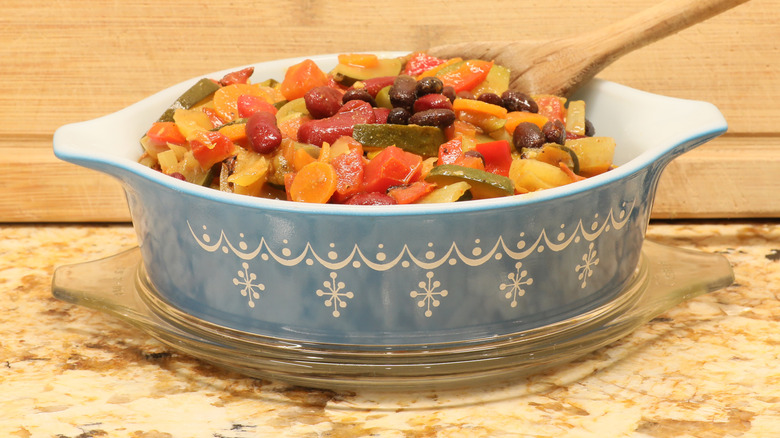
You'll know your Pyrex is unsafe if it has chips, cracks, or heavy scratching. This is especially important when thrifting Pyrex glassware, as even a tiny chip on the rim can cause instability — even in older versions (here's how to tell if your Pyrex is really vintage, in case you need it). While Pyrex restoration is possible for small imperfections like stubborn stains, the brand warns on its website that customers shouldn't use or repair heavily damaged pieces. Luckily, if you're in the United States and purchase a new Pyrex product, most damages are covered by a two-year warranty.
Pyrex's history can get tricky, as different manufacturers have produced the brand over the years, and the type of glass varies by region. Early products made by Corning were crafted from borosilicate glass, which is more resistant to extreme temperature fluctuations. Today, most Pyrex sold in the Americas and Asia is made from tempered soda-lime glass. However, borosilicate glass is still used for many Pyrex items sold in the Middle East, Europe, and Africa.
Depending on the age and type of glass in your Pyrex, one may have a longer lifespan than the other. As this Reddit user reminisced about the durability of old-school pieces: "You almost couldn't break it ... Freezer to oven? No problem ... Drop it? It would normally just bounce." (And in case you are wondering, yes, vintage Pyrex is safe to use in an oven.) Modern Pyrex pieces may not be quite as durable, but both styles still require proper care to ensure a long life.