

The Vintage Glass Kitchenware That's Worth Scouting For At Thrift Stores (It's Worth A Pretty Penny Today)
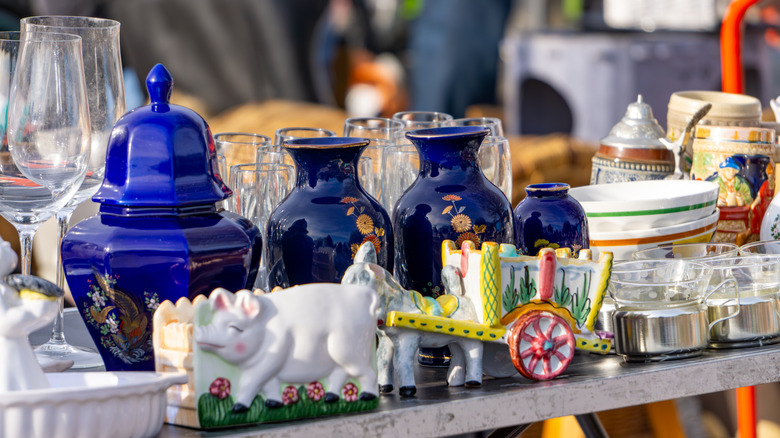
Milk glass may be something you've found tucked away in your grandmother's china cabinet or on thrift shelves. With a history that dates back centuries, some pieces may be worth more than you think. The opaque and milky appearance of this glassware was designed to mimic expensive porcelain without the high price tag. Normally found in translucent white, milk glass pieces were also produced in various colors such as light blue, pink, and green.
In America, milk glass first became popular in the Victorian era, particularly in the late 1800s. At this time, manufacturers produced tableware including serving dishes, pitchers, bowls, and vases, as well as other household items like toothpick holders and hairpins. Following World War II, milk glass experienced another surge in popularity, particularly as everyday tableware.
If you're looking to add milk glass to your collection, thrift stores aren't your only option. Flea markets, garage sales, antique malls, auctions, and online resale sites are also worth browsing. Recognizable manufacturers include Fenton, Westmoreland, Imperial, and Indiana Glass.
Prices can vary considerably depending on a piece's age, condition, manufacturer, and design. A common milk glass vase or piece of tableware may sell for $15 to $25, while complete dish or punch bowl sets, especially those with unusual colors or designs, can fetch hundreds of dollars. Rare vintage milk jars may be worth even more. Between its decorative appeal and long history, milk glass is another vintage kitchenware to keep an eye out for.
What to look for when thrifting for milk glass
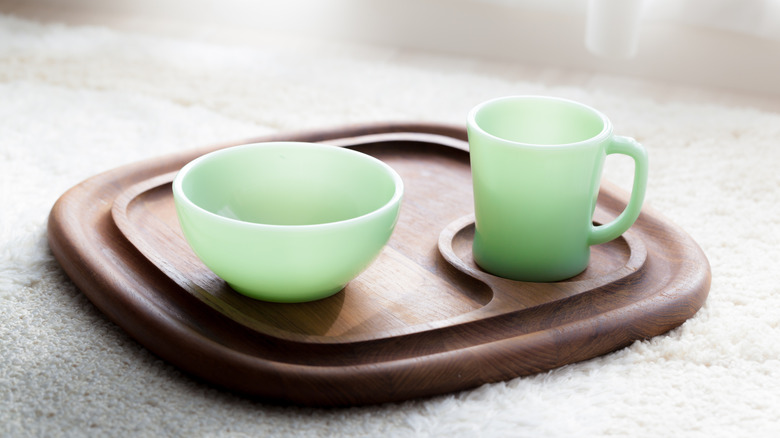
Whether you are shopping for a personal collection or for resale, knowing what to look for can help distinguish between a common find and something more rare. Harder-to-find pieces include older Victorian-era examples with distinctive patterns like latticework or animal or ship motifs. When it comes to the 1950s to 1970s era of milk glass production, look for hobnail pieces, which feature a raised bump pattern, animal dishes featuring classic hen-on-nest designs, and floral trade vases.
Make sure to examine pieces for cracks or chips, as these affect not only the visual beauty of the piece but also the value. Another thing to look for when buying a set is whether the top and bottom pieces match, rather than being interchangeable pieces from different sets.
When browsing, to help date a piece, inspect the bottom for manufacturer marks like Fenton's embossed oval logo and Westmoreland's most famous overlapping W and G mark. Just remember that many pieces did not receive a manufacturer mark.
Authenticity is further complicated by the fact that manufacturers sometimes reused molds, resulting in newer reproductions that resemble older pieces. Examine the glass with a flashlight, looking for an iridescent glow on the edges that's often associated with older Victorian-era pieces. Consult collector references or a professional appraiser for finds that you think might be more valuable. For more thrift-store inspiration for the kitchen and dining room, check out these vintage collectible glasses and valuable retro kitchenware before you head out for your next haul.