

Everyone Seemed To Have This French-Inspired CorningWare In Their Kitchens In The '70s
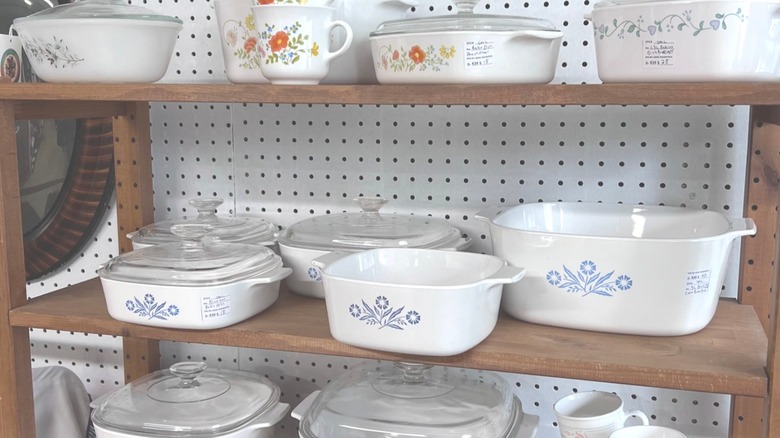
CorningWare dishes have been a fixture in American homes for decades, and some patterns have made a nostalgic mark among those who associate the dishes with their upbringing. To this day, the dishes are still found in cupboards and used in kitchens, and vintage CorningWare patterns can be valuable. While many collectors look for the more whimsical Corning patterns, the simple, all-white French White CorningWare line has its own set of fans. "Can't live without them," wrote a collector on Facebook who owns several pieces of the French White line.
Launched in 1978, the elegant pieces feature fluted sides that bring a French-inspired look into homes. Unlike many other CorningWare lines, French White doesn't have any sort of decorative motif on the surface. Instead, its appeal lies in the clean appearance and ridged sides. The French White range includes a variety of CorningWare forms, including round and oval casserole dishes, covered baking dishes, and oven-to-table pieces that can easily be presented at a dinner party. Without a recognizable pattern, the fluted sides give these pieces character while maintaining a simple and clean aesthetic. Many American cooks in the 1970s and '80s were inspired by French cuisine, and the French White line fit into this interest by offering a look associated with French cooking and the use of white ovenware. The white design can complement any created tablescape, as its neutral appearance doesn't compete for attention at a dinner party.
Detecting newer and older dishes
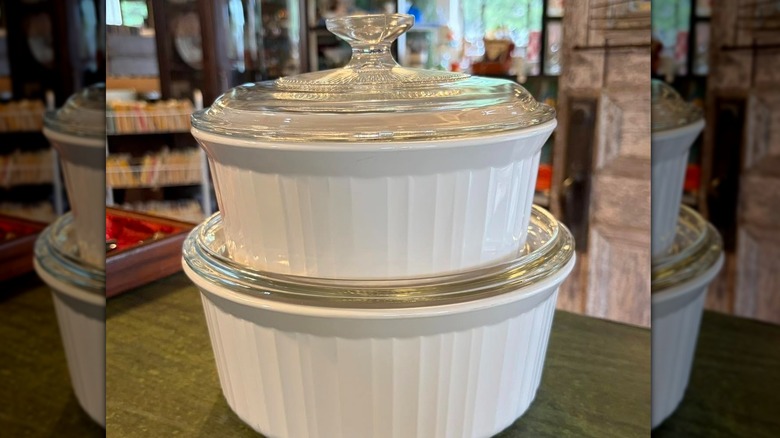
French White is still produced, so the pieces you come across in a secondhand store may not be vintage. The original line of French White pieces were made from Pyroceram, the glass-ceramic material designed to withstand temperature changes. This feature allowed home cooks to prepare and serve food in one dish, instead of having to move a dish from the oven to a separate serving piece. The Pyroceram pieces are more valuable to collectors, as later pieces were made in stoneware.
When browsing dishes in an antique shop, look for the CorningWare stamp and a model number on the bottom of a dish to help verify the model and identify its age. Older pieces can be identified by the brand name written as two words instead of one. The more recent French White cookware made from stoneware can be heavier than Pyroceram, and the base of the newer stoneware pieces may have a firing ring from the kiln-firing process. Additionally, stoneware pieces may look more cream-colored than the Pyroceram pieces, which tend to appear whiter due to the material. The fluting differs, too, as the stoneware flutes appear softer, whereas the original dishes have crisper lines. A new 20-piece stoneware set can be purchased for around $165.